
Vandaag of morgen in huis

Kwaliteit gegarandeerd

Welkomstaanbiedingen ontgrendelen: GRATIS bezorging | Tot 80% korting | Gratis 30 dagen JoyPlus-proefperiode
Download de app
An orthopaedic dog bed may seem easy to choose at first. But the wrong size, a cover that’s difficult to clean or soft filling that quickly goes flat can leave you disappointed with your purchase before long. This matters for puppies, senior dogs, large dogs and cats that spend a lot of time in their bed every day.
A soft exterior doesn’t automatically mean a supportive bed, either. So look beyond the appearance and focus on the construction, care requirements and stability. Read on to find out what really matters when choosing an orthopaedic dog bed, and which models suit different needs.
A fluffy dog bed feels cosy, but a thick plush layer doesn’t tell you much about the support underneath. Check what material is used for the filling or core. For example, the product information for some models lists egg-crate foam. This shaped foam layer provides structure and can help distribute weight more evenly. Don’t confuse this with medical treatment: a dog bed is no substitute for advice from a vet.
A dog bed for small dogs should leave enough room for them to turn around and stretch out. For a dog bed for large dogs, the usable sleeping space is particularly important, as high sides can take up some of the surface area.
Measure your dog while they’re lying down comfortably. Add a little extra space to the length and width, especially if your dog likes to sleep stretched out. A donut dog bed is often a good choice for pets that like to curl up, but it may be less practical if your dog usually sleeps fully stretched out.
Dog hair, sand and moisture eventually find their way into every bed. Check whether it’s a dog bed with a removable cover, and make sure the washing instructions are clear. “Washable” might mean that only the central cushion can be washed, while the outer bolster can only be wiped clean.
Also check drying time, zips and the material used for the inner filling. Several models in this selection have machine-washable covers, while the core should only be aired or spot-cleaned.
A comfortable pet bed should be soft enough to lie on comfortably, but shouldn’t consist solely of loose fibres that flatten quickly. According to their product descriptions, products with egg-crate foam combine a shaped core with a soft top layer. Other models use PP cotton. This material feels plush, but the level of support depends on the amount of filling, the construction and how the bed is used.
For a senior dog or a pet that finds it difficult to get up, a low entry may be more practical than a very high bolster. A raised edge may be more comfortable for dogs that like to rest their head on something. So consider your pet’s sleeping habits before choosing a model.
Use these guidelines as a starting point:
The stated diameter refers to the bed’s outer measurement. On a donut dog bed, the raised sides take up some of the surface area. So check the inner space and compare it with your dog’s length.
A dog bed with a non-slip base stays more stable on smooth floors such as laminate or tiles. Rubber dots or a non-slip mat can help limit movement, but they can’t make an unsuitable location safe. Place the bed on a flat, dry and stable surface, and check regularly that the underside is still making good contact with the floor.
Don’t place the bed next to a radiator, heater or open fire. If your dog likes to chew, it’s wise to supervise them the first few times they use it. Check the seams, zips and loose filling regularly.

Why it suits this profile: This round model is designed for small and medium-sized dogs and measures 70 cm. Its shape suits pets that like to curl up.
The product information lists a removable central cushion, a zip fastening and a base with rubber dots. This makes it easier to assess the care requirements and stability before you buy.
Plush fabric, PP filling, 70 cm diameter and a removable central cushion, according to the product specifications.
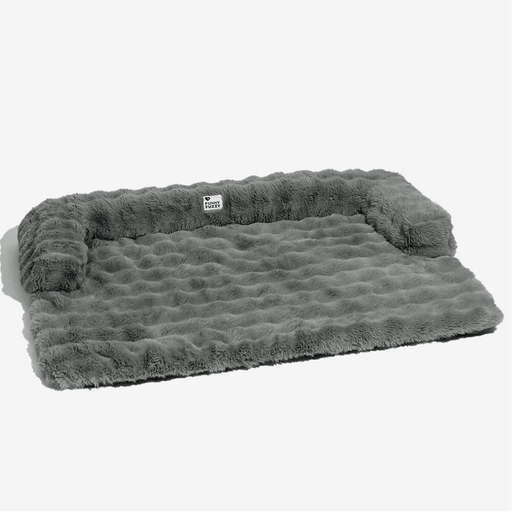
Why it suits this profile: This sofa-style bed is suitable for dogs and cats at every life stage. Its combination of soft faux fur, egg-crate foam and a raised headrest suits pets that like to rest their neck against an edge.
The product description lists the core, headrest, removable cover and non-slip layer separately. This makes it easier to look beyond the fluffy exterior.
Egg-crate foam, raised headrest, machine-washable cover and non-slip base, according to the product specifications.

Why it suits this profile: Designed for everyday use by dogs and cats, this model combines sherpa, soft plush fabric and egg-crate foam. Its sofa-style design makes it a practical choice for a regular resting spot in the living room.
According to the product information, the cover can be removed and washed. The instructions also recommend airing the core and checking the bed regularly for signs of wear.
Sherpa and faux fur, egg-crate foam, raised headrest, machine-washable cover and non-slip layer, according to the product description.
We’ve put together a complete, up-to-date list of products that meet these strict selection criteria and the applicable European safety regulations.
A washable dog bed will stay in good condition for longer if you care for it according to its construction. Remove hair regularly with a vacuum cleaner or lint roller. Wash the cover according to the care label, use a mild detergent and let all parts dry thoroughly before using the bed again.
When the bed is used frequently, check it at least once a week for:
If the cover or filling is damaged, replacing the bed is safer than continuing to repair it yourself. Dogs that chew need extra supervision, especially during the first few days.
A model with a supportive core and a low, easy-to-reach entry can be practical for an older dog. Claims about joints or posture come from the product description; they aren’t a medical guarantee. If your dog is in pain, feels stiff or has difficulty getting up, contact a vet.
Measure your dog while they’re lying fully stretched out, then add extra room to turn around. For round models, allow for the raised edge. A diameter of 70 cm often suits small to medium-sized dogs that like to curl up; larger dogs will generally need a model measuring 90 cm or more.
Remove hair several times a week and wash the cover as soon as it gets dirty or damp. You may need to do this more often in homes with several pets or a dog that often goes outside. Always follow the care label and make sure the cover is completely dry before putting it back on the bed.
