
Vandaag of morgen in huis

Kwaliteit gegarandeerd

Welkomstaanbiedingen ontgrendelen: GRATIS bezorging | Tot 80% korting | Gratis 30 dagen JoyPlus-proefperiode
Download de app
An orthopaedic dog bed can provide a comfortable place to rest for small and medium-sized dogs, older pets and cats. However, a soft exterior says little about a bed’s practical quality. A dog bed may look thick and inviting, yet quickly flatten, slide around or prove difficult to clean.
As a Joybuy Product Recommendation Officer, I filter product information according to verifiable features. Pay particular attention to the construction, dimensions, washability and stability. This helps you avoid paying mainly for appearance or marketing terms.
A fluffy or plush dog bed feels comfortable, but a layer of soft filling does not always provide sufficient support. So look at the internal structure. The product descriptions of several FUNNYFUZZY models mention egg-crate foam, meaning a foam layer with an egg-box pattern. This structure is designed to combine firmness and comfort.
Please note: claims about supporting the joints, spine or neck come from the brand’s product information. They are not a medical guarantee and do not replace advice from a vet.
With a washable dog bed, this often means that the removable cover or central cushion can be put in the washing machine. The inner filling is not always suitable for machine washing. Therefore, check:
For everyday use, a dog bed with a removable cover is generally more practical than a fully enclosed model.
A dog bed with an anti-slip base may stay more stable on a smooth floor, but the surface underneath is still important. Place the bed on a flat, dry and stable surface and check that the anti-slip layer is fully in contact with the floor. Older dogs in particular may struggle with a bed that slides away as they get in.
Check the underside regularly for signs of wear. An anti-slip base is not a substitute for placing the bed safely.
For an orthopaedic dog bed, the inner layer is more important than the fluffy finish. Foam, egg-crate foam or another shape-retaining core can provide more structure than polyester or PP cotton filling alone. A raised edge or a dog bed with neck support is suitable for pets that like to rest their head against a bolster.
A donut dog bed works differently: its round, raised edge creates an enclosed sleeping space for dogs that like to curl up. This type is particularly practical for small and medium-sized dogs that enjoy a nest-like feel.
Measure your pet while it is lying fully stretched out, then allow some extra room. Don’t only look at the outside diameter, as a high edge reduces the usable sleeping area.
Always check the product specifications. Sizes S and M may vary between brands.
Sherpa, plush and faux fur feel warm, but can visibly trap hair. A removable cover makes cleaning easier. Wash the cover according to the care label and allow all parts to dry thoroughly before using the bed again.
A cat bed and a dog bed have similar requirements: a quiet spot, a stable base and a material that suits your household cleaning routine. Keep every bed away from open flames, radiators and other direct heat sources.
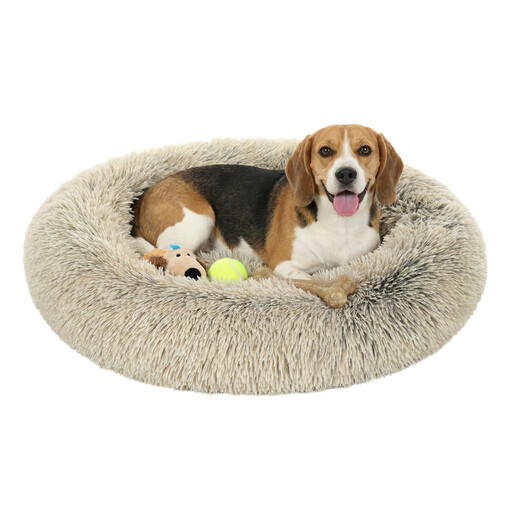
Why it suits this profile: The round shape and 70 cm diameter provide a well-defined resting space for small to medium-sized dogs. The neutral colour fits easily into a living room.
The product description mentions a removable central cushion and rubber anti-slip points. However, check the current care instructions before buying.
70 cm diameter, raised edge, PP cotton filling and a removable central cushion.

Why it suits this profile: This sofa-style model combines sherpa and faux fur with an egg-crate foam structure. The raised headrest is designed for pets that like to rest their head on a bolster.
According to the product information, the cover is removable and machine-washable. The foam core should not be put in the washing machine, in line with the care instructions.
Egg-crate foam, raised headrest, machine-washable cover and anti-slip base.
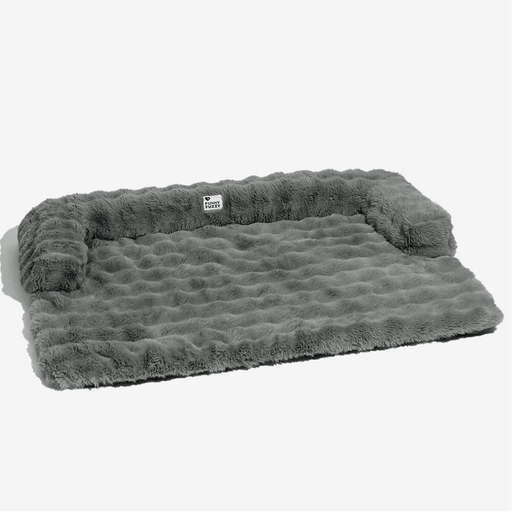
Why it suits this profile: The size M, high edge and foam structure are practical for pets that rest for several hours every day and like support for their neck and legs.
The product description mentions a removable cover and anti-slip layer. The inner cushion core should be aired rather than washed, which helps prevent incorrect care.
Size M, egg-crate foam, raised edge, removable cover and anti-slip base.
Allow a vacuum-packed bed to expand fully first. Fluff it up gently and give the material time to regain its shape. Then place it in a quiet corner where your dog or cat already likes to rest.
A familiar blanket or toy can help your pet settle in. After positioning the bed, check that it is not blocking a door, staircase or radiator. If your pet likes to chew, supervision during the first few uses is advisable. Inspect the seams, zips, filling and anti-slip points regularly. Stop using the bed if any parts come loose or the filling becomes visible.
We have put together a complete, up-to-date list of products that fully meet these strict selection criteria and the applicable European safety regulations.
A bed with a shape-retaining foam layer, stable base and suitable entry can be practical for older dogs. However, the term “orthopaedic” is not a medical assessment. If your dog experiences pain, stiffness or mobility problems, it is best to discuss its sleeping comfort with a vet.
This depends on shedding, dirt and accidents. Remove hair regularly with a vacuum cleaner or lint roller and wash the removable cover according to the care label. Only wash the inner filling if the manufacturer expressly permits it. Allow all parts to dry completely before putting them back in place.
Its lifespan depends on your pet’s weight, daily use, chewing habits and care. A bed may wear out more quickly if it is kept in direct sunlight permanently or is often washed incorrectly. Therefore, regularly check the seams, zips, filling and anti-slip layer, and replace the bed as soon as it is no longer stable or safe.
