
Vandaag of morgen in huis

Kwaliteit gegarandeerd

Welkomstaanbiedingen ontgrendelen: GRATIS bezorging | Tot 80% korting | Gratis 30 dagen JoyPlus-proefperiode
Download de app
As a Product Recommendation Officer at Joybuy, I see dog owners every day who feel overwhelmed by the sheer number of options. The packaging promises the world, but what's really inside that bag of dog food? Choosing the right nutrition, like Orijen Original, requires a critical eye. Let's cut through the marketing jargon and look at what really matters.
Many owners unwittingly fall into two common traps:
Grain-free dog food is popular, but grains are often simply replaced with cheap fillers like potato starch or tapioca. This can lead to unwanted spikes in blood sugar levels and offers little nutritional value.Making an informed choice starts with understanding the core specifications.
Before you place a bag of food in your shopping cart, it's wise to check three crucial points on the packaging. These determine the actual quality of the food, beyond the glossy packaging.
A dog needs animal proteins for muscle development and energy. A protein-rich dog food is a good start, but the source is just as important. Look at the first five ingredients. Are specific, fresh meat or fish types listed, such as "fresh chicken" or "fresh whole herring"? That's a positive sign. Products that start with "dehydrated meat" or "chicken meal" contain a more processed, concentrated form. For example, Orijen Original lists 25% fresh chicken as its first ingredient, indicating high quality.
The WholePrey concept, which Orijen applies, is based on the diet of a dog's ancestors in the wild. They didn't just eat muscle meat, but the entire prey. WholePrey kibble therefore contains a specific ratio of:
This approach ensures that nutrients are delivered naturally, which often results in a shorter list of synthetic additives.
With grain-free food, be critical of the substitutes. Ingredients like lentils, chickpeas, and whole peas offer a slower release of energy and more fibre than potato or corn. A good premium dog food with chicken and fish balances the animal ingredients with these types of low-glycemic, plant-based sources.
Based on these objective criteria, we have highlighted a number of products that fit specific dog owner profiles.
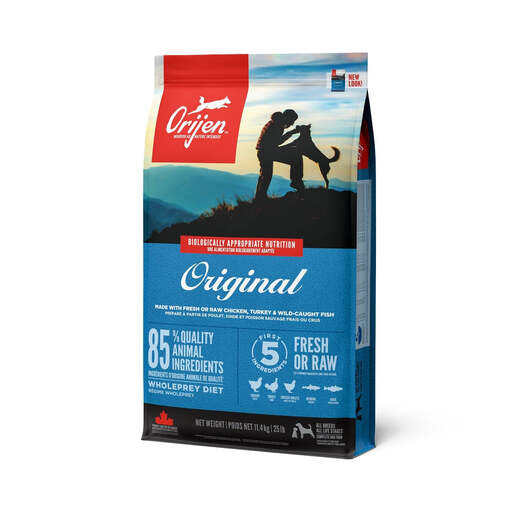
Why This Fits Their Persona: For the owner who wants to support their adult dog's vitality and muscle mass with a diet rich in diverse, high-quality animal proteins.
The ingredient list is transparent and starts with fresh animal ingredients, not vague descriptions. It's grain-free but uses nutritious lentils and chickpeas instead of cheap fillers.
Contains 38% crude protein, 85% of which comes from animal sources. The WholePrey ratio ensures a complete nutritional profile with fewer synthetic additives.
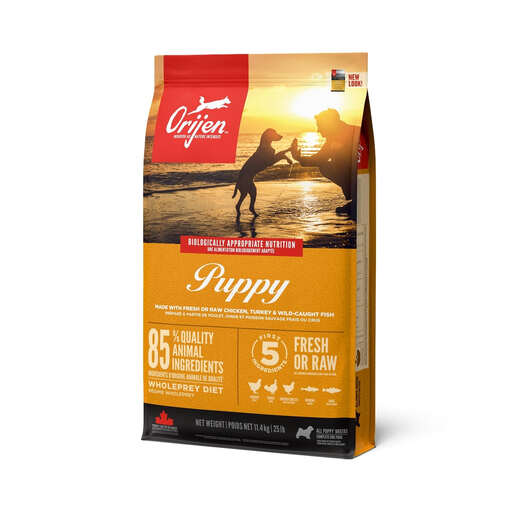
Why This Fits Their Persona: Ideal for owners who want to give their puppy the best possible start with a diet tailored to the high energy needs and development of muscles, bones, and brain.
This formula is specifically designed for a puppy's sensitive digestive system and avoids unnecessary fillers. The focus is on high-quality, easily digestible proteins and fats for healthy growth.
Has a protein content of 38% and contains omega fatty acids (DHA & EPA) from fish, which the manufacturer states support brain and eye development. The `Orijen 11.4 kg` packaging is a practical choice for a growing dog.
We have compiled a complete, up-to-date list of products that meet these strict selection criteria.
A sudden change in food can disrupt your dog's digestion. It is recommended to make the transition gradually over a period of 7 to 10 days. Start with 25% new food and 75% old food, and increase the proportion of the new food every few days until you have fully switched over.
Orijen Original is a complete food suitable for dogs at all life stages. However, due to its high protein and mineral content, the manufacturer indicates that it is not suitable for Great Dane puppies under 14 weeks of age. When in doubt about your dog's specific needs, it is always wise to consult the feeding guidelines on the packaging.
The price of a premium dog food like Orijen is largely determined by its ingredients. A high percentage of fresh, regional meat and fish is more costly to produce than food made with grains or meat meal. The complex composition according to the WholePrey principle, with a wide variety of animal ingredients, also contributes to the final price.
