What should you look for when choosing?
Compact camera with close-up mode
Best for: photographing complete models and occasionally capturing a detail without changing lenses.
Trade-off: you have less choice of lenses, so check that the camera can frame both the detail you want and the whole model.
Mirrorless camera with macro lens
Best for: regularly photographing small folds individually or changing lenses to suit the shot.
Trade-off: the camera body alone does not provide macro magnification; check the mount, the lens included and whether there is room for lighting.
| What to consider |
What should you check? |
Who is this important for? |
| White background and paper colour |
Check the adjustable white balance and the options for exposure compensation or manual exposure; also consider your lighting setup. |
If I photograph white paper, I want to keep the background bright without losing sight of the paper colour or pale folds. Around 33% of consumers put colour and background at the top of their list of buying concerns. |
| Capturing fine folds |
Compare the close-up mode, magnification and lens mount of the exact camera-and-lens combination. |
If I want to show small fold lines individually, I need the detail to appear large enough in the frame without relying on the word ‘macro’ alone. Around 27% of consumers prioritise capturing fine details. |
| Repeatable composition |
Check that the tripod mount and screen suit the way you plan to position the camera by your models. |
If I photograph several models one after another, I want to be able to keep the framing and camera angle the same. Around 20% of consumers prioritise a repeatable workflow. |
| Complete, straightforward setup |
Check whether you are buying a body, a kit or a camera with a fixed lens, and which lens, memory card and battery are included. |
If I want to get started with as few separate purchases as possible, I want to know in advance which parts I really need. Around 20% of consumers prioritise a simple, complete setup. |
In a very bright scene, the metering may work differently from what you expect. Canon Netherlands recommends paying attention to exposure and white balance. Take a test shot and check both the background and the visibility of pale folds.
According to OM Digital Solutions, the OM SYSTEM Tough TG-7 has a minimum focusing distance of around 1 cm. That distance alone does not determine whether your full model or the detail you want will fit in the frame. For mirrorless camera lenses, Canon Netherlands lists a maximum magnification of 1:2 for the RF 35mm F1.8 MACRO IS STM, while Nikon Netherlands lists 1:1 for the NIKKOR Z MC 50mm f/2.8; these figures apply to the lenses named.
Joybuy cameras
The Joybuy selection below includes camera and webcam models. Check each model’s suitability for still-life origami photography, close-up shots and the framing you want.
 No image available
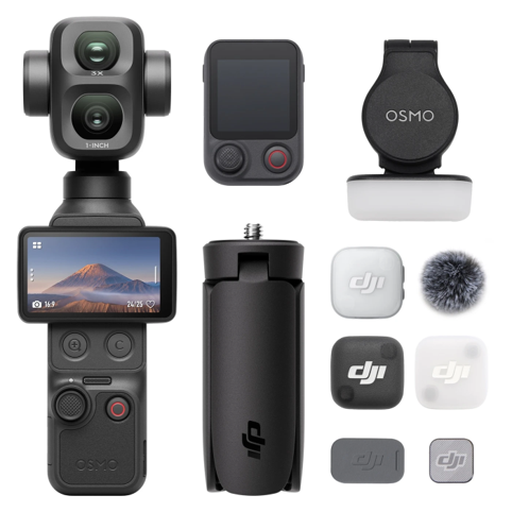
Osmo Pocket 4P Vlog Combo – Black
Check whether this vlogging camera is suitable for still-life origami shots and the close-up framing you want.
Joybuy
 No image available
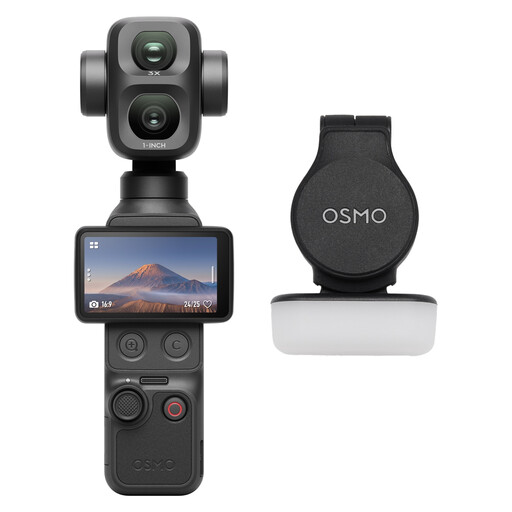
Osmo Pocket 4P Standard Combo – Black
Check whether this camera suits your workflow for photographing still origami models and the framing you need.
Joybuy
 No image available
DJI Osmo Pocket 4 Standard Combo
Check whether the features and framing are suitable for still-life close-up photos of paper.
The product title lists a 1″ CMOS sensor, 4K/240fps, 3-axis stabilisation, 2× lossless zoom, 107 GB of built-in storage and a 2″ rotatable screen.
Joybuy
 No image available
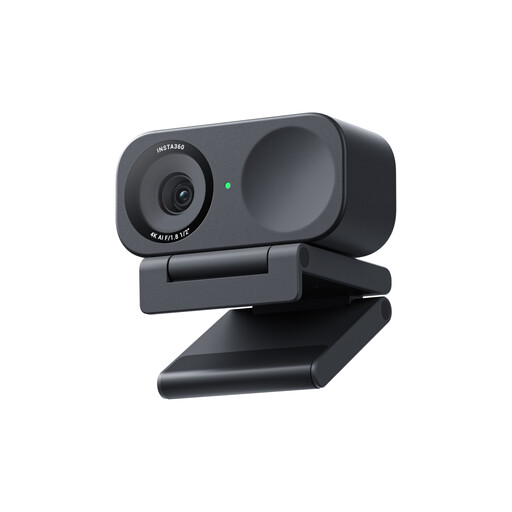
Insta360 Link 2C Standard Bundle – Graphite Black
This model is described as a webcam for PC and Mac; check that its connection and setup are suitable for your photography.
The product title lists 4K, a 1/2″ sensor, auto-framing, HDR and a microphone.
Joybuy
 No image available
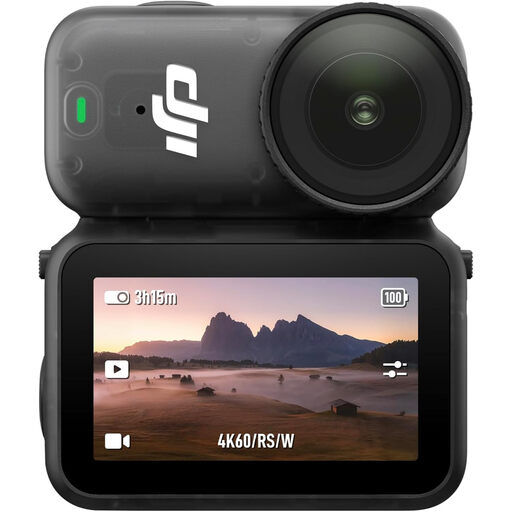
DJI Osmo Nano Standard Combo (128GB)
Check whether an action camera suits the fixed setup and framing you need for origami photography.
The product title lists 4K/60 fps, a 1/1.3-inch sensor, a 143° field of view and 128 GB of storage in the bundle.
Joybuy
Frequently asked questions
Does a white background automatically look white in the photo?
No, a white background does not guarantee that it will look white in the photo. Exposure can turn out differently than intended in a bright scene, so check it and adjust if necessary. Also set the white balance to suit your lighting, and make sure pale folds remain visible.
How can you keep the framing consistent across a series of origami photos?
Use a fixed camera position, for example on a suitable tripod, and check the composition before setting up the next model. Canon Netherlands describes this approach as a way to keep your framing and background consistent.
Do you need a macro lens for every origami model?
No, not if you mainly photograph the whole model and your existing lens can achieve the framing you want. To capture small folds individually, compare the close-up capability or magnification of the exact camera-and-lens combination; the word ‘macro’ alone does not tell you what magnification you will get.
What rights do you have when buying a camera online from a business in the Netherlands?
According to the Dutch government, distance purchases often come with a 14-day cooling-off period; whether it applies depends on the purchase. You are also entitled to a product that is fit for purpose. The Dutch government states that the Netherlands has no fixed statutory warranty period; if a product is faulty, contact the seller.


