Who is this guide for?

Parents who distinguish between breakfast and snacks

You’re looking for something for the school week and want to decide first whether it’s for breakfast, lunch or an occasional snack. The National School Breakfast and the Netherlands Nutrition Centre can help you distinguish between crisps and breakfast foods from the Dutch Wheel of Five.

Shoppers who want to identify organic production

You want to check whether a product is organically produced by looking at its labelling, rather than relying on words such as ‘plain’ or ‘natural’. The European Commission explains the requirements for the EU organic logo.

Parents who need to check allergens

You’re catering for a specific allergy or gluten restriction, so you check the exact flavour, ingredients and any warnings. The Netherlands Food and Consumer Product Safety Authority explains allergen labelling, while Albert Heijn’s product information shows why you need to check each variety individually.

What should you look for when buying?

First decide when the chips will be eaten. Then check the organic certification and allergen information for the exact variety, and make sure the pack suits the planned snack occasion.

What to consider What should you check? Who is this important for?
The right occasion Decide whether the chips are for an occasional snack. If you’re comparing products, compare their nutritional values per 100 g. When I choose something for school, I don’t want chips to replace the daily breakfast choice. This is a priority for around 31% of consumers.
Organic certification Check the organic designation, the EU organic logo, the associated control code and the origin statement. I want to be able to confirm that the chips are organic; words such as ‘plain’ aren’t enough. Organic assurance is the top priority for around 23% of consumers.
Allergens in each variety Read the ingredients and allergen warnings on the current packaging, and take any relevant school rules into account. If I need to account for an allergy or gluten restriction, I check the exact flavour and pack it in line with the school’s rules. Allergen safety is the top priority for around 31% of consumers.
Portion size and storage Check the net weight and follow the storage instructions on the packaging. Don’t compare portions as if they were the same weight. I want to be able to divide the contents between planned snack occasions and store the rest properly. Practical portioning is the top priority for around 15% of consumers.

Common mistakes

  • Assuming organic means suitable for everyday breakfast

    An organic label doesn’t change whether crisps are suitable for a daily breakfast. The National School Breakfast recommends foods from the Dutch Wheel of Five, while the Netherlands Nutrition Centre places crisps outside it.

    First decide whether you’re looking for breakfast or an occasional snack. Then consider organic certification as a separate buying requirement.

  • Assuming all tortilla chips contain gluten, or are gluten-free

    The AH Biologisch Tortilla chips naturel reviewed here is labelled gluten-free, while the ingredients information for Doritos Nacho Cheese 185 g lists wheat flour. This information applies to the varieties named, not every product from those brands.

    Check the ingredients and warnings for the exact flavour on the current packaging, rather than relying on the brand name or the fact that the chips are made from maize.

  • Assuming an American organic product listing means it’s available in the Netherlands

    An organic product listing on an American manufacturer’s website doesn’t prove that the same product is available in the Netherlands or meets the relevant EU organic labelling requirements.

    Base your choice on the packaging and product information for the product you’re actually buying.

    Imported products may incur delivery costs and carry labelling intended for another market. Check the terms and product information before ordering.

  • Comparing portions of different weights directly

    A manufacturer’s portion may weigh a different amount from another product’s portion. This means you can’t always compare the values per portion directly.

    Compare nutritional values per 100 g, then decide for yourself what amount is right for the planned snack occasion. A manufacturer’s portion is not age-specific nutritional advice.

Brands as a point of reference

Albert Heijn

The Dutch product information for AH Biologisch Tortilla chips naturel 150 g provides specific details about the organic labelling and the stated dietary characteristics of this variety.

  • For this variety, Albert Heijn lists the EU organic logo, control code BE-BIO-02 and gluten-free status.
  • The packaging also states: may contain soya. This information does not automatically apply to other AH crisps.

Doritos

Albert Heijn’s Dutch listing for Doritos Nacho Cheese shows why you need to check the ingredients for each flavour separately.

  • The product information for the variety reviewed lists ingredients that you can check on each pack.
  • The 185 g variety lists wheat flour and milk ingredients. This information doesn’t prove organic certification and doesn’t apply to the entire brand.

Jumbo

Jumbo Tortilla Chips Naturel 300 g offers a useful point of comparison for ingredients, pack size and storage.

  • Jumbo lists maize 76.9%, sunflower oil 22.2% and salt 0.9%, and says to store in a cool, dry place.
  • This product information alone doesn’t demonstrate organic certification.

Lidl

Lidl Netherlands lists a tortilla chip variety flavoured with sweet paprika.

  • The product listing confirms a specific tortilla chip variety within the stated brand range.
  • A flavour name isn’t proof of organic certification or the absence of allergens. Check the label on the exact pack.

Mission

Mission Foods Europe describes tortilla chips in a range of shapes and flavours.

  • The European manufacturer’s website mentions, among other options, round and triangular shapes.
  • A separate listing for American Organic Chips doesn’t confirm availability in the Netherlands or EU organic certification.

Tortilla chips at Joybuy

The Joybuy selection below focuses on tortilla chips for an occasional snack. If organic certification is a requirement for you, check it separately on the packaging.
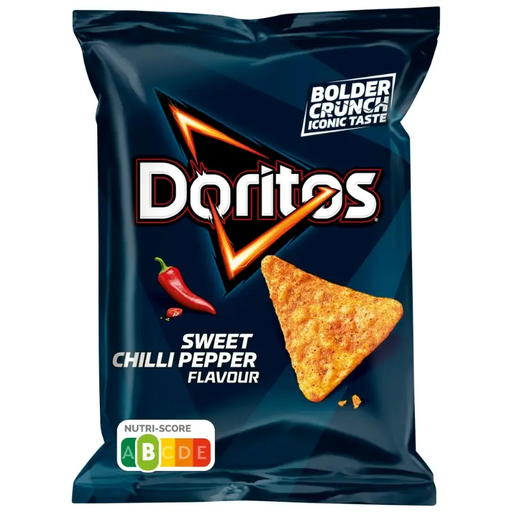
Doritos Sweet Chili Pepper Tortilla Chips, 44 g pack

Doritos Sweet Chili Pepper Tortilla Chips, 44 g

The product description presents these tortilla chips as a snack to enjoy on the go, making them suitable for an occasional snack. Check the packaging if organic certification is a buying requirement.

The product name lists 44 g. The product description lists gluten, soya and wheat; take any allergies and relevant school rules into account.

View at Joybuy

Frequently asked questions

Can you serve organic tortilla chips as a daily school breakfast?

Tortilla chips aren’t suitable as the basis for a daily school breakfast: the National School Breakfast recommends breakfast foods from the Dutch Wheel of Five, while the Netherlands Nutrition Centre places crisps outside it. An organic label doesn’t change the product category.

How can you identify organic tortilla chips?

Check the organic labelling on the exact pack. According to the European Commission, the EU organic logo is compulsory for prepacked food produced in the EU and sold as organic. The control code and an indication of the agricultural origin must also be shown. Imported organic products may use the logo voluntarily, so check the origin details too.

Do tortilla chips always contain gluten?

No, it depends on the variety. Albert Heijn labels AH Biologisch Tortilla chips naturel as gluten-free, while the ingredients information for Doritos Nacho Cheese 185 g lists wheat flour. Always check the exact variety on the current packaging.

What do the Dutch rules on allergen warnings mean?

Allergen information must appear on the label of prepacked products. The Netherlands Food and Consumer Product Safety Authority explains that rules on warnings about unintended presence have applied since 1 January 2026: manufacturers must assess risks and may only use a precautionary warning when there is an appropriate basis for doing so. A warning doesn’t mean the allergen is present in every pack.

Is the manufacturer’s stated portion automatically suitable for my child?

No. Don’t treat a manufacturer’s portion as personalised or age-specific nutritional advice. First compare products per 100 g, then decide whether the amount is right for the planned snack occasion.
