
Organic comes first
You want to be able to check the organic information, rather than relying on green packaging or a general claim. The European Commission and Skal Biocontrole explain the organic labels and control information to look for.


Start by checking the organic label: the EU organic logo should be accompanied by a control code and information about the origin of the agricultural ingredients, as explained by the European Commission. Then check the ingredients and allergen information, and separately make sure the mix is unsalted. A fruit and seed mix may work well for breakfast, but it’s made differently from a standard nut mix.
You want to be able to check the organic information, rather than relying on green packaging or a general claim. The European Commission and Skal Biocontrole explain the organic labels and control information to look for.
You’re looking for nuts to enjoy while watching TV, and consider salt, how much you serve yourself and any ingredients that matter to you or anyone else eating them, as well as the organic label. Voedingscentrum provides general information about unsalted nuts; allergen information should be on the label.
You want to use one pack on different occasions and are choosing between a standard nut mix and a mix with fruit and seeds. Albert Heijn lists these as separate products.
Start with the organic label, then decide whether the ingredients, allergens, occasions you’ll use it for or pack size matter most to you.
| What to consider | What should you check? | Who is this important to? |
|---|---|---|
| Organic label | Check for the EU organic logo, the code of the control body and the origin statement. According to the European Commission, use of the logo requires, among other things, at least 95% organic ingredients, as well as meeting additional conditions. | I want to be able to check why a product is described as organic. Verifiable organic information is a top priority for around 31% of consumers. |
| Ingredients and portion size | Check the pack to see whether the nuts are unsalted, and look at the nutritional information per 100 g. Decide how much to serve yourself; a pack isn’t automatically one portion. | If I’m mainly looking for unsalted nuts, I want to be able to make that choice separately from the organic certification. Around 25% of consumers put ingredients and portion size at the top of their list. |
| Allergens | Read the current ingredients and allergen information, including any warnings about possible unintended presence. NVWA explains the Dutch rules on allergen labelling and warnings. | If I need to consider a food allergy, whether my own or someone else’s, I want to check the current packaging. Allergen information is the top priority for around 19% of consumers. |
| TV time and breakfast | Check which ingredients are in the mix. A standard nut mix and a mix with fruit and seeds are different product types. | I want to use the same mix for TV snacking and breakfast, so I check the balance of nuts, fruit and seeds. Around 13% of consumers put versatility first. |
| Pack size | Compare the pack size and storage advice with how much you expect to use. Voedingscentrum’s storage guide offers general advice on storing food. | If I want to avoid buying more than I’ll use, I check the net weight and storage advice. A suitable pack size is the top priority for around 12% of consumers. |
An organic label alone doesn’t tell you whether a mix is unsalted, which ingredients it contains or how much you’ll want to serve yourself.
Check the organic information first, then read the ingredients, nutritional information and portion size separately.
The date and nut mix described by Albert Heijn also contains sunflower seeds, dates, figs and pumpkin seeds. Its ingredients are therefore different from those of a standard nut mix.
Check the full ingredients list and choose a mix that suits what you want to eat while watching TV or at breakfast.
Jumbo says that its older Organic Unroasted Unsalted Nut Mix, product code 311660ZK, is no longer available online. A listing for a different nut mix has product code 501935ZK.
Check the product code and the current packaging. Don’t assume that the ingredients or claims in one product listing also apply to another.
Albert Heijn provides details of an organic unroasted nut mix and a separate organic date and nut mix.
Jumbo lists a 150 g Organic Unroasted Nut Mix, as a reference for anyone looking for a smaller pack of a standard nut mix.
PLUS lists a 150 g pack of organic nut mix.
This Joybuy selection includes nut snacks, including a raw, unsalted nut mix. If you’re looking to buy organic, check the certification, control code and ingredients on the packaging; a product name alone isn’t a substitute for checking.
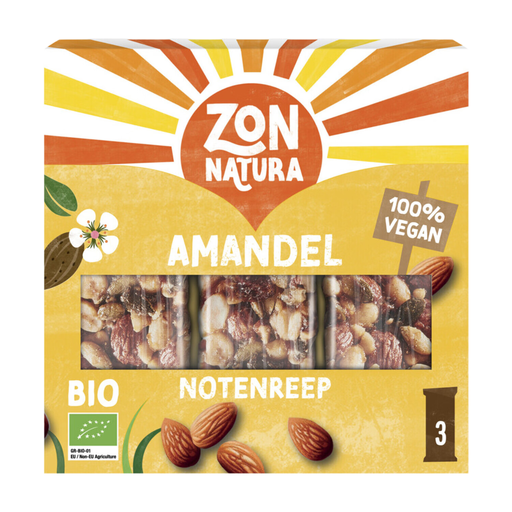 No image available
A nut bar for anyone looking for a snack at home or on the go.
The listed ingredients include peanuts, almonds, pumpkin seeds and raisins.
Contains peanuts and almonds.
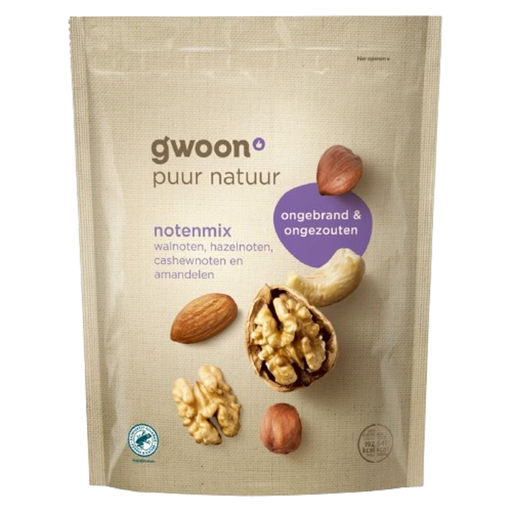 No image available
A raw, unsalted nut mix for snacking or adding to breakfast, salads and baked goods.
The ingredients list includes hazelnuts, walnuts, almonds and cashews; the product may contain traces of peanuts.
 No image available
Unsalted peanuts for snacking or using in recipes.
The product description lists 99% peanuts and sunflower oil.
Contains peanuts and may contain cashews.
For the EU organic logo, check the control body’s code and the statement showing the origin of the agricultural ingredients. According to the European Commission, use of the logo requires, among other things, at least 95% organic ingredients, as well as meeting additional conditions. Skal Biocontrole explains that businesses need an organic certificate to sell products as organic.
No. Voedingscentrum’s general nutritional guidance uses a 25 g handful, while packs may have a different net weight. So don’t automatically treat the whole pack as one portion.
Follow the storage advice on the packaging and, if needed, consult Voedingscentrum’s storage guide. Don’t assume that the same storage time applies to every nut mix and combination of ingredients.
Since 1 January 2026, new rules have applied in the Netherlands on how and when food businesses must warn about allergens that may unintentionally get into food, according to NVWA. This is separate from listing allergens as ingredients. If a food allergy is relevant, check the current packaging.