
Livraison le jour même et le lendemain

Qualité garantie

Débloquez vos offres de bienvenue: Livraison GRATUITE | Jusqu'à -80 % | 30 jours d'essai gratuits à JoyPlus
Téléchargez l'application
Those switching to organic cotton menstrual products often look for a softer material, fewer fragrances and a smaller material footprint. Yet green packaging does not tell the whole story. The key differences usually lie in absorbency, the exact composition and how you use the product.
This buying guide helps you compare organic tampons, sanitary pads with organic cotton and other sustainable menstrual products. The recommendations are based on verifiable product information, such as materials, size, quantity and the features stated by the manufacturer.
Check which part of the product is made from organic cotton. In sanitary pads, for example, it may refer only to the top sheet, while the absorbent core is made from other materials. That is not necessarily a problem, but it is important to read the product description carefully.
Tampon composition is often stated more clearly. The Yoni tampons in this selection are described as being made from certified organic cotton, including the string. Also check the certification and the information on the packaging for each product.
Using a tampon designed for heavy flow on a light day can be unnecessarily uncomfortable. Conversely, a medium-absorbency tampon may need to be changed more frequently during a heavy period. Choose the lowest absorbency suited to your flow and always follow the instructions on the packaging.
With sanitary pads, length, width, wings and the shape of the core all play a role. Overnight sanitary pads are generally longer or provide additional coverage, but check the stated use and size.
According to Yoni’s product description, the tampons are plastic-free, fragrance-free and biodegradable. The packaging also states that the individual wrappers and the underside of certain Yoni products are made from bioplastic. This does not automatically mean that every component is home-compostable under all conditions.
Do not flush menstrual products down the toilet. For the latest information, always check the packaging and your local waste-disposal guidelines.
For those who are sensitive to fragrance in personal-care products, fragrance-free sanitary pads are a practical filter. According to the product description, the Always Cotton Protection products in this guide are fragrance-free and feature a top sheet made from 100% organic cotton.
Yoni likewise states that its organic cotton tampons are fragrance-free. The product description also mentions that they are chlorine-free and hypoallergenic. These are stated product claims and do not guarantee that everyone will experience the product in the same way. Stop using the product if irritation occurs and consult a doctor if symptoms persist.
Tampons are often categorised using droplets or terms such as medium and heavy. The Yoni Medium is intended for regular-flow days and contains 16 tampons. According to the description, the Yoni Heavy is designed for heavier-flow days and also contains 16 tampons.
Compare the absorbency with the product you currently use, but do not rely on the name alone. Shape, fit and your personal menstrual pattern affect how often the product needs to be changed.
Sanitary pads with wings can help secure the pad to the sides of your underwear. The Always Cotton Protection Normal is intended for light to certain moderate-flow days, depending on the stated underwear size. The Long version provides greater length. The Night version is designed for overnight use and, according to the product description, is intended for moderate to heavy flow, depending on the size.
When buying, pay attention to:
The following popular options are grouped by use case. This makes it easier to see which product suits a regular-flow day, heavier flow or overnight use.
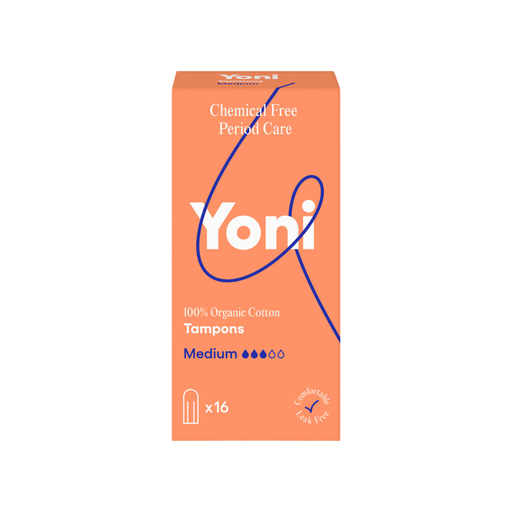
Why it suits this profile: A straightforward pack for regular-flow days and for anyone trying organic cotton tampons for the first time.
The variant specifies medium absorbency, making it more precise than a general claim covering “all days”.
16 count; certified organic cotton; described as fragrance-free and plastic-free.
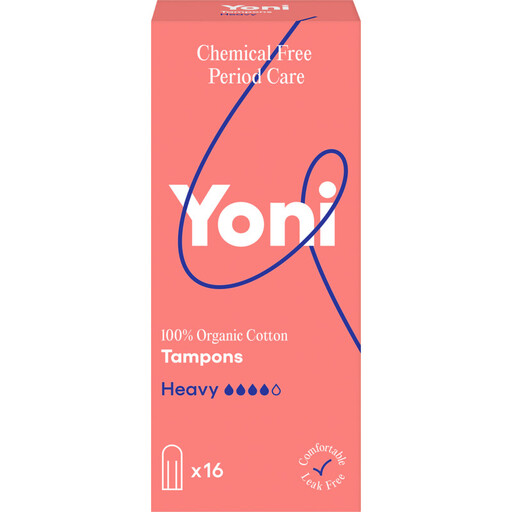
Why it suits this profile: Suitable for those specifically looking for organic tampons for heavier-flow days.
The Heavy designation makes the intended use clearer than offering one universal absorbency for the entire cycle.
16 count; certified organic cotton; described as fragrance-free and plastic-free.
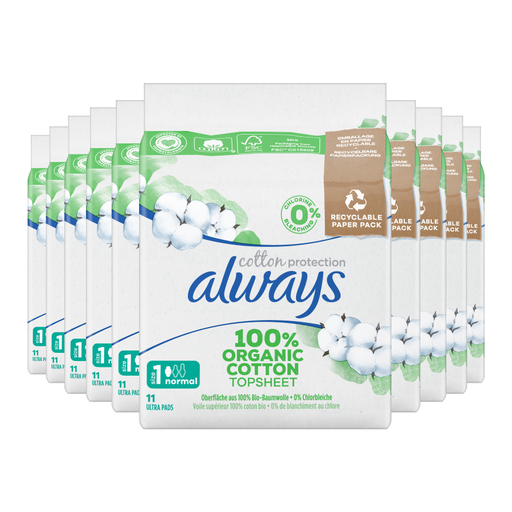
Why it suits this profile: A practical choice for light-flow days and everyday use, with extra hold provided by the wings.
The product name explicitly states Normal, wings and the quantity of 110.
Top sheet made from 100% organic cotton; described as fragrance-free and supplied in paper packaging.
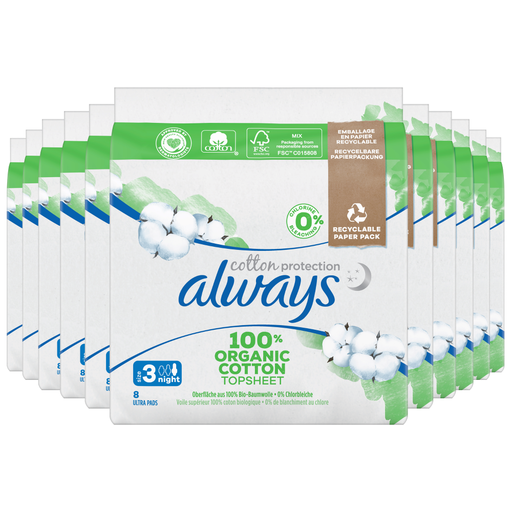
Why it suits this profile: Designed for those looking for longer coverage overnight or during heavier-flow days.
The variant is clearly labelled Night, rather than using a Normal product as an overnight option.
96 count; wings; top sheet made from 100% organic cotton and described as fragrance-free.
Do not compare only the price of the box. Divide the price by the number of tampons or sanitary pads, then consider the variant you will actually use. A large pack is not good value if the absorbency or fit is unsuitable.
For many users, a combination works well: medium organic cotton tampons for regular-flow days, heavy tampons for heavier-flow days and sanitary pads as additional protection or for overnight use. Check the current stock, packaging and usage instructions for each product before ordering.
Browse our current range of organic cotton wool and compare products by material, size, absorbency and occasion.
That depends on the absorbency variant and your flow. According to the product description, Medium is intended for regular-flow days, while Heavy is designed for heavier-flow days. Use the lowest suitable absorbency and follow the instructions on the packaging.
Not necessarily. For some products, organic cotton refers only to the top sheet. Check the complete composition and the specific plastic-free claim. According to the product description, the Always Cotton Protection variants feature a top sheet made from 100% organic cotton, while Yoni describes the tampons mentioned above as plastic-free.
Store tampons and sanitary pads in a dry, clean place, preferably in their original packaging. Check the expiry or packaging information before use. Dispose of used products with general waste and do not flush them down the toilet.
