Organic certification doesn’t automatically make cornflakes a suitable choice for a breakfast where you’re watching your carbohydrate intake. The Diabetes Fund recommends eating low-fibre cornflakes as little as possible, and suggests wholegrain porridge oats and muesli as alternatives. If you do want cornflakes, compare the carbohydrate, sugar and fibre content per 100 g, then check how much you actually eat per portion.
Who is this decision relevant to?
People keeping an eye on carbohydrates and fibre
If you’re considering cornflakes for a diabetes-friendly breakfast, ‘no added sugar’ doesn’t tell you enough. The Diabetes Fund also recommends checking the fibre content and suggests wholegrain porridge oats and muesli as alternatives to low-fibre cornflakes.
People looking for organic products with a short ingredients list
You want to be able to identify an organic product and know what it contains. Check for the EU organic logo, the code of the inspection body and the ingredients list. Organic production alone doesn’t tell you anything about the amount of carbohydrates or fibre.
People who need to check for allergens
The label on the exact pack matters to you. Albert Heijn lists soya in AH Biologisch Cornflakes; Jumbo warns that Smaakt Bio Cornflakes Ongezoet may contain several allergens. Organic certification doesn’t replace this check.
What should you consider when choosing?
First decide whether you want to stick with cornflakes or compare them with wholegrain porridge oats or muesli. Then check the nutritional information and ingredients on the current pack of each breakfast cereal.
| What to consider |
What to check when buying |
Who it matters to |
| Carbohydrates and fibre |
Compare carbohydrates, sugars and fibre per 100 g, then check the amount in your own portion. |
If I want to fit cornflakes into breakfast, I need to know more than just the sugar content on the label. For around 50% of consumers, the combination of carbohydrates, fibre and portion size would be the main priority. |
| Organic certification and ingredients |
Check for the EU organic logo, the code of the inspection body and the ingredients list. |
I want to be able to see whether my cornflakes are certified organic and what ingredients they contain. This would be the top priority for around 30% of consumers. |
| Allergens and what you eat with your breakfast |
Read the ingredients and allergen warnings on the pack, and consider what else you eat with your cornflakes. |
If I need to avoid an allergen, I can’t rely on the product name or an organic logo. An estimated 20% of consumers would put the allergen profile and how cornflakes fit into breakfast first. |
Common mistakes
-
Assuming organic means low in carbohydrates
The EU organic logo relates to organic production, not nutritional value. Albert Heijn lists 80 g of carbohydrates per 100 g for AH Biologisch Cornflakes; Jumbo lists 85 g per 100 g for Smaakt Bio Cornflakes Ongezoet.
Compare the nutritional information per 100 g and check how much you eat per portion. If fibre is your main priority, compare them with wholegrain porridge oats or muesli too, as the Diabetes Fund recommends.
-
Focusing only on ‘no added sugar’
A product with no added sugar can still be high in carbohydrates. For the two organic cornflakes mentioned, Albert Heijn and Jumbo list 80 g and 85 g of carbohydrates per 100 g respectively.
Read the full nutritional information and consider your portion alongside the rest of your breakfast.
-
Assuming an organic label tells you about allergens
AH Biologisch Cornflakes lists soya, despite being labelled gluten-free. For Smaakt Bio Cornflakes Ongezoet, Jumbo warns that it may contain, among other things, cereals containing gluten, milk, nuts, peanuts, sesame and soya.
Check the ingredients and allergen warnings on the exact pack every time you buy it.
Brands to consider
AH Biologisch
Albert Heijn lists AH Biologisch Cornflakes in a 300 g pack and labels it gluten-free.
- The product information lists 80 g of carbohydrates, 0.3 g of sugars and 5 g of fibre per 100 g.
- The product contains soya; a gluten-free label doesn’t mean it’s suitable for everyone with an allergen requirement.
Smaakt Bio
Jumbo lists Smaakt Bio Cornflakes Ongezoet in a 300 g pack, made with organic maize.
- The nutritional information lists 85 g of carbohydrates, 1.0 g of sugars and 3.1 g of fibre per 100 g.
- The product information warns that it may contain, among other things, cereals containing gluten, milk, nuts, peanuts, sesame and soya.
Kellogg's
The Kellogg's Corn Flakes listed by Jumbo are regular cornflakes; this standard variety isn’t an organic option in this comparison.
- Jumbo lists nutritional values and ingredients for this variety, so you can compare the label.
- The listed ingredients include sugar and malted barley extract; the nutritional information gives 8.0 g of sugars, 3.0 g of fibre and 1.1 g of salt per 100 g.
Golden Bridge
ALDI lists Golden Bridge Cornflakes as part of its breakfast cereal range.
- If you’re considering this brand, you can compare your chosen pack with other cornflakes.
- Before comparing a variety with the organic options, check the pack for an EU organic logo, nutritional information and allergen details.
Muesli as an alternative on Joybuy
This product selection is muesli with nuts and seeds, not cornflakes. It’s worth considering if you’d like to look at another breakfast cereal alongside organic cornflakes. Before choosing, compare the nutritional information and the label on the pack.
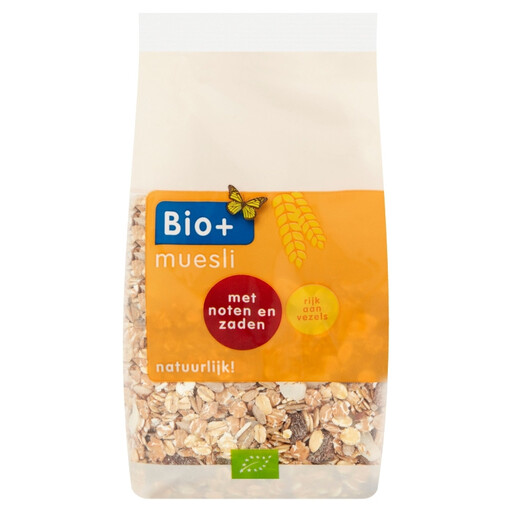 Image unavailable
Bio+ B+ Muesli Nuts and Seeds 450 g
Worth comparing if you’re also considering muesli with nuts and seeds instead of cornflakes.
Pack size: 450 g. Check the label for the nutritional information, allergens and organic details that matter to you.
View on Joybuy
Frequently asked questions
Are organic cornflakes automatically suitable for people with diabetes?
No. The EU organic logo tells you about organic production, not the carbohydrate, sugar or fibre content. The Diabetes Fund recommends checking factors such as fibre in breakfast cereals and eating low-fibre cornflakes as little as possible.
How can I tell if cornflakes are certified organic?
Check the pack for the EU organic logo, the code of the inspection body and a statement showing where the agricultural raw materials come from. According to the European Commission, use of the organic logo is linked to certification and requirements for organic ingredients. Also read the nutritional information when choosing your breakfast.
What should I check if I need to avoid gluten or soya?
Read the ingredients and allergen warnings on the exact pack. Albert Heijn labels AH Biologisch Cornflakes as gluten-free, but lists soya as an allergen; Jumbo warns that Smaakt Bio Cornflakes Ongezoet may contain cereals containing gluten and other allergens.
What should I compare besides the nutritional values per 100 g?
Check how much cornflakes you actually eat and what else you add to your breakfast. Values per 100 g make products easier to compare, while your portion and the rest of the meal determine what you eat overall.


