What should you look for when buying?
Assess organic certification and fat content as two separate characteristics; the nutritional information for the exact variant tells you what you can compare.
| What to consider |
What should you check? |
Who is this important for? |
| Total fat |
Compare the total fat per 100 g for the exact flavour variant. According to the European Commission, the ‘low fat’ claim for solid foods applies to products containing no more than 3 g per 100 g. |
If I’m watching my total fat intake, I compare the exact variant per 100 g and keep an eye on saturated fat separately. Around 34% of consumers put total fat first. |
| Organic certification |
Check the organic labelling on the product. The EU organic logo includes, among other things, a control body code and an indication of the agricultural origin. |
When organic production is my main criterion, I check the certification mark on the packet and assess the fat content separately. Around 33% of consumers prioritise certification. |
| Serving size |
Weigh your portion and multiply the nutritional value per 100 g by the portion weight, then divide by 100. Use the values on your packet. |
If I want to measure how much I have each time I snack, I calculate it using the amount I actually eat. Around 20% of consumers prioritise portion control. |
| Shopping costs |
Compare specific products on the same weight basis, and check the certification and nutritional information for each product again. |
If I’m watching the cost, I want to make a fair comparison without choosing a product that doesn’t meet my other criteria. Around 13% of consumers prioritise the cost of suitable groceries. |
Coated peanuts at Joybuy
This Joybuy selection features coated peanut variants with nutritional values listed per 100 g. Check the organic certification separately on the packaging of the exact variant.
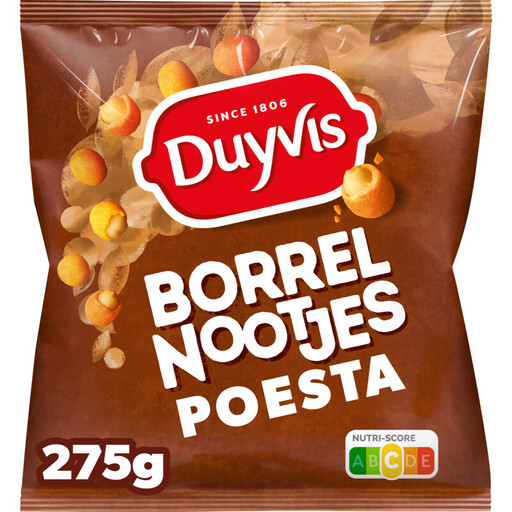 No image available
Duyvis Poeta Coated Peanuts - 275 g
The product description refers to seasoned coated peanuts with a crunchy coating.
Listed fat content: 34 g per 100 g. For solid foods, the European Commission sets the maximum for the ‘low fat’ claim at 3 g per 100 g.
Joybuy
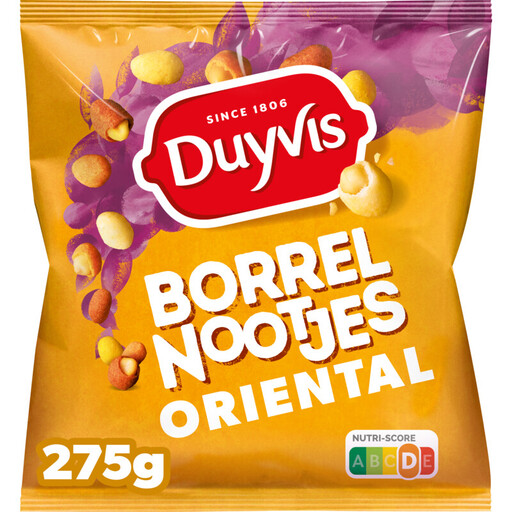 No image available
Duyvis Oriental Coated Peanuts - 275 g
The product description refers to crunchy, seasoned coated peanuts with a curry flavour.
Listed fat content: 34 g per 100 g. For solid foods, the European Commission sets the maximum for the ‘low fat’ claim at 3 g per 100 g.
Joybuy
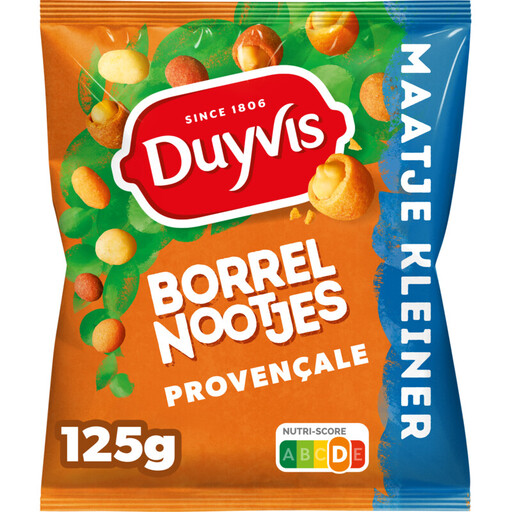 No image available
Duyvis Bran Nuts Provencale - 125 g
The product description refers to coated peanuts with a crunchy coating and an onion and garlic flavour.
Listed fat content: 33 g per 100 g. For solid foods, the European Commission sets the maximum for the ‘low fat’ claim at 3 g per 100 g.
Joybuy
 No image available
Duyvis Coated Peanuts Provençal - 275 g
The product description refers to crunchy coated peanuts with a Provençal flavour.
Listed fat content: 35 g per 100 g. For solid foods, the European Commission sets the maximum for the ‘low fat’ claim at 3 g per 100 g.
Joybuy
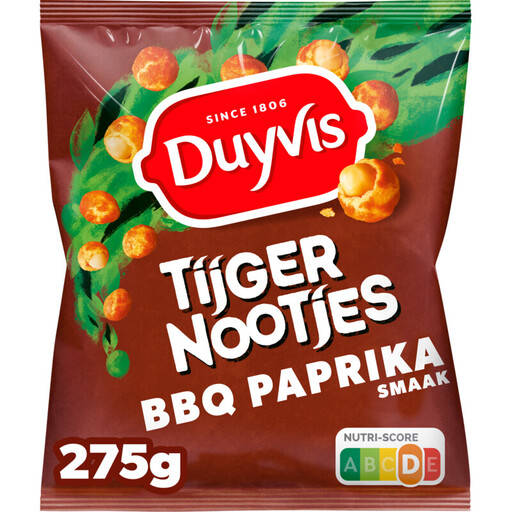 No image available
Duyvis Tigernut BBQ Paprika - 275 g
The product description refers to crunchy coated peanuts with a BBQ and paprika flavour.
Listed fat content: 33 g per 100 g. For solid foods, the European Commission sets the maximum for the ‘low fat’ claim at 3 g per 100 g.
Joybuy
Frequently asked questions
Does ‘organic’ mean that coated peanuts are low in fat?
No. Assess organic certification and fat content separately. According to the European Commission, the ‘low fat’ claim for solid foods applies to products containing no more than 3 g of fat per 100 g.
How do you calculate the fat in your portion?
Multiply the fat content per 100 g by the weight of your portion, then divide by 100. For the Duyvis Cocktail variant described by HANOS, a 25 g portion with 34 g of fat per 100 g works out to 8.5 g of fat. This is a calculation, not dietary advice.
What should you check if you have a food allergy?
Check the ingredients and allergen information for the exact variant. The NVWA requires clear allergen information. For the Duyvis Cocktail variant described, HANOS lists peanuts, gluten and milk as present; mustard, nuts and soya may also be present. This information does not automatically apply to other flavours.
How should you store an opened packet of coated peanuts?
Follow the storage advice on the exact packaging. For the Duyvis Cocktail variant described, HANOS recommends storing it in a cool, dry place and using an airtight, lightproof container after opening.
Are unsalted nuts a low-fat alternative to coated peanuts?
Not necessarily: unsalted nuts are not automatically low in fat. The Voedingscentrum lists 14.9 g of fat, including 1.6 g of saturated fat, in a 25 g handful of unsalted nuts, and includes unsalted nuts in the Dutch Wheel of Five. These are different assessments.


