If you’re looking for soft bread to toast, don’t automatically choose a small pack of toast or crackers: these are different products from half a loaf. If you’d rather have something crunchy for a small household, a 100 g pack of sesame toast keeps the total quantity down, while mini crackers in individual packs let you open only what you need. For either option, check the organic certification, ingredients and label if salt or iodine matters to your choice.
Who is this choice relevant to?
Small households that don’t want to open everything at once
If you’re shopping for one or two people, it makes a difference whether you want a small total quantity or prefer to open several packs separately. Jumbo lists Van der Meulen sesame toast as 100 g; Albert Heijn lists eight inner packs for its mini crackers.
Shoppers checking for an organic label
If you want to buy organic, check the label rather than relying on the product name alone. According to Skal Biocontrole, the EU organic logo is compulsory on pre-packed foods produced in the EU and sold as organic.
Consumers comparing ingredients and nutritional information
Sesame, soya, wheat and other listed ingredients may affect your choice of product. Compare salt on a like-for-like basis, such as per 100 g. If the type of salt matters to you, read the ingredients list: the word ‘salt’ alone doesn’t tell you whether baker’s salt or iodised salt was used.
What should you look for?
First decide whether you’re looking for half a loaf of soft bread or crunchy toast or crackers. Then, within the product type you’ve chosen, compare the certification, how much you’ll open at once and the information on the label.
| What to look for |
What to check before buying |
Who it matters most to |
| Organic labelling |
Check for the EU organic logo and the organic claim on the packaging. |
I want to see what the organic claim on my toast or crackers is based on. For around 42% of these consumers, checking this is the top priority. |
| Quantity and inner packs |
Compare the total weight with the number of individual packs; a smaller pack isn’t the same as a pack divided into portions. |
I only have toast occasionally and want to choose how much I open each time. Around 33% of these consumers prioritise finding a suitable quantity. |
| Ingredients and nutritional information |
Read the allergen information and compare salt per 100 g; if you have a question about iodine, check which type of salt is listed. |
If I need to avoid certain ingredients or want to know the type of salt, the label is what decides it for me. This is the top priority for around 25% of these consumers. |
Common mistakes
-
Mistaking a small pack of toast for half a loaf
Organic sesame toast and mini crackers are crunchy products sold by weight. They don’t automatically serve the same purpose as soft, sliced bread that you toast yourself.
Decide which type of product you want before comparing pack sizes.
-
Assuming organic labelling tells you about allergens
Jumbo lists wheat, sesame and soya in its organic sesame toast, with milk as a possible allergen. Albert Heijn lists, among other things, cereals containing gluten in its organic mini crackers and mentions possible traces of sesame, soya and mustard.
If you need to avoid an ingredient, check the current ingredients and allergen information on the packaging.
-
Taking ‘salt’ as proof that iodine has been added
The Voedingscentrum explains that bread in the Netherlands provides iodine because special baker’s salt with added iodine is used. This doesn’t tell you which type of salt is used in a specific toast or cracker product.
Check whether the ingredients list for that product mentions baker’s salt or iodised salt.
Brands to consider
Albert Heijn / AH Biologisch
AH Biologisch offers plain mini crackers that can be a crunchy alternative to toast.
- Albert Heijn lists a 250 g pack, divided into eight packs of five double crackers, and displays the EU organic logo.
- These are crackers, not half a loaf. The product information lists cereals containing gluten, including barley and wheat, and possible traces of sesame, soya and mustard.
Van der Meulen
Van der Meulen makes Melba Organic Sesame Toast, which Jumbo lists in a 100 g pack.
- The total quantity is smaller than that of the AH mini crackers mentioned here; the product information confirms organic certification.
- According to Jumbo, the sesame toast contains wheat, sesame and soya, may contain milk and has 2.1 g of salt per 100 g. Don’t assume it comes in separate inner packs.
Bolletje
Bolletje offers crackers and crispbreads, among other products: other crunchy options to consider separately.
- Bolletje’s brand range includes various crackers and crispbread products.
- Check the organic logo and pack size for each individual product; the brand name alone doesn’t tell you either.
Crackers at Joybuy
This product selection is for a small pack of crunchy crackers, not soft bread or literally half a loaf. If you want to buy organic, check for the certification logo on the packaging.
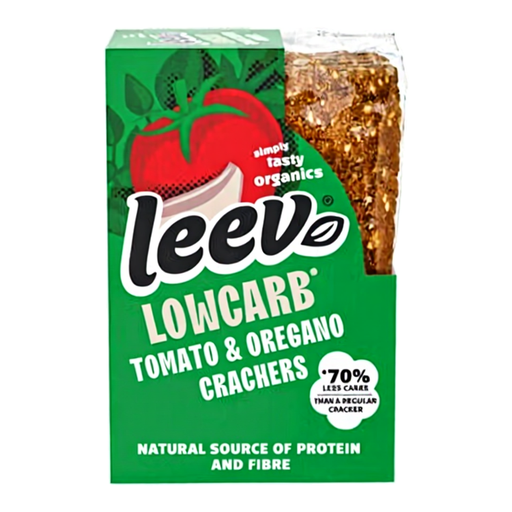 Image unavailable
Leev tomato and oregano crackers 80 g
For anyone looking for a small total quantity of crackers rather than half a loaf. The product name lists 80 g. Before buying, check the label for the organic logo, current ingredients and allergens and, if it matters to your choice, the type of salt used.
View at Joybuy
Frequently asked questions
How can I identify pre-packed organic toast?
Check for the EU organic logo and the organic claim on the label. Skal Biocontrole says this logo is compulsory on pre-packed foods produced in the EU and sold as organic.
Does a 100 g pack always prevent more waste than a larger pack?
Not necessarily: 100 g is a smaller total quantity, while a larger pack with separate inner packs may be more suitable if you want to open some at different times. Choose according to how often you eat toast or crackers.
Does organic toast automatically contain added iodine?
You can’t tell from the word ‘organic’ or from the word ‘salt’. The Voedingscentrum links the iodine in bread in the Netherlands to special baker’s salt with added iodine; for toast or crackers, check the ingredients list to see which type of salt is listed.
How should I store toast or mini crackers after buying them?
Follow the storage advice and use-by date on the packaging. Albert Heijn recommends storing its mini crackers in a cool, dry place; after opening, also check how to keep the individual packs or opened packaging sealed.


