
A small study snack
You’re looking for dried fruit that you can portion out in advance. The ingredients and how much you eat matter more than claims about an energy boost.


Organic raisins are a good choice if you want to use the same dried fruit as a small study snack and a breakfast topping. Choose unsweetened organic mango if you prefer mango strips. Check the organic labelling, ingredients and allergen information on the exact pack. Unsweetened doesn’t mean sugar-free: the Netherlands Nutrition Centre recommends eating no more than 20 g of dried fruit a day.
You’re looking for dried fruit that you can portion out in advance. The ingredients and how much you eat matter more than claims about an energy boost.
You want to enjoy the same fruit at breakfast and during a study break. Raisins and dried mango differ in fruit type and form, so compare product information from Jumbo, PLUS and Albert Heijn.
You want to be able to check the organic labelling on the specific product, and look at its certification mark, ingredients and packaging. Skal Biocontrole explains that ‘organic’ is a legally protected term.
When choosing organic dried fruit for study breaks and breakfast, consider the product labelling, portion size and how you plan to use it. Skal Biocontrole states that the EU organic logo is mandatory on prepacked foods produced within the EU and sold as organic.
| Consideration | What to look for | Who is this most relevant to? |
|---|---|---|
| Portion size and ingredients | Read the ingredients and nutrition table, and weigh out a small portion in advance. | If I want a little something to eat while studying, I check the ingredients and portion size; around 36% of consumers prioritise these two things. |
| Organic labelling | Check the EU organic logo and the organic product information on the packaging. | When I buy organic, I want to be able to find the labelling on that exact pack; around 36% of consumers prioritise verifiable organic origins. |
| Using it for breakfast and studying | Compare the type of fruit, pack size and storage instructions with when you plan to eat it. | I want to enjoy the same fruit at breakfast and during a study break; around 28% of consumers are mainly looking for this combination. |
Unsweetened dried mango still contains sugars from the fruit. Albert Heijn lists its own organic mango as containing 0 g of added sugars and 61 g of total sugars per 100 g.
Read both the ingredients and nutrition table, and portion out how much you want to eat in advance.
Jumbo’s product information lists a 15 g portion; AH and PLUS list 25 g. The Netherlands Nutrition Centre recommends eating no more than 20 g of dried fruit a day.
Use the product portion to understand its nutritional value, and weigh out your portion in line with the Netherlands Nutrition Centre’s advice.
The pack for the AH mango checked here states that it may contain peanuts and nuts. Organic labelling alone doesn’t tell you anything about allergens.
Check the allergen information on the exact pack before buying.
The product information for AH Biologisch Mango gedroogd & ongezoet describes a mango option for anyone who prefers dried mango to raisins.
Jumbo’s organic Sultana raisins are a product-focused option for anyone who wants to enjoy raisins in small portions.
PLUS sells BIO+ Sultana raisins in a 250 g pack for anyone looking for organic raisins.
The Joybuy products below are fruit products described in their product information as snack or breakfast options. Check the type of fruit, organic labelling, ingredients and any age or allergen information on each pack.
 No image available
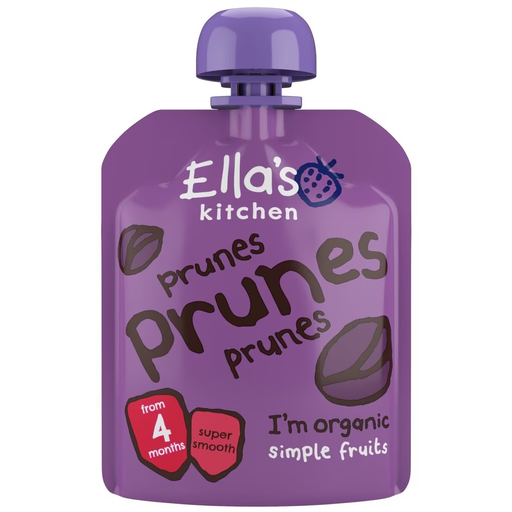
The product title specifies BIO Prunes; check the pack to make sure the product form and organic labelling match what you’re looking for.
The title lists 70GR and 4M+; check the usage and age guidance on the pack before choosing this product.
 No image available
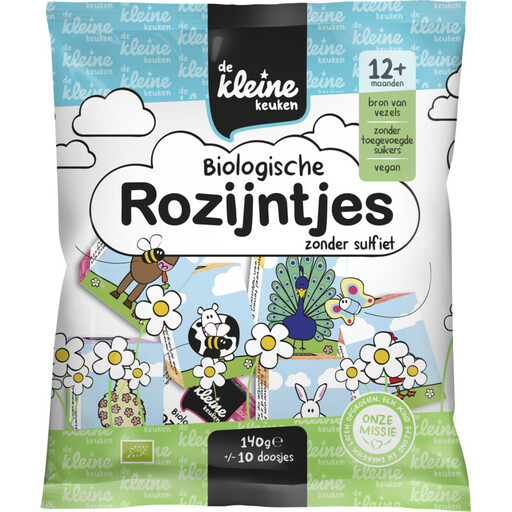
The product information describes raisins for snacking or adding to breakfast cereal; check the organic labelling on the exact pack.
The pack contains 140 g. The ingredients list raisins and sunflower oil; nutritional values are also given per 15 g portion.
The product title specifies 12M+. According to the product information, a small stem or stone may remain despite checks.
 No image available
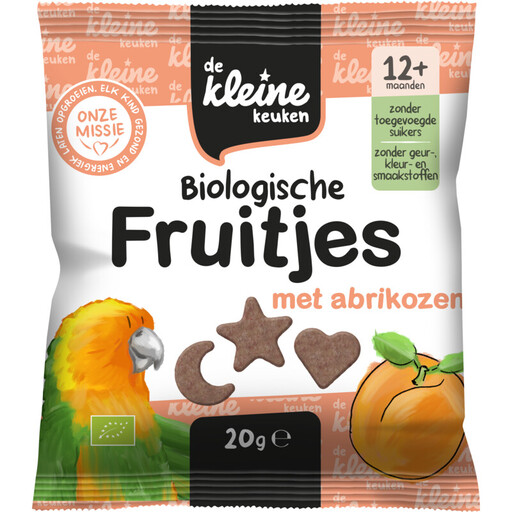
The product information describes fruit pieces with apricot, date and banana as a snack; check the ingredients and portion size for your needs.
The listed composition is 44% dried apricots, 44% dates, 8% bananas and 4% rice flour. The snack portion is 20 g.
The product information gives an age indication of 12 months and states that it may contain traces of nuts.
 No image available
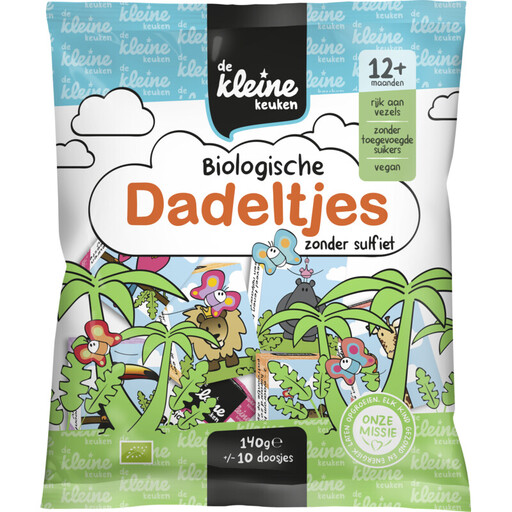
The product title describes dates as a snack; check that the product form and age indication suit the intended use.
The ingredients list 95% dates and 5% rice flour. Nutritional values are given per 14 g.
The product title specifies 12+. The product information advises keeping a child sitting upright and supervising them while they eat.
Check the EU organic logo and the organic product information on the pack. Skal Biocontrole describes the term ‘organic’ as legally protected. The EU organic logo is mandatory for prepacked foods produced within the EU and sold as organic; this specific requirement does not automatically apply to every imported pack.
No. Unsweetened does not mean sugar-free. Albert Heijn lists its own organic mango as containing 0 g of added sugars and 61 g of total sugars per 100 g, so check both the ingredients and the nutrition table.
The Netherlands Nutrition Centre recommends eating no more than 20 g of dried fruit a day. Weigh out a portion in advance and include any dried fruit you eat at breakfast in your daily total. Product portions, such as 15 g for Jumbo and 25 g for AH and PLUS, are product-specific figures and do not replace this advice.
Check the allergen information on the exact pack. The AH mango checked here states that it may contain peanuts and nuts, so don’t choose a product based only on the words organic or unsweetened.
Follow the storage instructions on your product’s packaging. The raisin and mango products checked here say to store in a cool, dry, dark place; Albert Heijn also gives a limited shelf life after opening.