
Older people looking for an organic breakfast staple
For anyone who wants plain oats and would like to check the organic certification on the packaging, rather than relying on the product’s appearance.


Choose organic wholegrain oats with a verifiable EU organic logo if you’re looking for a simple breakfast staple. For an older person, also check the nutritional information per serving, the texture they prefer and any allergens. If they’re losing weight unintentionally or having difficulty swallowing, oats alone aren’t the answer and you should contact their GP.
For anyone who wants plain oats and would like to check the organic certification on the packaging, rather than relying on the product’s appearance.
For anyone who wants to compare fibre content and adjust their porridge to a texture that’s easy and pleasant to eat. Oats are just one part of the overall diet.
For anyone looking for a breakfast that can be enriched with suitable ingredients. If someone is losing weight unintentionally or you suspect malnutrition, the Netherlands Nutrition Centre advises contacting their GP.
Start by checking the organic label if that’s a deciding factor. Then consider whether the ingredients, nutritional information and preparation method are suitable for the person who’ll be eating the oats.
| What to consider | What to check | Who it matters to |
|---|---|---|
| Organic label | Check the EU organic logo, the control code and the ingredients list. The European Commission says the organic logo is intended for products certified as organic by an authorised body. | I want to know what the organic label is based on and whether I’m buying plain oats. Around 40% of consumers prioritise verifiable organic origins. |
| Fibre and wholegrain oats | Compare the ingredients and the stated amount of fibre per 100 g and per serving. | For my daily breakfast, I want to know how much fibre is in the amount I actually eat. This is a key consideration for around 30% of consumers. |
| Nutritional value for a reduced appetite | Check the protein and energy per serving, and consider the ingredients used to prepare the oats. | If someone isn’t eating much, I want to assess what the whole breakfast provides, not just the dry oats. Around 20% of consumers give nutritional value the highest priority. |
| Preparation and allergens | Check the preparation instructions, the desired texture and the current allergen information on the packaging. | I need a breakfast that’s easy to prepare or suitable for a necessary allergen restriction. For around 10% of consumers, this practical suitability is their main concern. |
Organic certification tells you about how a product is made, not whether a serving suits someone’s appetite, nutritional needs or ability to eat.
Use the certification as one factor in your choice, and also consider the nutritional information and how easy the prepared meal is to eat.
Even oats with a single main ingredient can contain oats and list other allergens that may be present on the label.
If you have a diagnosed allergy or coeliac disease, check the current packaging and follow your personalised medical advice; don’t rely on the product name alone.
Short preparation time and organic certification are separate product features. The Quaker Oats Express variety described here isn’t labelled as organic.
Compare the preparation instructions and check the certification separately if organic origins matter to you.
Choosing a different type of oats won’t address the cause of ongoing poor appetite or unintentional weight loss.
If you suspect malnutrition, contact a GP, as advised by the Netherlands Nutrition Centre. Ask them to assess what dietary changes may be appropriate.
These examples highlight differences between specific oat products; the features listed don’t necessarily apply to every product from the same brand.
The supermarket’s own brand offers organic wholegrain oats in a 500 g pack, as an example of plain oat flakes.
AH Biologisch Havermout is an example of an own-brand product made with wholegrain oat flakes.
The standard oats and Oats Express servings described here are most relevant if you’re looking for regular wholegrain oats or a quick preparation time.
The brand offers organic oat products with different ingredients, including one product made with oats and spelt.
These oat products may be suitable if you’re looking for a simple breakfast staple with an organic label. Before buying, check the certification, ingredients and allergens on the packaging.
 No image available
An oat product for anyone who wants to put together their own breakfast. The pack contains 500 g; if you prefer organic products, check the EU organic logo and control code on the label.
 No image available
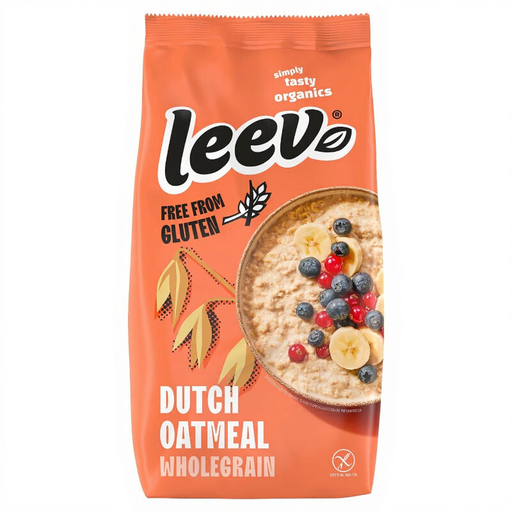
Oats for anyone who wants to choose the ingredients for their own breakfast, in a 450 g pack. Product descriptions give conflicting information about gluten: if you have coeliac disease or need to avoid gluten, don’t use this product as a gluten-free option without checking the current packaging.
Check the EU organic logo and the control body’s code on the packaging. The European Commission says the organic logo can be used on products certified as organic by an authorised body. Also read the ingredients list to see what type of oats you’re buying.
No. Organic oats alone don’t tell you whether someone’s overall diet meets their needs. If they’re consistently eating very little, losing weight unintentionally or you suspect malnutrition, the Netherlands Nutrition Centre advises contacting their GP.
Yes. Check the current ingredients and allergen information for each product. The oat products described list oats or gluten, and some also warn of the possible presence of other allergens. If you have coeliac disease or a diagnosed allergy, make your choice based on the information on the individual pack.
A portion pack can make measuring easier, but also compare the preparation method and the texture of porridge you prefer. Albert Heijn gives a preparation time of around two minutes for plain Quaker Oats Express. Check separately whether a quick-cook variety also meets your preference for organic products.