
Walkers who care about organic production
You want to choose peanuts as part of your regular shop and be able to verify their organic status. The European Commission sets out the requirements for using the EU organic logo.


Want to take organic peanuts on a walk? Check the organic labelling on the exact pack, then consider separately whether the ingredients and portion size suit you. For a short walk, take a measured amount in a tightly sealed container. For longer outings, peanuts should be just one part of your food and drink plan.
You want to choose peanuts as part of your regular shop and be able to verify their organic status. The European Commission sets out the requirements for using the EU organic logo.
You’re looking for unsalted peanuts that you can portion out in advance and take with you. Wandel.nl offers practical snack tips, while the Netherlands Nutrition Centre advises storing peanuts in a tightly sealed container in a cool, dark and dry place.
You’re walking for several hours or days and want to include peanuts in a wider plan for food and drink. Sportzorg explains that food and drink are part of preparing for a multi-day walking trip.
First check that the organic labelling applies to the exact product. Then look at the ingredients, portion size and how much you’ll use at home.
| What to consider | What should you check? | Who should pay particular attention? |
|---|---|---|
| Organic labelling | Where applicable, check for the EU organic logo, the inspection code and the indication of agricultural origin. | I want to be able to check that the organic labelling applies to this product, rather than relying on words such as ‘pure’. Around 36% of consumers give verifiable organic production their highest priority. |
| Ingredients and salt | Read the ingredients list and check whether the peanuts are unsalted if that’s what you prefer. | I want to know what else is in my snack besides peanuts and whether the ingredients suit my preferences. Around 29% of consumers prioritise ingredients and salt above other purchasing factors. |
| Portioning and storage | Check the net weight and take a measured portion with you in a tightly sealed container. | I want to take a suitable amount with me and store the rest properly at home. Around 21% of consumers give portion size and storage their highest priority. |
| Quantity and routine | Compare the net weight with how many peanuts you need for walks and for use at home. | I want to choose a pack that fits my usual shopping and walking routine, without taking more than I need. Around 14% of consumers give this a top priority. |
A descriptive term on the packaging is not, by itself, proof of organic certification.
Check the organic labelling on the exact product; don’t assume it from the supermarket’s name.
An unsalted product may contain other ingredients too. For example, Duyvis lists peanuts and sunflower oil for its Pinda’s Ongezouten variety.
Read the full ingredients list, then decide whether the product suits your preferences.
The amount in a shop-bought pack isn’t automatically the amount you’ll want to take on a single walk.
Portion it out in advance and keep the rest tightly sealed. For a long outing, make a wider plan for food and drink too.
A product page for AH Biologisch Pinda’s ongezouten 200 g listed organic labelling; it also stated that the product had been discontinued.
The manufacturer lists a 235 g unsalted peanut variety.
The retailer’s specification describes a 250 g unsalted variety.
The product information describes unsalted peanuts in a 300 g stand-up pouch.
The retailer’s specification describes a 250 g pack of roasted, unsalted peanuts.
These product cards show peanuts for snacking. Don’t assume a product is organically certified without checking the labelling on the exact pack.
 No image available
The product information describes unsalted, roasted peanuts, with 100% peanuts as the ingredient.
Net weight: 210 g.
 No image available
The ingredients information lists peanuts as an ingredient. The peanuts are in their shells and need to be shelled before eating.
Net weight: 500 g.
 No image available
The title describes unsalted peanuts; according to the product information, the ingredients list also includes sunflower oil.
Net weight: 250 g.
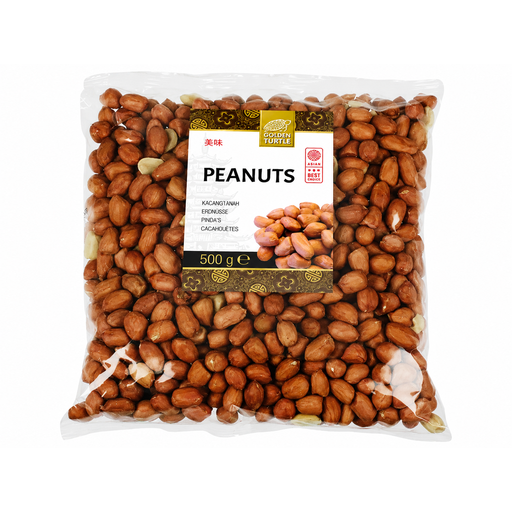 No image available
The product information describes peanuts with their skins on and recommends roasting them before eating as a snack.
The ingredients information lists peanuts only. Net weight: 500 g.
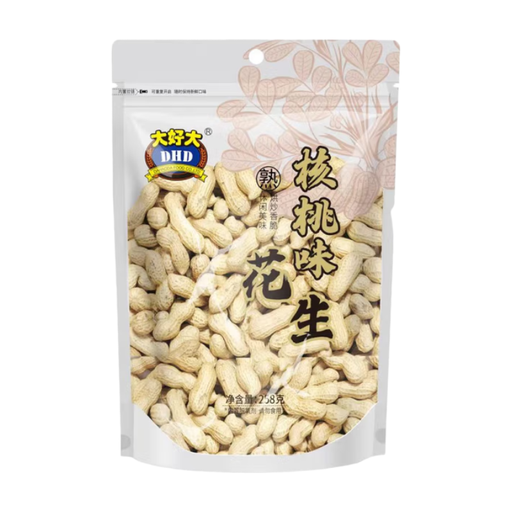 No image available
The product information mentions individual packs for taking on the go.
The listed ingredients include sugar, salt, soya lecithin and walnut flavouring. Net weight: 258 g.
It depends on where they come from and how they’re packaged. According to the European Commission, the logo is compulsory for pre-packed organic food produced in the EU and sold as organic; for imported products, its use is optional. If the logo is used, the packaging should also show the inspection code and the indication of agricultural origin.
Check the organic labelling and ingredients list separately. Organic production doesn’t automatically tell you whether peanuts are unsalted or what other ingredients have been added.
Peanuts are an allergen and, according to the Netherlands Food and Consumer Product Safety Authority (NVWA), allergen information must appear on the label of pre-packed food. Since 1 January 2026, Dutch rules have applied to warnings about unintended allergens caused by cross-contamination; this type of warning is different from listing peanuts as an ingredient.
No, that amount is a snack portion, not enough provisions for a full day. Wandel.nl suggests around 25 g of nuts per person as a snack; for a walk lasting several hours or days, Sportzorg also recommends taking enough other food and drink.
Store peanuts in a tightly sealed container in a cool, dark and dry place, as recommended by the Netherlands Nutrition Centre. For an unopened pack, follow the storage instructions and best-before date on the packaging.