Who are these options for?

Choosing organic with confidence

You’re looking for whole peanuts with a verifiable organic label, rather than relying on words such as ‘natural’ or ‘pure’. When the EU organic logo is used, it must be accompanied by a control code and an indication of origin, according to the European Commission.

An unsalted addition to lunch

You want to have peanuts alongside or mixed into breakfast or lunch you’ve brought with you, and you’re keeping an eye on the unsalted option and how much you eat. The Netherlands Nutrition Centre gives a 25-gram handful as a reference portion; this isn’t a personal recommendation.

Portioning in advance

You regularly take food with you and would rather prepare a portion at home than open the whole bag while you’re out. The Netherlands Nutrition Centre advises storing unsalted peanuts in a tightly sealed container in a cool, dark and dry place.

What should you look for in peanuts to take with you?

What to consider What should you check? Who is this important for?
Organic label Check the exact pack. The EU organic logo must be accompanied by a control code and an indication of agricultural origin; for some imported products, use of the logo may be optional. If I’m taking organic peanuts with me, I want to be able to check the label on the pack. Around 36% of consumers prioritise a verifiable organic label.
Ingredients, salt and allergens Read the ingredients list, salt information and allergen information on the current pack. The Health Council of the Netherlands includes unsalted nuts, including peanuts, in its dietary guidance. If you regularly add peanuts to lunch, you’ll want to know exactly what’s in the option you’ve chosen and whether it suits your needs. Around 29% of consumers give top priority to ingredients, salt and allergens.
Convenience and portion size Check the net weight and whether you can reseal the pack securely. The Netherlands Nutrition Centre uses 25 grams as a reference portion for unsalted peanuts. If I want to prepare an amount to take with me, I look for a portion that’s easy to carry and store separately. Around 21% of consumers prioritise convenience and portion size.
Stock and food waste Choose an amount that suits how much you use, and follow the use-by date and storage advice on the pack. The Netherlands Nutrition Centre advises keeping peanuts in a tightly sealed container in a cool, dark and dry place. If I buy a larger supply, I want to use it in time and store it properly. Around 14% of consumers give stock management and avoiding food waste top priority.

Common mistakes

  • Assuming unsalted or natural means organic

    An ‘unsalted’ label tells you about the salt content, not organic certification. The European Commission sets out the conditions for using the EU organic logo; Skal Biocontrole explains that terms such as ‘organic’, ‘biological’ and ‘bio’ are covered by European organic regulations.

    Check the organic label separately from the flavour and salt content. If the EU organic logo is used, also check the control code and the stated agricultural origin.

  • Treating the whole pack as one portion

    A bag may contain more than you want to take for a single snack. The Netherlands Nutrition Centre lists 157 kilocalories for a 25-gram handful of unsalted peanuts; this is general information about the category, not a measurement of a specific brand or variety.

    Decide at home how much you want to take and portion it separately. Don’t treat the reference portion as personal dietary advice.

  • Buying a large supply without suitable storage

    Peanuts can go rancid, stale or mouldy, and can absorb odours from other foods.

    Choose an amount that suits how much you use, and store it as advised on the pack, in a tightly sealed container in a cool, dark and dry place.

Brands to consider

Albert Heijn

The official product name ‘AH Biologisch Pinda’s ongezouten’ combines an organic positioning with unsalted whole peanuts.

  • Albert Heijn’s product name makes it easy to identify the intended option.
  • The product name alone doesn’t confirm the details on the current pack, so check them for yourself.

Duyvis

Duyvis describes its Pinda’s Ongezouten option as peanuts without salt.

  • The manufacturer clearly identifies the unsalted option.
  • Unsalted doesn’t mean the product is organically certified.

Jumbo

The official product page lists Jumbo Pinda’s Ongezouten 250 g, an option containing whole peanuts.

  • The product name identifies the unsalted option and its net weight.
  • The product name doesn’t automatically mean the peanuts are organic; check the pack if organic origin is essential.

Peanuts at Joybuy

This Joybuy selection focuses on peanuts you can take with you as a ready-to-eat snack. If organic origin is essential for you, check the label and details on the current pack.
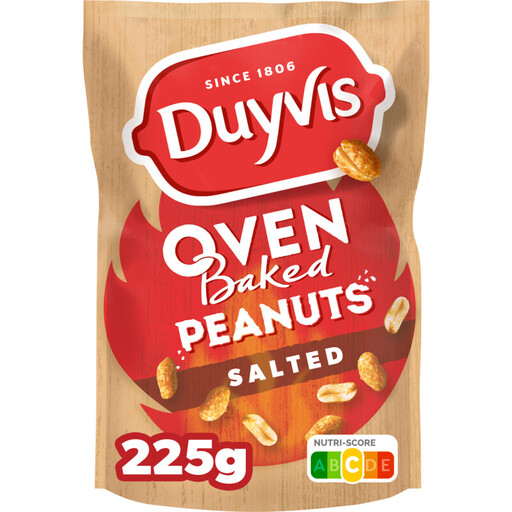
Duyvis roasted peanuts, 225 g

Duyvis roasted peanuts - 225 g

The product description presents these roasted peanuts as a ready-to-eat snack to take with you.

The ingredients list includes salt and savoury flavourings, so this isn’t the unsalted option. The product information also states that it may contain other nuts. Check the allergen information on the pack.

View at Joybuy

Frequently asked questions

Does ‘organic’ mean the same as an unregulated claim such as ‘natural’?

No. According to Skal Biocontrole, terms such as ‘organic’, ‘biological’, ‘bio’ and ‘ecological’ are covered by European organic regulations. Check the label and the accompanying details on the pack.

Does every bag of organic peanuts have to display the EU organic logo?

Not in every case. According to the European Commission, the logo is mandatory for prepacked food produced in the EU and sold as organic. Its use may be optional for imported products that meet EU rules on organic imports. When the logo is used, it must be accompanied by a control code and an indication of agricultural origin.

Does a supermarket have to display its own organic certificate?

Not every retailer needs its own organic certificate. Skal Biocontrole explains that shops and online retailers are subject to supervision and can be registered as points of sale. A retailer’s registration doesn’t replace checking the organic label on the specific product.

Are organic peanuts suitable for someone with a peanut allergy?

No. Organic peanuts aren’t an alternative if you have a peanut allergy. The Netherlands Nutrition Centre identifies peanut proteins as a food allergen. For prepacked products, check the allergen information on the current pack.

How should you store peanuts taken from a bag to take with you?

Store them in a tightly sealed container in a cool, dark and dry place, as the Netherlands Nutrition Centre advises for unsalted peanuts. For the original pack, also follow the storage advice and use-by date on the label.
