What should you look for when buying?
First decide whether organic production is a requirement or a preference. Then compare nutritional values on the same basis, taking into account the portion you actually eat.
| What to consider |
What to look for |
Who should pay particular attention? |
| Protein per portion |
Compare protein and energy per 100 g, then work out the values for your own portion. |
If I eat peanuts around exercise, I want to know what my portion actually contributes. Around 34% of consumers prioritise protein content. |
| Organic production |
Check the organic designation and, where applicable, the EU organic logo, inspection code and agricultural origin. |
If organic is a requirement for me, I want to be able to verify it from the product information. Around 33% of consumers prioritise organic certification. |
| Salt and portion size |
Check the salt and energy per 100 g and per portion; compare portions of the same weight. |
For an everyday snack, I want to weigh up the quantity and flavour against my dietary choices. Around 20% of consumers prioritise salt and portion control. |
| Packaging and storage |
Check the pack weight and storage instructions after opening. |
If I don’t use all the peanuts at once, I want a quantity and storage method that suit how I use them. Around 13% of consumers prioritise packaging and managing their supplies. |
Compare peanuts at Joybuy
These Joybuy products are peanut varieties you can compare by product type and stated nutritional values. If organic production is a requirement for you, check the organic designation, EU organic logo and inspection code in the current product information before buying.
 No image available
g’woon unsalted peanuts 250 g
An unsalted variety to compare if you’re looking for peanuts to snack on or use in recipes.
The product information lists 99% peanuts, 27 g of protein and 0.02 g of salt per 100 g.
Contains peanuts and may contain cashew nuts.
View at Joybuy
 No image available
g’woon peanuts in shells 500 g
An option to compare if you’re looking for peanuts in their shells to snack on or use in recipes.
The product information lists 29 g of protein and 0.12 g of salt per 100 g.
The peanuts are in their shells; the product information lists nuts as an allergen.
View at Joybuy
 No image available
Verse Extra Large roasted peanuts 210 g
An unsalted roasted variety to compare for snacking, cooking or baking.
The product information lists 100% peanuts, 26 g of protein and 0.02 g of salt per 100 g.
The product information lists peanuts as an allergen.
View at Joybuy
 No image available
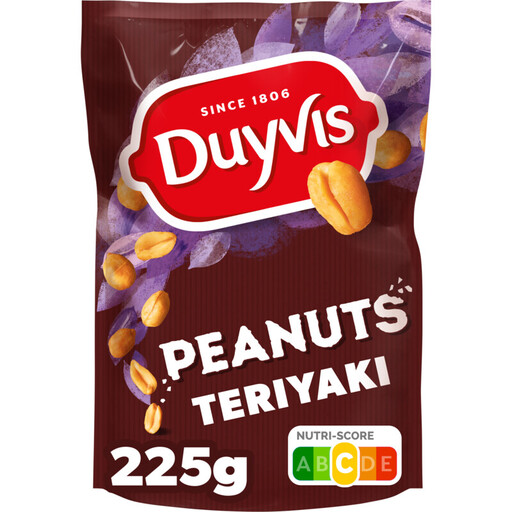
Duyvis Japanese Teriyaki peanuts 225 g
A seasoned peanut snack to compare if you’re also keeping an eye on salt content.
The product information lists 28 g of protein and 1.4 g of salt per 100 g, and gives a portion size of 30 g.
Not suitable for anyone with an allergy to peanuts, soya, wheat or celery; the product information also warns that it may pose a choking hazard to young children.
View at Joybuy
 No image available
Duyvis roasted peanuts 225 g
A roasted variety to compare for snacking or adding to dishes.
The product information lists 24 g of protein and 1.4 g of salt per 100 g.
Contains peanuts and may contain other nuts.
View at Joybuy
Frequently asked questions
Does 26 g of protein per 100 g mean the same as ‘high protein’?
No. The number of grams of protein and the requirements for a nutrition claim are not the same thing. The European Commission states that nutrition claims are only permitted if they comply with the applicable EU rules; don’t assess a claim solely on the basis of grams of protein per 100 g.
How can I recognise organic peanuts?
Check the organic designation and product information. According to the European Commission, the EU organic logo may only be used on products certified as organic. The logo is compulsory for pre-packed organic food produced and sold as organic in the EU; it may be optional for certain imported products. The inspection code and agricultural origin should appear alongside the logo.
Is a handful of peanuts enough to recover after a hard training session?
Think of peanuts as part of your overall diet, not as a guaranteed way to recover. A 25 g portion of the organic AH variety reviewed provides a calculated 6.5 g of protein. For keen strength athletes looking to increase muscle mass, the Netherlands Nutrition Centre recommends 1.2 to 2 g of protein per kilogram of body weight per day, depending on the goal; this is not advice for every recreational sportsperson.
Are organic peanuts suitable for someone with a peanut allergy or for young children?
Organic production does not make peanuts allergen-free. Peanut products are not suitable for anyone with a peanut allergy; check the allergen information on the packaging too. Product information from Albert Heijn, Jumbo and PLUS also warns that peanuts may pose a choking hazard to young children.
What should I do with AH Extra Large Salted Peanuts with a best-before date of 04-11-2026?
Do not consume this specific variety with this best-before date. On 20 May 2026, Albert Heijn issued a warning about possible metal particles in AH Extra Large Salted Peanuts (tub) with a best-before date of 04-11-2026. The warning applies to that variety and date; it does not automatically apply to all AH peanuts or the organic varieties.


