Who is this choice relevant to?

For young children

If you’re buying sandwich fillings for babies, toddlers or pre-schoolers, start by choosing a suitable texture. The Netherlands Nutrition Centre advises against giving whole peanuts to children under 4. Smooth peanut butter is only an option if peanuts are allowed under the individual dietary arrangements and the nursery’s policy.

For those following allergy arrangements

Allergies and local policies can determine whether peanuts are allowed at all at a group lunch. The Netherlands Food and Consumer Product Safety Authority treats peanuts and tree nuts as separate allergens; the Dutch Food Allergy Foundation explains that peanuts are botanically legumes. Check the ingredients and any cross-contamination warnings on the current packaging.

For those who prefer organic products

If you want to buy organic peanut products, check the organic label and the exact variant once you’ve considered the children’s ages and the nursery’s policies. The European Commission links the EU organic logo to organic certification; terms such as ‘100%’ or ‘natural’ are no substitute for checking.

What should you look for when buying?

First check whether peanuts are allowed under the relevant policies and which texture is suitable for the children. Then check the organic credentials, ingredients and practical packaging.

What to consider What should you look for? Who is this important for?
Texture for young children Age, eating ability and a clear indication that there are no pieces; do not give whole peanuts to children under 4. When choosing a sandwich filling for young children, I want a texture that’s right for their age. Around 26% of consumers make suitable texture their top purchase priority.
Allergy and nursery policies Ingredients, allergen information and the precise scope of the policies on peanuts and tree nuts. For a group lunch, I first want to know whether peanuts are allowed under the individual and local policies. For around 26% of consumers, this clarity matters most.
Organic label Check the organic product label and, where shown, the EU organic logo and inspection code. If peanuts are allowed under the relevant policies, I want to be able to check the product’s organic credentials. Around 21% of consumers give this their top priority.
Ingredients Read the full ingredients list and check separately whether salt or sugar has been added. I want to choose a variant that suits the lunch arrangements, with no added salt or sugar. This is the top purchase priority for around 16% of consumers.
Stock and storage Choose a jar size that matches actual use and follow the storage instructions on the packaging. For regular lunches, I want packaging and storage instructions that work for everyday use. Around 11% of consumers put stock levels and convenience first.

Common pitfalls

  • Assuming organic means suitable for every age

    Organic certification tells you about a product’s organic credentials, not its texture. As the Netherlands Nutrition Centre points out, whole peanuts remain unsuitable for children under 4 because of the risk of choking.

    First choose a form that suits the child’s age and eating ability; only then check the organic label.

  • Treating smooth and crunchy peanut butter as the same

    Pieces change the texture. A jar of crunchy peanut butter is therefore not automatically equivalent to a smooth variant, even if the brand or jar size is the same.

    Check the full variant name and only choose a texture that suits the children and the nursery’s policies.

  • Mistaking an old product page for a current option

    The older AH organic whole peanuts and older organic natural peanut butter reviewed are listed as discontinued on their product pages.

    Check the current product listing and assess any alternative again for texture, organic labelling and allergens.

    Finding a replacement may take extra time, so check before you finish shopping for lunch.

  • Mistaking ‘100%’ or ‘natural’ for organic or allergen-free

    These labels are no substitute for organic certification or allergen information. Peanut butter contains peanuts; a product may also warn that tree nuts could be present.

    Check the organic label, ingredients and allergen information as separate parts of the packaging.

Relevant brands and product ranges

Albert Heijn

Relevant for AH Terra Plantaardig organic 100% peanut butter, a smooth organic spread for sandwiches.

  • For the 350 g jar reviewed, Albert Heijn lists peanuts as the ingredient, along with the EU organic logo, NL-BIO-01 and Skal 001920. The product information says to stir well and store in a cool, dark and dry place.
  • The packaging warns that almonds, cashews and hazelnuts may be present. The organic label does not change the allergen information about peanuts.

Jumbo

Jumbo’s 100% Biologische Pindakaas Naturel 350 g is an organic natural variant for sandwiches.

  • The ingredients list contains only ground roasted peanuts from organic farming.
  • Jumbo explains that the listed salt comes from naturally occurring sodium. Check the current packaging for information relevant to the nursery’s policies.

PLUS

The PLUS product listing is for BIO+ Pindakaas 100% in a 350 g jar.

  • The product listing makes the brand and jar size easy to identify for comparison.
  • Use the current packaging for this exact variant to check ingredients and allergens; details for a product with the same name from another retailer do not automatically apply to this jar.

Duyvis

Duyvis Pinda’s Ongezouten is a useful comparison with whole peanuts, not a verified organic option for lunch.

  • For the 235 g pack reviewed, the manufacturer lists peanuts and sunflower oil as ingredients.
  • The manufacturer warns that traces of various types of nuts may be present. Whole peanuts are not suitable for children under 4.

Lidl

Vita D’or 100% pindakaas naturel 600 g is a useful comparison in terms of product form and ingredients.

  • Lidl describes the natural variant reviewed as having no added ingredients and states that it contains no added sugar or palm oil.
  • The product information does not substantiate organic certification. Lidl’s test reference relates to a May 2023 Consumers’ Association test, not a current organic ranking.

Aldi

The Dutch ALDI product listing names HELAES 100% peanut butter in a 600 g jar.

  • The jar size and product range offer useful points of comparison with other peanut butter products.
  • The listing alone does not substantiate organic certification or provide a full assessment of texture and allergens. Check the exact packaging.

Peanut butter for nursery lunch

These Joybuy products are peanut butter for sandwiches. Check that peanuts, the ingredients and the texture are suitable for the children and comply with the nursery’s policies.

PCD Peanut Butter 350 g

PCD peanut butter 350 g

This may be suitable if you’re looking for a peanut spread with no added salt or sugar: the product description says it contains 100% peanuts, with no added salt or sugar. Check the packaging and whether peanuts are allowed under the nursery’s policies and individual arrangements.

View at Joybuy
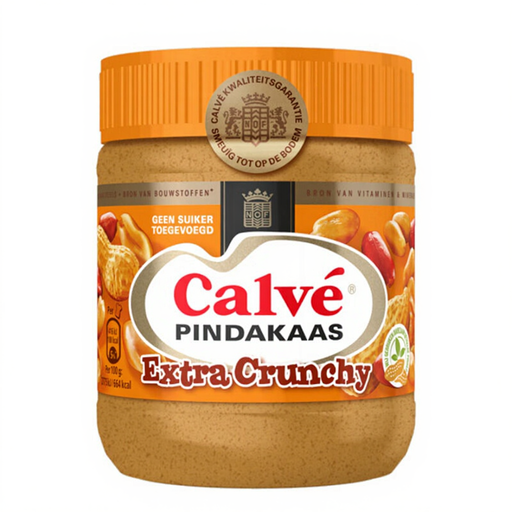
Calve Extra Crunchy Peanut Butter 350 g

Calve Extra Crunchy peanut butter 350 g

The crunchy variant is only an option if pieces are suitable for the children and allowed under the nursery’s policies. Don’t choose it as a substitute for smooth peanut butter without first checking the variant and the current ingredients and allergen information.

View at Joybuy

Frequently asked questions

Can you give whole organic peanuts to a toddler?

No. The Netherlands Nutrition Centre advises against giving whole peanuts or nuts to children under 4 because of the risk of choking. If peanuts are allowed under the individual dietary arrangements and the nursery’s policy, choose a suitable ground form or smooth peanut butter. It’s still important to make sure older children eat slowly and are supervised.

Does a nut-free policy automatically mean peanuts are allowed?

No, don’t assume this. Peanuts are legumes and are treated as an allergen separately from tree nuts. Ask the nursery which products its policy excludes and follow individual allergy arrangements; an organic certification mark does not change this assessment.

How can you identify an organic peanut product?

Look for the organic product label and the EU organic logo, and check the accompanying details on the packaging. The European Commission only allows the EU organic logo on products that are organically certified. ‘100% peanuts’ or ‘natural’ does not in itself mean a product is organically certified.

Is crunchy peanut butter the same as smooth peanut butter?

No, the texture is different. Check the full variant name and only choose one with pieces if that is suitable for the children and allowed under the nursery’s policies. The same base ingredients or jar size do not make crunchy peanut butter equivalent to a smooth variant.

How should you store the AH Terra peanut butter reviewed?

Albert Heijn says AH Terra should be stored in a cool, dark and dry place and stirred well before use. Follow the storage instructions on the packaging you buy; this does not establish a general storage period after opening for all peanut butters.
