What should you look for?
Check organic certification and ingredients separately, then choose a preparation method and pack format to suit your breakfast and how you plan to use the nuts.
| What to consider |
What should you check? |
Who is this important for? |
| Both organic and vegan |
Check the organic certification and read the ingredients list for animal-derived additives. The European Commission explains the requirements for the EU organic logo; according to the Dutch Association for Veganism, honey is not vegan. |
If I’m looking for plant-based ingredients as well as organic certification, I want to be able to check both separately. Around 36% of consumers give this combination top priority. |
| Preparation for everyday use |
Check whether the nuts are unroasted or roasted, whether oil has been added and whether they’re unsalted. The Netherlands Nutrition Centre includes unsalted nuts in the Dutch Wheel of Five. |
If I regularly have nuts for breakfast, I check the salt content and choose a preparation method that suits my preferences. Around 29% of consumers prioritise eating nuts for breakfast every day and how they’re prepared. |
| Edible quantity |
Compare like with like: the weight of walnuts in their shells isn’t the same as the weight of shelled, ready-to-eat nuts. |
If I want to know how many nuts I can actually use after buying them, I look at the pack format rather than just the total weight. Around 21% of consumers give the usable quantity top priority. |
| Use and storage |
Check whether the nuts are shelled and follow the storage instructions on the pack. The Netherlands Nutrition Centre lists rancidity, a tough texture and mould as signs of quality loss in nuts. |
If I want to use the nuts without extra preparation and avoid waste, I choose a pack size that matches how much I use. Around 14% of consumers prioritise convenience and managing their food stocks. |
Nut options at Joybuy
These Joybuy options are unsalted peanuts and a raw, unsalted nut mix. Check the pack for organic certification, ingredients and allergen information before choosing them for a vegan breakfast.
 No image available
g'woon unsalted peanuts, 250 g
This option is suitable if you’re specifically looking for unsalted peanuts; check the pack for organic certification and vegan ingredients.
The product description lists 99% peanuts and sunflower oil.
The product contains peanuts and may contain cashews.
View at Joybuy
 No image available
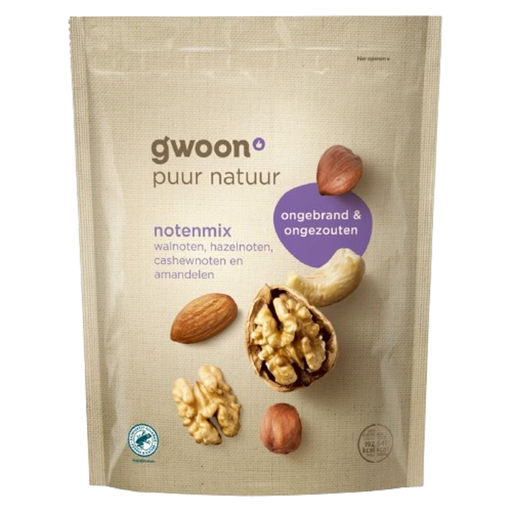
g'woon raw, unsalted nut mix, 200 g
The product description suggests adding this mix to breakfast; also check the pack for organic certification and ingredients before choosing it.
The mix contains 30% hazelnuts, 30% walnuts, 20% almonds and 20% cashews. The description doesn’t mention added salt or oil.
The product information lists nuts and possible traces of peanuts.
View at Joybuy
Frequently asked questions
Does organic automatically mean vegan?
No. Organic certification relates to production requirements, while a vegan choice excludes animal-derived ingredients. So check the ingredients list too. According to the Dutch Association for Veganism, honey is not vegan.
What information should appear alongside the EU organic logo?
According to the European Commission, the EU organic logo must be accompanied by the code of the control body and an indication of origin for the agricultural raw materials. The logo is compulsory on prepacked food produced in the EU and sold there as organic; this requirement doesn’t automatically apply to every imported pack.
Is a vegan label enough if I need to avoid nuts or peanuts?
No. A vegan label doesn’t tell you whether a product contains allergens. Read the ingredients and allergen information on the current pack, including any cross-contamination warnings.
How should you store opened nuts?
Follow the instructions on the pack. The Jumbo walnuts discussed should be stored in a cool, dry and dark place; the product information for the BIO+ cashews says to store them in a dry, dark place. The Netherlands Nutrition Centre’s general advice for mixed unsalted nuts isn’t a product-specific guarantee of shelf life.
Are whole nuts suitable as a breakfast topping for young children?
Not necessarily: the product pages discussed warn that young children can choke on nuts. Follow the warning on the pack.
What should you consider when buying walnuts in their shells?
Bear in mind that they need extra preparation, and don’t compare their purchase weight directly with the quantity of shelled walnuts. Unless the edible yield has been established, the total pack weight doesn’t tell you how many shelled walnuts you’ll be left with.


