What should you look for when choosing?
If you’re considering organic nuts around sport or recovery, it helps to assess nutritional value, organic certification and practical suitability separately.
| What to consider |
What should you check? |
Who might prioritise this? |
| Protein in your portion |
Compare protein and energy per 100 g, then work out how much your portion provides. |
If I do sport, I want to know what my own portion contributes rather than relying on the product name alone. Around 31% of consumers prioritise the protein in their own portion. |
| Organic certification |
Check for the EU organic logo and, when the logo is used, the inspection code and the origin of the agricultural products. |
I want to be sure I’m buying organic, regardless of terms such as unsalted or natural. Around 25% of consumers make confidence in organic certification their top purchase priority. |
| Everyday food choice |
Read the ingredients, salt content and preparation method for the exact product. |
For my everyday snack, I’m mainly looking for a suitable product, not just the highest protein content. Around 19% of consumers prioritise the overall composition for everyday use. |
| Packaging and affordability |
Compare pack sizes on a like-for-like basis and choose a pack that suits how you’ll use it. |
I want to fit organic nuts into my regular food shop and choose a practical amount. Around 13% of consumers prioritise affordability and pack size. |
| Allergens |
Read the ingredients, allergen information and warnings about possible cross-contamination on the packaging. |
If you have a relevant allergy, suitability comes before protein content or organic certification. Around 12% of consumers let a relevant allergy determine their choice. |
Compare nuts at Joybuy
These product options help you compare protein content per 100 g across different types of nuts. Check separately on the packaging whether a product is organically certified.
 No image available
g’woon unsalted peanuts, 250 g
Enjoy as a snack or use in recipes.
The product information lists 27 g of protein per 100 g. Ingredients: 99% peanuts and sunflower oil.
Contains peanuts and may contain cashew nuts.
View at Joybuy
 No image available
Anatolia Badem Natural almonds, 500 g
Enjoy as a snack, or use in baking or cooking.
The product information lists 21.0 g of protein per 100 g and 100% almonds.
Contains almonds.
View at Joybuy
 No image available
g’woon roasted unsalted cashew nuts, 200 g
Enjoy as a snack or use in dishes and baking.
The product information lists 18.67 g of protein per 100 g.
Contains cashew nuts and other tree nuts.
View at Joybuy
 No image available
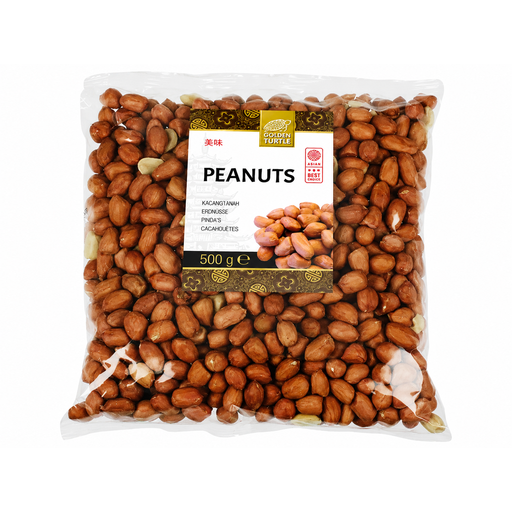
Golden Turtle Premium unroasted peanuts with skins, 500 g
The product information suggests using them as a snack or in dishes such as curries, stir-fries and salads.
The product information lists 26 g of protein per 100 g.
Contains peanuts.
View at Joybuy
Frequently asked questions
Do I need special protein products as well as nuts if I do sport?
Not necessarily. According to the Netherlands Nutrition Centre, most people who do sport don’t need special protein shakes or bars if they eat a varied diet. When choosing, consider the nutritional value of your portion and your overall diet.
How can I identify organic nuts by the EU organic logo?
Check the logo and the information displayed with it. The European Commission says that products bearing the EU organic logo must meet certain requirements, including containing at least 95% organic ingredients. The inspection code and the origin of the agricultural products should also appear alongside the logo. This tells you about the organic certification, not the protein contribution.
Is allergen information on food products compulsory?
Yes. The Netherlands Food and Consumer Product Safety Authority (NVWA) says that suppliers must inform consumers about allergens present. If you have a relevant allergy, also read the warnings about possible cross-contamination on the packaging. Duyvis refers to the product information for details.
Does unsalted mean that nuts are unroasted?
No, these terms don’t mean the same thing. Duyvis describes roasted peanuts that are available both salted and unsalted. So check how the exact product has been prepared.
How do I compare packs of different sizes?
Compare pack sizes on a like-for-like basis and check the nutritional value per 100 g. Jumbo lists 175 g for the organic almonds described, while PLUS lists 150 g. Pack size alone doesn’t tell you how much protein your portion provides.


