
Everyday desk snackers
You’re looking for a snack you can take with you in a measured portion. Look for unsalted nuts and a clear label, rather than relying on the overall look of the packaging.


Choose organic nuts for the office by checking the claims and details on the packaging, then decide whether a single variety or a mix suits you. Check the portion size and allergens too: organic certification alone tells you nothing about the ingredients or the possible presence of other allergens.
You’re looking for a snack you can take with you in a measured portion. Look for unsalted nuts and a clear label, rather than relying on the overall look of the packaging.
You want nuts to enjoy with breakfast and during a break. A single variety or an unsalted mix gives you different combinations to choose from; check exactly which varieties are included.
You’re buying for several people and want to be able to check the ingredients, allergens and storage advice. Keep the original packaging, or keep the label information with the supplies.
First, decide what matters most to you: organic product information, ingredients, allergens or a convenient quantity for the office.
The European Commission states that the EU organic logo may only be used on products certified as organic. Check the control code and the agricultural origin statement on the packaging too.
| What to consider | What to look for | Who should prioritise this? |
|---|---|---|
| Organic certification | Check the organic claim, EU organic logo and control code on the packaging. Also check the origin statement. | If verifiable organic product information is your priority, you’ll want to assess the claims on the label. Around 25% of consumers put confidence in organic certification first. |
| Ingredients | Read the ingredients and nutrition information for the exact product. The Netherlands Nutrition Centre recommends unsalted nuts and prefers unroasted or lightly roasted nuts. | If you snack on nuts every day or add them to breakfast, you’ll want to know which varieties and any added ingredients you’re choosing. Around 25% of consumers give ingredients top priority. |
| Allergens | Check both the list of allergens present and any precautionary warnings on the packaging. | If you share the supply with others, you’ll want to check allergen information for everyone using it. Around 19% of consumers put this information first. |
| Portions and storage | Compare the net weight and any portion information. Follow the storage advice on the specific packaging. | If you take nuts in for breaks, breakfast or a shared supply, you’ll want a quantity that suits the way they’ll be used. Around 19% of consumers give practical portions and storage top priority. |
| Cost per use | Compare current prices per kilogram for products with similar ingredients and organic claims; factor in any delivery costs separately. | If you want to weigh up the cost of the amount you’ll use, you’ll need to consider differences in pack size and ingredients. Around 12% of consumers put the cost of their intended use first. |
How a nut is processed is separate from its organic status. Its appearance or a claim that it is unroasted doesn’t tell you whether it has been certified as organic.
Check the organic claim and, where applicable, the EU organic logo and control code on the packaging.
Even a pack containing just one type of nut may carry a warning about the possible presence of other nuts or peanuts.
Read the allergen information and precautionary warnings separately. If you’re sharing the supply, keep the original label available.
The 150 g AH Biologisch Cashewnoten ongebrand is an option if you’re looking for a single unsalted variety with specific organic details on the label.
The 150 g PLUS Notenmix, labelled organic, is an option if you want several types of unroasted, unsalted nuts in one pack.
The 150 g Jumbo Biologisch Ongebrande Notenmix described here combines different types of nuts and gives an example of a blended mix.
This selection includes products for a nut snack, as well as muesli and nut bars for a break or breakfast. Not all of them are packs of whole nuts; always check the exact product packaging for organic claims and allergen information.
 No image available
A good fit if you’re looking for an unsalted peanut snack for an office break.
The product description lists 99% peanuts and sunflower oil. The product contains peanuts and may contain cashews.
 No image available
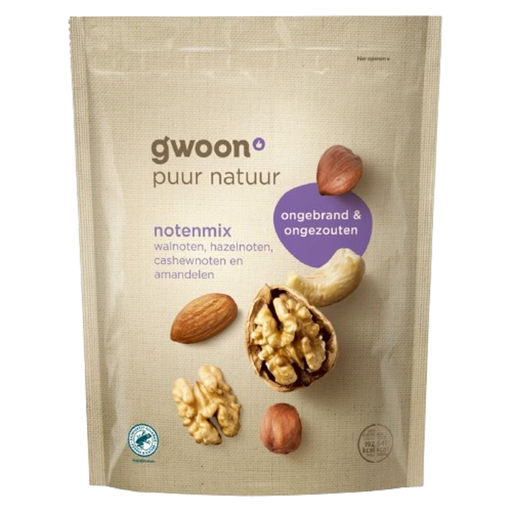
A good fit if you want to combine different types of nuts in an unsalted snack.
The product description lists hazelnuts, walnuts, almonds and cashews. The product may contain traces of peanuts.
 No image available
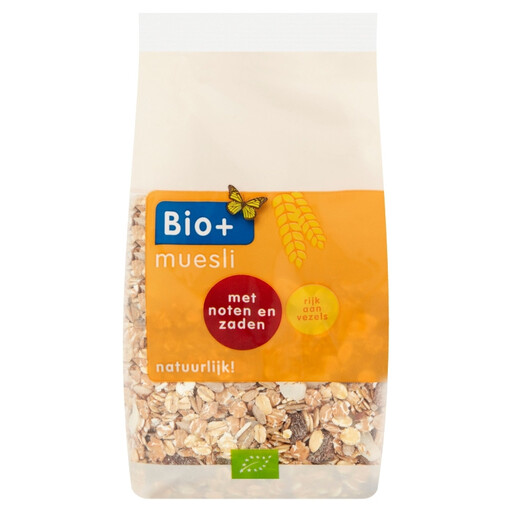
A good fit if you’re looking for muesli with nuts and seeds for breakfast or a snack, rather than a pack of whole nuts.
The product information lists grains, raisins and seeds, as well as hazelnuts, almonds and walnuts. The product contains gluten and notes the possible presence of nuts, milk, soya and sesame, among other allergens.
 No image available
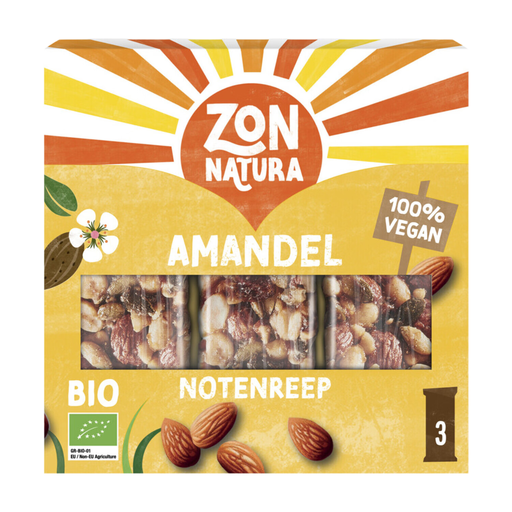
A good fit if you want to take a mixed bar with you as a snack, but not if you’re looking for whole nuts only.
The ingredients include peanuts, almonds, agave syrup, pumpkin seeds and raisins. The product contains peanuts and almonds and notes the possible presence of other nuts and sesame.
 No image available
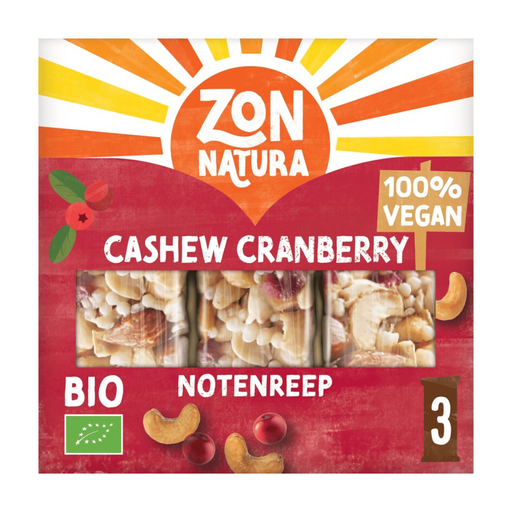
A good fit if you’re looking for a mixed bar with cashews and cranberries for a snack break.
The ingredients include peanuts, cashews, almonds, agave syrup, cranberries and rice. The product notes the possible presence of sesame.
The EU organic logo is mandatory on prepacked foods produced in the EU and sold as organic. The European Commission also lists the control code and agricultural origin as label details. Separate rules apply in other situations, so consider a missing logo in the context of the product.
No. The origin is shown separately, for example as EU Agriculture, Non-EU Agriculture or a combination of the two. For its AH Biologisch Cashewnoten ongebrand, Albert Heijn lists the EU organic logo, control code IT-BIO-009 and the origin Non-EU Agriculture.
Use the portion information on the packaging as a practical guide for dividing the contents, not as personal dietary advice. Albert Heijn lists six 25 g portions in its 150 g pack of cashews. When dividing your own supply, also factor in any nuts you use at breakfast.
Follow the storage advice on the packaging for your product. Albert Heijn recommends storing the cashews reviewed at room temperature in a dark place; PLUS recommends keeping the mix mentioned in a cool, dry and dark place. Don’t assume this means all nuts have the same shelf life once opened.
Read the allergen information on the exact product packaging and make it available to everyone using the supply. The Netherlands Food and Consumer Product Safety Authority distinguishes between the rules for prepacked foods and information requirements for food businesses supplying unpackaged products. The latter rules don’t automatically apply to every informal office supply.