
Breakfast-makers looking to choose organic
You want to add nuts to yoghurt or another breakfast dish, and are looking for a recognised certification and an ingredients list that suits your needs.


Start by checking the organic certification, then decide whether you want a nut mix, a single type of nut or cashews with sunflower oil. Albert Heijn’s product information describes a mix of four types of nuts, Jumbo lists a pack of organic walnuts, and PLUS offers cashews with sunflower oil. If you’re serving breakfast to guests, check the allergen information too, and choose a pack size that suits how much you’ll use and can store properly.
You want to add nuts to yoghurt or another breakfast dish, and are looking for a recognised certification and an ingredients list that suits your needs.
You’re buying for several people and want to check the types of nuts, allergen information and warnings for young children.
You want a pack size that suits breakfast and how you’ll use the rest, with storage instructions you can follow.
First, check the organic label, then choose a mix that suits your breakfast. Also check the warnings on the pack and choose an amount you can store properly.
| What to consider | What should you check? | Who should consider this? |
|---|---|---|
| Organic labelling | Look for the EU organic logo, the control code and the indication of agricultural origin. Also check the ingredients on the specific pack. | If you want to choose organic, you’ll want to be able to recognise the label on the product. Around 31% of consumers put verifiable organic certification first. |
| Ingredients | Check which types of nuts and any other ingredients are included. A mix has a set combination; cashews with sunflower oil are not made up of nuts alone. | If you want to choose the nuts for your breakfast yourself, check the types and any added ingredients. Around 31% of consumers put the ingredients first. |
| Guests and allergens | Read both the ingredients list and any warnings about the possible presence of allergens. Also take any warnings for young children into account when deciding how to serve the nuts. | If you’re making breakfast for guests, you’ll want to know which nuts and warnings are listed on the pack. Around 19% of consumers put the needs of guests and young children first. |
| Pack size and storage | Check the net weight and storage instructions. Keep nuts sealed and dry, and follow the guidance on the pack too. | If you want to use any leftover nuts after breakfast, choose a pack size that you can store properly. Around 19% of consumers focus mainly on pack size and leftovers. |
These terms don’t mean the same thing. According to the European Commission, the EU organic logo can only be used for products certified as organic by an approved control authority or control body.
Check the organic labelling on the pack, then look separately at the ingredients and how the product you’ve chosen has been prepared.
The Jumbo walnuts reviewed here warn that other allergens may be present. So even a product with just one ingredient doesn’t automatically answer questions about possible cross-contact.
Read the ingredients and precautionary warnings on the pack before serving nuts to guests.
Nuts should be kept sealed and dry, so pack size matters if you want to use any leftover nuts after breakfast.
Choose a net weight to suit how much you’ll use, and follow the use-by and storage information on the pack.
Albert Heijn’s product information describes a 350 g mix of unroasted nuts with organic labelling.
Jumbo describes organic, unroasted walnuts in a 110 g pack.
PLUS’s product information describes BIO+ unsalted cashews in a 200 g pack.
Lidl presents Alesto as a range of nuts, dried fruit and party snacks.
ALDI’s product information describes an unsalted Trader Joe’s nut mix.
Duyvis describes products including borrelnootjes, tiger nuts, peanuts and mixes.
This Joybuy pick is a nut mix to enjoy with breakfast. Check the organic labelling on the pack before choosing it as an organic option.
 No image available
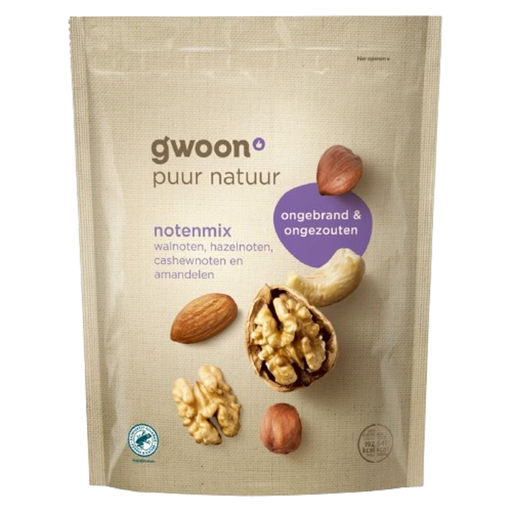
Joybuy’s product description suggests adding this mix to breakfast. It contains hazelnuts, walnuts, almonds and cashews.
The description lists 30% hazelnuts, 30% walnuts, 20% almonds and 20% cashews. The title says Raw & Unsalted, and the pack contains 200 g.
The product description warns that traces of peanuts may be present. There’s no organic labelling in the title, so check the certification and information on the pack if you want to choose organic.
No. According to the European Commission, the EU organic logo can only be used for products certified as organic by an approved control authority or control body. Consider organic labelling separately from terms such as ‘natural’ and ‘unroasted’.
Check for the EU organic logo and the related product information, including the control code and the indication of agricultural origin. Albert Heijn and Jumbo list NL-BIO-01 on the products reviewed; this number is not the same for every organic product.
No. The Jumbo walnuts reviewed here warn that other nuts, peanuts and sesame may be present. Read both the ingredients list and the precautionary warnings on the pack.
Keep nuts sealed and dry, and follow the instructions on the pack. The Netherlands Nutrition Centre advises keeping nuts well sealed and storing them in a dry place.
No. The Albert Heijn, PLUS and Jumbo products reviewed here warn that young children may choke on nuts. Take this product warning into account when deciding how to serve them; organic labelling says nothing about whether they’re suitable for young children.