What should you look for when buying?
First, check the organic label and the information that goes with it. Then choose according to your preferred type of nut, portion size and how you plan to carry it.
| What to consider |
What to look for |
Who is this most relevant to? |
| Organic certification |
Check the organic label and the associated inspection and origin details. The EU organic logo is required on pre-packed foods produced in the EU and sold as organic; the European Commission also explains the relevant labelling requirements. |
If I want to buy organic with confidence, I want to be able to check the label rather than rely on the packaging. Around 31% of consumers prioritise verifiable organic production. |
| Nutritional value and portion |
Check the nutritional information for the exact product and decide how much you’ll actually take with you. As a general guide, the Voedingscentrum gives 164 kcal, 4,5 g protein and 2,2 g carbohydrates for 25 g of unsalted nuts. |
If I want to know how my snack contributes to my day or workout, I look at the amount in my container. Around 25% of consumers pay most attention to nutritional value and portion size. |
| Taking them with you and sealing the container |
Check that the packaging seals securely, or put the amount you want in a separate, well-sealed container. The pack size isn’t the same as a snack portion. |
If I take nuts in my gym bag, I want to be able to portion and seal them conveniently. Around 25% of consumers prioritise ease of carrying. |
| Single type or mix |
Check which types of nuts are in the pack and read the ingredients and allergen information. An organic label alone says nothing about the ingredients or salt content. |
If I want to use the same nuts for breakfast and as a snack, I choose between one type and a mix based on whether I prefer simplicity or variety. Around 19% of consumers consider this dual use most important. |
Nuts and snacks at Joybuy
These Joybuy products include nuts and snacks to enjoy on the go or at breakfast. Only the Zonnatura bar’s product name describes it as an organic nut bar; check the organic label and allergen information on the packaging.
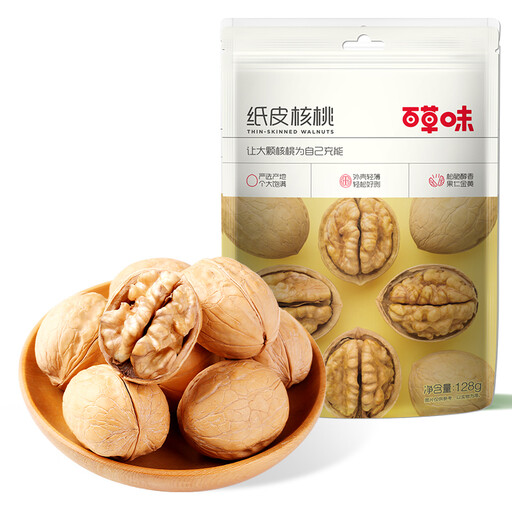 Image unavailable
Be&Cheery paper-shell walnuts 128 g
The product description mentions individually wrapped walnuts for enjoying on the go or at breakfast.
Contains walnuts.
View at Joybuy
 Image unavailable
g'woon unsalted peanuts 250 g
The product information suggests them as a snack; this variety is for anyone looking for unsalted peanuts.
Ingredients: 99% peanuts and sunflower oil.
Declared salt content: 0,02 g per 100 g. May contain cashew nuts.
View at Joybuy
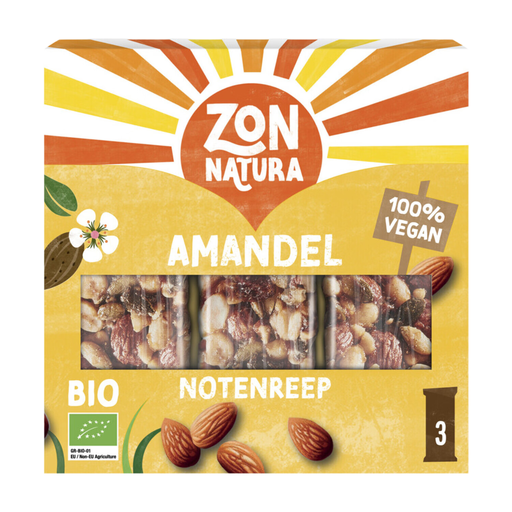 Image unavailable
Zonnatura Organic Nut Mix Bar 75 g
The product description recommends this bar as a snack on the go.
The product name describes it as an organic nut bar. The ingredients include peanuts, almonds and pumpkin seeds; agave syrup is listed as a sweetener.
Contains peanuts and almonds. The product information states that it may contain other nuts and sesame seeds.
View at Joybuy
 Image unavailable
g'woon roasted unsalted cashew nuts 200 g
The product description suggests them for snacking, cooking and baking.
The product name specifies roasted, unsalted cashew nuts.
Contains cashew nuts.
View at Joybuy
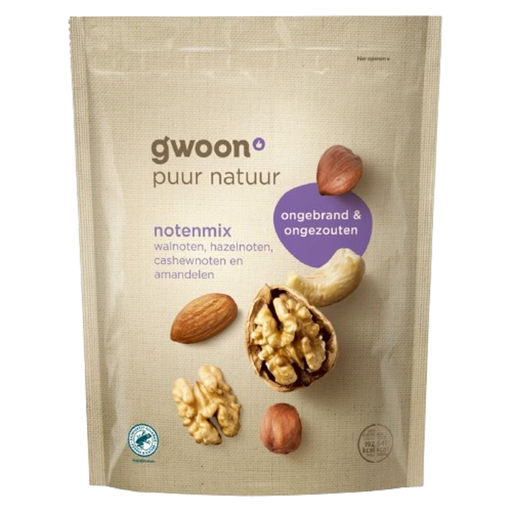 Image unavailable
g'woon raw unsalted nut mix 200 g
The product description suggests it for snacking and enjoying at breakfast.
The product name specifies a raw, unsalted nut mix containing four types of nuts.
Contains nuts and may contain traces of peanuts.
View at Joybuy
Frequently asked questions
What should you look for on organic packaging in the Netherlands?
The EU organic logo is required on pre-packed foods produced in the EU and sold as organic. According to the European Commission, this must be accompanied by the control body’s code number and an indication of the agricultural origin. This requirement doesn’t automatically apply to every imported or unpackaged product.
Do ‘unroasted’ and ‘organic’ mean the same thing?
No. ‘Unroasted’ describes how the nuts have been prepared; organic refers to rules for organic production and inspection. Also check whether the nuts are unsalted and read the ingredients information.
Are nuts on their own enough for a long, intense workout?
Don’t automatically assume that a bag of nuts will be enough. The Voedingscentrum’s general guide for 25 g of unsalted nuts gives 2,2 g of carbohydrates and 4,5 g of protein. The Voedingscentrum highlights getting enough carbohydrates during prolonged, intensive endurance exercise, so consider your overall diet around your workout.
How should you take a nut snack in your gym bag?
The MDL Fonds recommends an airtight container for taking nuts on the go. Put the amount you want to take with you in the container, and follow the storage instructions on the packaging for the rest of the product.
Does organic mean a product is suitable for someone with a nut or peanut allergy?
No. An organic label doesn’t mean a product is allergen-free. The Netherlands Food and Consumer Product Safety Authority treats peanuts and tree nuts as separate allergens; pre-packed products show allergen information on the label. Check for warnings about possible traces too.


