What should you look for when buying?
First, check who the snack is for and which allergens are relevant. Then look at the organic labelling, ingredients and quantity, and consider what you can store and use properly.
| What to consider |
What should you look for? |
Who is this most relevant to? |
| Child safety and allergens |
Check the types of nuts and allergen information, and choose a suitable form for young children. Do not give whole nuts to children under four. |
If you’re choosing snacks for a child, you’ll want to check that the texture and ingredients are suitable. Around 25% of consumers put child safety and allergens first. |
| Organic labelling |
Check the EU organic logo, the associated control code and the agricultural origin statement, where this labelling applies. The logo may be optional for imported and unpackaged organic products. |
If verifiable organic production is your main priority, check the information on the specific pack. Around 25% of consumers prioritise organic assurance. |
| Ingredients and preparation |
Read the ingredients list and product description: unsalted does not automatically mean unroasted or made without oil. Check the exact variant. |
If you want to know what else is in the product besides nuts, compare the ingredients and preparation method. Around 25% of consumers look at these first. |
| Quantity and storage |
Choose a net quantity that suits how much you expect to use, and follow the storage instructions. Store opened nuts in a tightly sealed container in a cool, dark, dry place. |
If you buy nuts for snacks as well as breakfast, you’ll want a pack that suits how much you use and how you store them. Around 25% of consumers make suitable stock management their first consideration. |
Nut products at Joybuy
This Joybuy selection includes nut products for snacks. The product information below does not confirm that these variants are organically certified; check the labelling on the packaging to find out.
 Image unavailable
g'woon unsalted peanuts, 250 g
The product information suggests enjoying these peanuts as a snack or using them in recipes.
The ingredients list 99% peanuts and sunflower oil. The product contains peanuts and may contain cashews.
Do not give loose nuts to children under four.
Joybuy
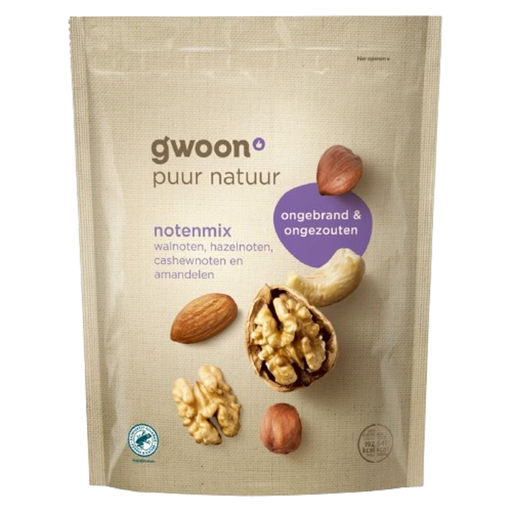 Image unavailable
g'woon raw, unsalted mixed nuts, 200 g
The product information suggests enjoying these nuts as a snack or adding them to dishes.
The ingredients list hazelnuts, walnuts, almonds and cashews. The product may contain traces of peanuts.
Do not give whole nuts to children under four.
Joybuy
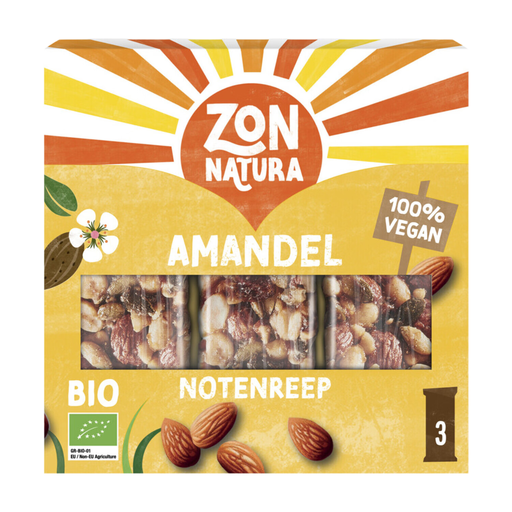 Image unavailable
Zonnatura nut mix bar, 75 g
The product information describes this bar as a snack to enjoy at home or on the go.
Ingredients include peanuts, almonds, pumpkin seeds and raisins. The information states that it may contain other nuts and sesame.
Joybuy
Frequently asked questions
What should be on a pack of organic nuts?
The EU organic logo is mandatory on pre-packed organic food produced in the EU. The logo must be accompanied by a control code and a statement of EU agriculture, non-EU agriculture or EU/non-EU agriculture. The logo may be optional for imported and unpackaged organic products.
Can my young child eat whole organic nuts?
Do not give whole nuts to children under four because of the choking risk. A suitable nut butter may be an alternative if its ingredients are suitable for your child. Organic certification does not change the choking risk.
Do organic nuts or nuts with a single ingredient rule out other allergens?
No. The AH cashews described here contain cashews and may also contain other nuts and peanuts. Read the allergen information on the pack, even if you’ve bought the product before.
Is a 25 g portion shown on the pack automatically the right portion for a child?
No. The AH pages reviewed list 25 g as a portion on the packaging; the MDL Fonds gives 25 g as a guideline for adults. This information does not establish a standard portion size for children.
How should I store opened nuts while on holiday?
Store nuts in a tightly sealed container in a cool, dark, dry place, and follow the storage instructions and best-before information on the specific pack. The Voedingscentrum points out that nuts are sensitive to moisture and can absorb other odours.
How do I choose the right pack size?
Choose a quantity that suits how much you’ll use for snacks and breakfast, and that you can store properly. Compare the net quantity and preparation method of the variants you’re considering.


