
Topping up a small breakfast supply
You only want to replace what you’ve run out of and are looking for a pack size that suits how much you use.


Choose a small, ready-to-use pack if you only want to top up your supplies, a mix if you want several types of nuts, or a single variety if you want to create a specific breakfast topping. Check organic certification separately from preparation method, salt and allergens. In-shell nuts also need cracking before you can use them.
You only want to replace what you’ve run out of and are looking for a pack size that suits how much you use.
You want several types of nuts in one pack and assess the organic label, ingredients and salt content separately.
You’d rather put together your own topping, so you’re looking for one variety instead of a ready-made mix.
When you’re topping up your breakfast supplies, the main things to consider are clear organic certification, the ingredients and a pack size that suits how much you use.
| What to consider | What should you look for? | Who is this important for? |
|---|---|---|
| Verifiably organic | Check for the EU organic logo and, where shown, the control code and the origin of the agricultural ingredients. The European Commission explains these details alongside the logo. | I want to be able to recognise certification when buying organic, rather than relying only on words such as ‘natural’ or ‘unsalted’. Around 37% of consumers give verifiable organic origin top priority. |
| Ingredients for breakfast | Read the ingredients and the proportions of each type of nut. Also check the pack for added salt and allergen information. | If I’m looking for a particular nut or mix ratio, I want to know what’s actually in the pack. Around 36% of consumers put their preferred ingredients first. |
| A suitable quantity | Match the net weight to how much you use and follow the storage instructions. The Netherlands Nutrition Centre advises storing nuts in a tightly sealed container in a dry place. | I only want to top up what I can use in time, so I choose a quantity that suits my supplies. Around 27% of consumers consider the amount needed to top up their supplies most important. |
These words alone don’t show that a product is organically certified. Skal Biocontrole explains that organic labels are protected.
Check the organic label for the specific product separately from its flavour, preparation method and salt content.
A mix may contain varieties you use less often. For example, PLUS’s product information lists the types of nuts in the mix reviewed and their proportions.
Compare the ingredients list with the topping you want to put together instead of choosing based on the product name alone.
In-shell walnuts aren’t ready to sprinkle over your breakfast: you need to crack them first.
Choose this type of product if the extra preparation suits you. For immediate use, a product without shells is more practical.
Organic certification doesn’t mean that a product is free from allergens or cross-contamination. The NVWA states that prepacked products must show allergen information on the label.
If you have a relevant allergy, check the ingredients and warnings on the current pack. The Jumbo walnuts reviewed state that they may contain other nuts, peanuts and sesame.
The AH Biologisch Notenmix ongebrand reviewed is a larger mixed pack for topping up your supplies.
The organic walnuts reviewed are available ready to use or in their shells.
The organic PLUS Notenmix reviewed is a small mix of five types of nuts.
Duyvis lists unsalted peanuts, among other options, for topping up your supplies.
Lidl’s Alesto information describes a range that includes several types of nuts.
ALDI’s range information lists several types of nuts, both salted and unsalted.
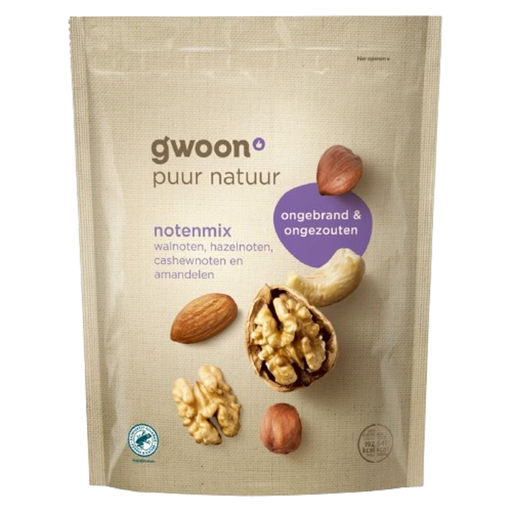
This Joybuy pick is a nut mix for anyone who wants to add several varieties to their breakfast. Check the pack separately for organic certification.
 No image available
Ideal if you want several types of nuts in one top-up; check the pack separately for an organic label.
Raw and unsalted; the product description lists hazelnuts, walnuts, almonds and cashews.
Net weight: 200 g.
Contains nuts and may contain traces of peanuts.
No, this doesn’t apply to every pack worldwide. According to the European Commission, the EU organic logo is compulsory on prepacked food produced in the EU and sold as organic. For imported products that meet EU import rules, using the logo is optional. If the logo is used, it should be accompanied by the control code and an indication of the agricultural origin.
Store nuts in a tightly sealed container in a dry place, preferably somewhere cool, and follow the instructions on the pack. The Netherlands Nutrition Centre recommends keeping them sealed and dry; for the mix reviewed, PLUS advises storing it somewhere cool, dry and dark.
Organic certification doesn’t mean a product is allergen-free. If you have a relevant allergy, check the ingredients and any warnings on the current pack. The NVWA states that prepacked products must show allergen information on the label. The Jumbo walnuts reviewed state that they may contain other nuts, peanuts and sesame.
No, you need to crack them first. Also bear in mind that Jumbo warns that the in-shell walnuts reviewed may pose a choking hazard to young children. This warning applies to this product and isn’t a general age restriction.
They describe different product characteristics: ‘unroasted’ refers to how the nuts are prepared, ‘unsalted’ means no salt has been added, and ‘organic’ refers to certification. Check each separately in the product information and on the pack.