What should you look for when choosing?
First, choose the right form based on who will be eating. Then check the organic labelling, ingredients, allergen information and packaging.
| What to consider |
What should you check? |
Who is this important for? |
| A simple breakfast |
Check that the nuts are unsalted and that the ingredients suit the way you plan to use them. |
If I want to add nuts to my own breakfast without much preparation, I look at their form and ingredients. Around 33% of consumers put convenience at breakfast first. |
| Organic labelling |
Look for the EU organic logo, the inspection body’s code number, and a statement showing whether the agricultural ingredients are from EU agriculture, non-EU agriculture or both. |
I want to be able to identify organic production from clear information on the packaging, not just a word such as natural. Around 25% of consumers make verifiable organic production their top priority. |
| A young child is eating too |
Check the texture, added ingredients and allergen information. For children under 4, Amsterdam UMC recommends nut butter with no added sugar or salt instead of whole nuts. |
When my child under 4 is eating with me, I look for a suitable texture and check the allergen information. Around 25% of consumers put eating together safely first. |
| Packaging and storage |
Choose a quantity that suits your needs and follow the storage instructions on the packaging. The Netherlands Nutrition Centre recommends storing mixed unsalted nuts in a cool, dark and dry place. |
I want to store my supplies properly and avoid buying more than I’ll use. Around 17% of consumers put packaging and storage first. |
Products at Joybuy
This selection includes unsalted peanuts, a raw unsalted nut mix and an organic nut bar. The bar is a different product from loose nuts and contains agave syrup.
 No image available
g'woon unsalted peanuts - 250 g
A good choice if you’re looking for unsalted peanuts for a snack or to use in a recipe.
The ingredients list states 99% peanuts and sunflower oil.
Contains peanuts and may contain cashews.
View at Joybuy
 No image available
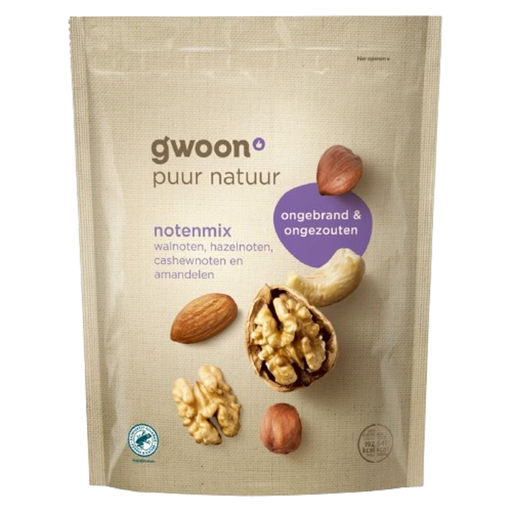
g'woon raw unsalted nut mix - 200 g
A good choice if you want to add a raw, unsalted mix to your breakfast.
The ingredients list names hazelnuts, walnuts, almonds and cashews.
The product information warns that traces of other nuts and peanuts may be present.
View at Joybuy
 No image available
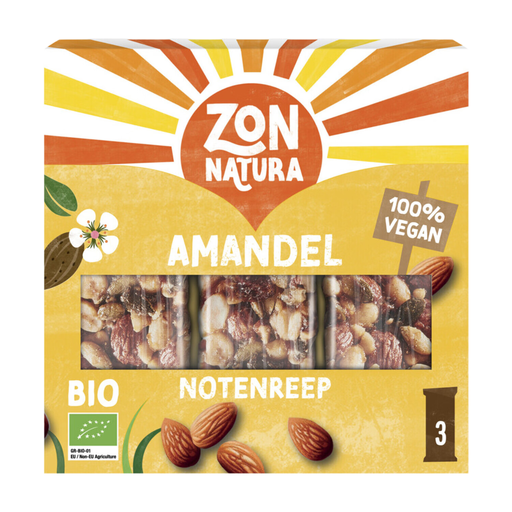
Zonnatura organic nut bar - 75 g
A good choice if you’re looking for a portable nut snack rather than loose nuts.
The ingredients list states that the peanuts, almonds and pumpkin seeds come from organic farming.
The bar is sweetened with agave syrup and contains 24 g of sugars per 100 g. The product information warns that it may contain other nuts and sesame seeds.
View at Joybuy
Frequently asked questions
What information should appear on the packaging alongside the EU organic logo?
According to the European Commission, the logo should be accompanied by the inspection body’s code number and a statement showing whether the agricultural raw materials come from EU agriculture, non-EU agriculture or both. Check this information on the organic product’s packaging.
Does unroasted mean the same as organic?
No. Unroasted describes how the product is processed; organic refers to production standards and certification. Check both separately. AH Biologisch Notenmix ongebrand is described as both unroasted and carrying the EU organic logo and code NL-BIO-01.
Can my baby eat the same nut breakfast as me?
Not in the form of whole nuts if your child is under 4. Because of the choking risk, Amsterdam UMC recommends nut butter with no added sugar or salt instead of whole nuts. The Netherlands Nutrition Centre says that first tastes of solid food do not replace breast milk or formula, so a product intended for a parent’s breakfast isn’t automatically suitable as baby food.
Does allergen information have to be available before purchase?
Yes. The Netherlands Food and Consumer Product Safety Authority says allergen information must appear on the label of pre-packed foods. Read the ingredients and any warnings about the possible presence of other allergens before choosing a product.
How should I store an opened pack of mixed unsalted nuts?
Store the nuts in a well-sealed container in a cool, dark and dry place, and follow the instructions on your product’s label too. For mixed unsalted nuts, the Netherlands Nutrition Centre gives a storage time of 6 months in a kitchen cupboard and 1 year in the freezer; quality may deteriorate after that.


