When choosing organic muesli, first check the labelling, then think about what you want in your weekend breakfast: a simple mix of grains, fruit and nuts, or a crunchy texture. Compare similar products per 100 g, including their sugar and fibre content, and always check the latest ingredients and allergen information if you have an allergy.
Who is this choice relevant to?
If you check organic labels
You want to be able to check whether muesli is organic, rather than relying on the look of the packaging. The EU organic logo and the code of the inspection body can help you do this, as explained by the European Commission and Skal Biocontrole.
If you compare nutritional information
You want to see how different packs compare in terms of sugar and fibre. The Netherlands Nutrition Centre advises comparing similar breakfast cereals per 100 g, so different serving sizes don’t skew the comparison.
If you want fruit, nuts or crunch
You’re looking for muesli with ingredients or a texture that suits your weekend breakfast. With these varieties, check the nutritional information and, if it matters to you, the allergen information on the pack too.
What should you look for when choosing?
Check the organic label first. Then compare the ingredients and nutritional information of muesli varieties that match the flavour and texture you’re looking for.
| What to consider |
What should you check? |
Who is this important for? |
| Organic labelling |
Check the EU organic logo, the inspection body’s code and the indication of origin on the label. |
I want to know what the organic claim on my muesli is based on, rather than relying on green packaging alone. For around 37% of consumers, being able to verify this comes first. |
| Sugar and fibre |
Compare similar muesli varieties per 100 g for sugar and fibre, and read the ingredients list. |
When putting my breakfast together, I want to compare the nutritional information on different packs accurately. Around 27% of consumers give this the highest priority. |
| Flavour and texture |
Choose between a simple mix, fruit and nuts, or a crunchy variety; check the ingredients on the exact pack. |
For a relaxed weekend breakfast, I want fruit, nuts or a crunchy texture without having to add much myself. This is the most important factor for around 18% of consumers. |
| Availability |
Check your chosen retailer and whether the variety is available shortly before you buy. |
I need my shopping to fit in with when I’m going to the shop or having it delivered. For around 18% of consumers, this practical consideration is decisive. |
Common mistakes
-
Assuming organic means low in sugar
Organic describes how a product is made, not its sugar content. The Netherlands Nutrition Centre notes that sugar, honey or chocolate may be added to crunchy muesli and cruesli, for example.
Check the organic labelling separately, then compare similar packs per 100 g for sugar and fibre.
-
Comparing only the serving sizes shown on packs
Nutritional values per serving are less useful for comparing two packs when the stated serving sizes differ.
Start by using the values per 100 g, then consider how much you serve yourself.
-
Skipping the allergen information
The exact ingredients in muesli containing grains or nuts may matter to someone with a food allergy. The Netherlands Food and Consumer Product Safety Authority highlights the importance of allergen information on labels.
For every variety you choose, check the latest ingredients, allergens and any ‘may contain’ warnings on the packaging.
-
Assuming a product listing means it’s in stock
A product page doesn’t necessarily tell you whether a pack will be available when you shop or have your groceries delivered. For example, Lidl lists Crownfield organic muesli as a product available to buy in store.
Check that your chosen variety is available before planning your weekend shop.
Brands to consider
AH Biologisch
Albert Heijn lists wholegrain muesli and plain crunchy muesli among the products in this range.
- For its plain crunchy variety, Albert Heijn lists wholegrain cereals and the EU organic logo.
- Check the ingredients, nutritional values and allergens on the latest packaging; Albert Heijn notes that product information can change.
Jumbo
Jumbo lists organic muesli with ingredients including raisins, fruit and nuts, as well as a crunchy nut variety.
- The different blends let you choose between fruit, nuts and a crunchy texture.
- Compare the nutritional information for each variety; the ingredients and values for one Jumbo muesli don’t necessarily apply to another.
Zonnatura
The Zonnatura Organic Muesli Nuts & Seeds listed by Jumbo is a specific option if you’re looking for nuts and seeds.
- The product listing makes it clear which variety you can compare for ingredients and nutritional information.
- Check the availability and latest label for this particular variety; product descriptions don’t automatically apply to other Zonnatura muesli products.
Crownfield
Lidl lists Crownfield organic muesli as an option for shopping in store.
- Lidl’s listing describes this muesli as an organic product.
- The listing says the product is sold in store only; check the label there and confirm availability.
ALDI BIO
ALDI includes organic muesli with dried fruit, nuts and seeds in its breakfast cereal range.
- The listed ingredients make it worth considering if you’re looking for muesli with fruit, nuts and seeds.
- Base your choice on the label of the pack you’re actually buying, including the organic labelling and allergen information.
Muesli for a weekend breakfast on Joybuy
These two muesli varieties include fruit, nuts or seeds, making them a good fit for a generously topped breakfast bowl. If you’re specifically looking for an organic option, check the latest packaging for the EU organic logo, the inspection body’s code and the indication of origin.
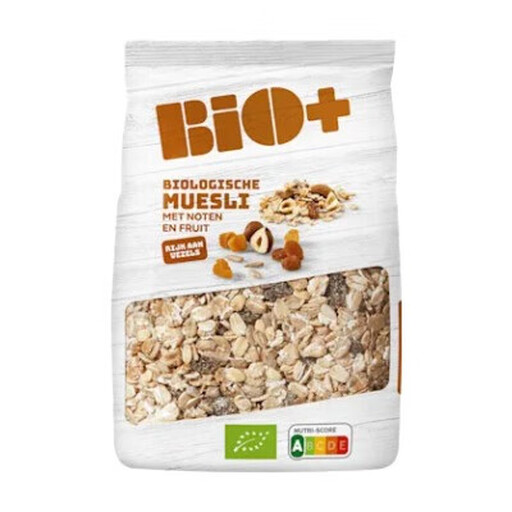 Image unavailable
B+ Muesli Nuts and Fruit, 450 g
An option if you’re looking for muesli with nuts and fruit for your weekend breakfast. Check the organic labelling, nutritional information and allergens on the latest pack.
View on Joybuy
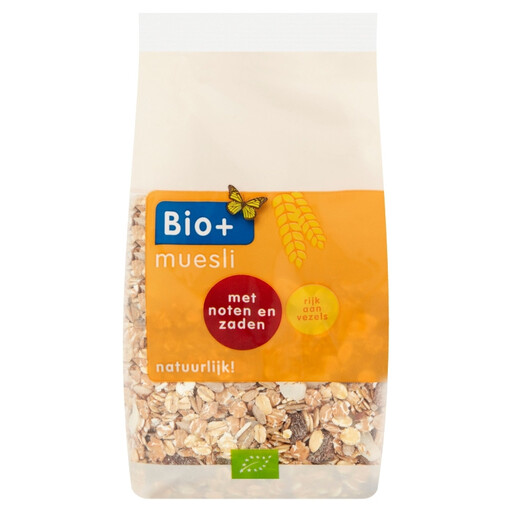 Image unavailable
Bio+ B+ Muesli Nuts and Seeds, 450 g
An option if you’d like muesli with nuts and seeds for breakfast. For this variety too, check the organic labelling, nutritional information and allergens on the latest packaging.
View on Joybuy
Frequently asked questions
How can I recognise organic muesli?
For pre-packed organic muesli, check the EU organic logo, the inspection body’s code and the stated origin of the agricultural ingredients. The European Commission and Skal Biocontrole explain what information is required for organic labelling; packaging that simply looks natural is not proof.
Does organic muesli automatically contain less sugar or more fibre?
No. The organic label alone tells you nothing about these nutritional values. The Netherlands Nutrition Centre recommends comparing similar breakfast cereals per 100 g, and checking the ingredients for the exact variety too.
What should I check if I have an allergy and want muesli with nuts?
Read the allergen information on the specific pack before eating it. Check the ingredients and any ‘may contain’ warnings; don’t assume that two varieties from the same brand have the same ingredients.
Is it better to buy organic muesli online or in store?
Choose the option where your preferred variety is available when you do your shopping. Albert Heijn and Jumbo show organic muesli on their product pages, while Lidl lists Crownfield organic muesli as an in-store product. Check current availability before counting on a particular pack.


