First, check whether the packaging clearly identifies the muesli as organic. Then choose plain muesli if you want to add your own fruit, a fruit and nut mix if you want those ingredients straight in your bowl, or crunchy muesli if texture is your priority. Whatever you choose, compare the ingredients, nutritional information per 100 g and allergens. Organic certification alone tells you nothing about the sugar content or whether a product is suitable for someone with an allergy.
Which muesli is right for you?
For anyone who wants to control the sweetness
A plain organic wholegrain muesli gives you the freedom to add your own fruit or yoghurt. Albert Heijn states that its organic wholegrain muesli contains 0 g of added sugars per 100 g. Check the packaging if this is important to your choice.
For anyone who wants fruit and nuts in the mix
Muesli with dried fruit and nuts has a different composition from a plain variety. Albert Heijn, Jumbo and Zonnatura all describe organic options of this kind. As well as checking any claims about added sugar, read the sugar content per 100 g and check the allergens.
For anyone who prefers a crunchy texture
With crunchy muesli, the ingredients and nutritional values are especially important: the Jumbo and Barnhouse varieties reviewed here include ingredients such as oil or syrup. Choose this type for its texture, not because you assume that organic means low in sugar.
What should you look for when choosing?
Start by checking the organic label, then decide which feature matters most for your breakfast: making your own mix, having fruit and nuts included, enjoying a crunchy texture or checking for allergens.
| What to consider |
What to check before buying |
Who it matters to |
| Plain organic base |
Look for the European organic logo and inspection code on the packaging. Then check that the ingredients are what you would expect in a plain muesli. |
If I want to make my own breakfast with fruit, I look for a clearly labelled organic base without fruit or nuts in the mix. Around 40% of consumers prioritise this combination. |
| Fruit and nuts |
Compare the ingredients and the ‘of which sugars’ figure per 100 g. Don’t assume ‘no added sugar’ means sugar-free. |
I want dried fruit and nuts in my breakfast straight away, but I also want to know how much sugar the mix contains. For around 30% of consumers, this ready-to-eat flavour is the top priority. |
| Crunchy texture |
Check which oils and sweeteners have been used, and compare the energy, fat and sugar content per 100 g. |
If I’m mainly looking for crunchy muesli, I accept that its composition may differ from a plain mix. This texture is the deciding factor for around 20% of consumers. |
| Allergens |
Check the current packaging for both ‘contains’ and ‘may contain’ information, even for a plain variety. |
If I need to avoid certain ingredients, the allergen information may limit my choice, whatever the flavour. Around 10% of consumers put this check ahead of their other preferences. |
Common mistakes
-
Assuming organic means low or no sugar
Organic certification and nutritional information answer different questions. Albert Heijn states that its plain muesli contains 0.7 g of sugars per 100 g, while its organic fruit and nut muesli contains 13 g per 100 g.
Compare the ‘of which sugars’ figure per 100 g and check the ingredients list too. A claim of 0 g added sugars doesn’t mean a muesli is sugar-free.
-
Comparing crunchy and plain varieties on taste alone
Jumbo states that its Bio Krokante Muesli 4 noten contains 457 kcal and 21 g of fat per 100 g. Its ingredients include sunflower oil and coconut blossom sugar. In this variety, the crunchy texture comes with a different composition from a simple cereal mix.
Compare the nutritional information per 100 g and decide whether the texture is worth the composition shown on the label.
-
Assuming organic muesli is allergen-free
The organic varieties described here include ingredients such as gluten-containing cereals, nuts or sesame. A plain mix isn’t automatically free from other allergens either.
If you have an allergy, read the full allergen information on the current packaging, including any ‘may contain’ warnings. Don’t rely on the product name or organic label alone.
Brands to consider
These examples show how plain, fruit and nut, and crunchy organic varieties can differ. Always check the packaging of the specific variety you choose before buying.
AH Biologisch
Albert Heijn describes a plain organic wholegrain muesli and an organic wholegrain variety with fruit and nuts.
- According to Albert Heijn’s product information, the plain variety contains 0 g of added sugars and 11 g of fibre per 100 g.
- The fruit and nut variety also states 0 g of added sugars, but contains 13 g of sugars per 100 g. Both varieties contain gluten-containing cereals; check the nuts in the fruit and nut variety too.
Jumbo
Jumbo describes both organic wholegrain muesli with fruit and nuts and organic crunchy muesli with four nuts.
- Jumbo’s product information states that the fruit and nut variety contains 15 g of sugars per 100 g, while the crunchy four-nut variety contains 6.2 g per 100 g.
- The crunchy four-nut variety also contains sunflower oil and coconut blossom sugar, and provides 457 kcal per 100 g. Compare the full nutritional information, not just the sugar content.
Zonnatura
Zonnatura makes an organic muesli with wholegrain cereals, nuts, seeds and dates.
- The product information published by Jumbo states that this variety contains 68% wholegrain cereals, 16% nuts and seeds, and 14.5% dates.
- The ingredients described include nuts, sesame and gluten-containing cereals. Check the current allergen information before buying.
Barnhouse
Barnhouse offers, among other products, an organic crunchy Krunchy variety with forest fruits.
- Ekoplaza states that this specific variety contains 11 g of sugars per 100 g.
- The variety contains rice syrup. Comparing it with a conventional variety doesn’t replace checking its own ingredients list and nutritional information.
ALDI
ALDI Netherlands lists organic muesli with dried fruit, nuts and seeds in its breakfast cereal range.
- The category gives you an idea of the type of muesli you may find in its range.
- Check each product individually for its organic label, ingredients, nutritional information and allergens.
Quaker Cruesli
Quaker Cruesli is a useful comparison for anyone looking for a crunchy breakfast cereal mix; Cruesli 4 Nuts is a mix of toasted cereals and nuts.
- The ingredients list for Quaker Cruesli 4 Nuts includes wholegrain oats and wholegrain wheat.
- The same ingredients list includes glucose syrup and sugar. If you’re specifically looking for organic muesli, check the organic label on the product you choose.
Muesli on Joybuy
These mueslis with fruit, nuts or seeds may suit a breakfast where you want those ingredients already in the mix. Check the current packaging to make sure the organic label, pack size, sugar content and allergens suit your needs.
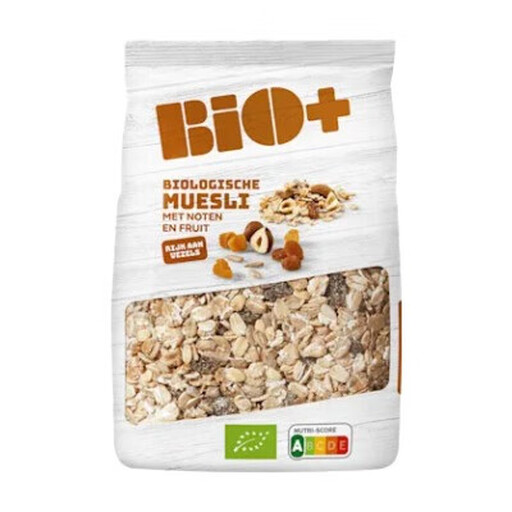 Image unavailable
B+ Muesli Nuts and Fruit
A muesli with nuts and fruit for anyone who wants these ingredients straight in their breakfast bowl. Check the pack size: the product listing mentions both 400 g and 450 g. Also check the current packaging for the organic label, nutritional information and allergens.
View on Joybuy
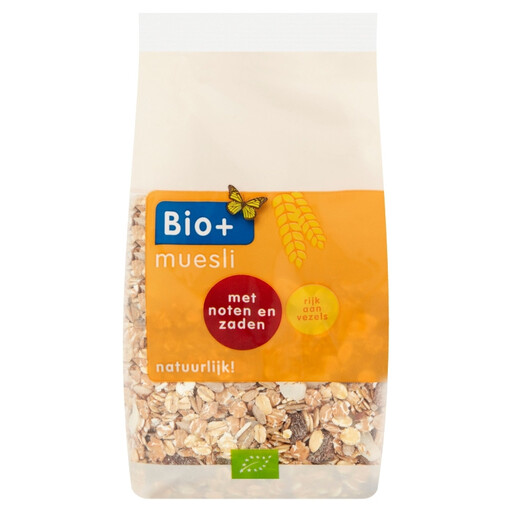 Image unavailable
Bio+ B+ Muesli Nuts and Seeds 450 g
A muesli with nuts and seeds for anyone looking for a mix of ingredients. The product title gives a pack size of 450 g. Before you choose, check the current packaging for the organic label, ingredients, added sugars and allergens.
View on Joybuy
Frequently asked questions
How can I identify organic muesli on the packaging?
Look for the European organic logo and inspection code. Skal Biocontrole states that the European logo is compulsory for prepacked food produced in the European Union and sold as organic. Check the labels on the packaging of the variety you’re buying.
Is muesli with no added sugar sugar-free?
No. Ingredients can contain naturally occurring sugars. Albert Heijn states that its organic wholegrain muesli with fruit and nuts contains 0 g of added sugars and 13 g of sugars per 100 g. So remember to check the ‘of which sugars’ figure in the nutritional information too.
Can I choose organic fruit and nut muesli if I need to avoid allergens?
It depends on the ingredients and allergens listed for the specific product. Organic doesn’t mean allergen-free. The fruit and nut varieties described by Albert Heijn and Jumbo contain gluten-containing cereals and nuts. Zonnatura also lists sesame in its nut and seed muesli. Before eating, check the current ‘contains’ and ‘may contain’ information.
How should I store muesli after opening?
Follow the storage advice on the packaging and seal it properly after use. The product information described by Albert Heijn and Jumbo recommends storing the relevant varieties in a cool, dry, dark place.


