What should you look for in organic muesli?
Start with the ingredients and nutritional values, then check the organic labels and any allergen information separately. Values per 100 g are useful for comparing packs, but they also need to suit the portion you choose for breakfast.
| What to consider |
What to check before buying |
Who it matters to |
| Wholegrain base and fibre |
Check the types of grain in the ingredients list, fibre per 100 g and any added sugar. |
When I choose muesli for a regular breakfast, I want to know what the grain base is made of. Around 36% of consumers give this combination of wholegrain ingredients, fibre and added sugar the highest priority. |
| Carbohydrates and portion size |
Compare carbohydrates and of which sugars per 100 g, and take your own portion into account. |
When I have muesli for breakfast, I want to be able to assess how many carbohydrates my chosen portion contains, especially if it includes dried fruit. For around 29% of consumers, portion size is the most important consideration. |
| Organic certification |
For pre-packed organic muesli, check the EU organic logo, the control body code and the origin statement. |
I want to choose a product that can be verified as organic, rather than relying on the look of the packaging. This check comes first for around 21% of consumers. |
| Ingredients and allergens |
Read the latest ingredients list, allergen information and any warning about cross-contamination. |
If I need to avoid an allergen, I need to know before buying what this particular muesli contains or may contain. Around 14% of consumers put this check ahead of the other selection criteria. |
Muesli options on Joybuy
These options are muesli with fruit and nuts, or with nuts and seeds. Compare the nutritional information and allergens for each variety. If organic certification matters to your choice, check the EU organic logo, control code and origin statement on the packaging.
 No image available
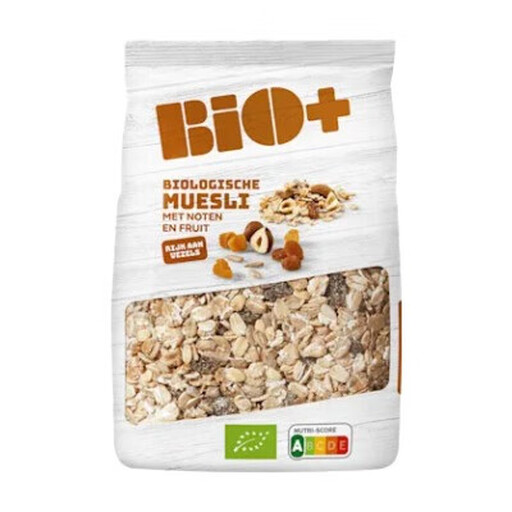
B+ Muesli Nuts and Fruit 450 g
An option if you’re looking for muesli with nuts and fruit. Check the carbohydrates and sugars on the packaging for your own portion too.
If you have an allergy, read the latest ingredients and allergen information.
View on Joybuy
 No image available
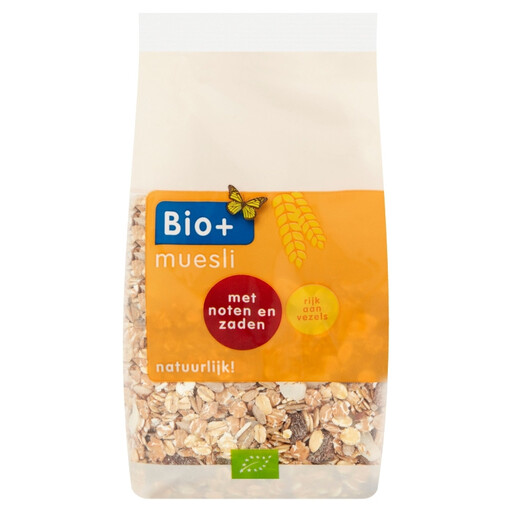
Bio+ B+ Muesli Nuts and Seeds 450 g
An option if you’re looking for muesli with nuts and seeds. Check the fibre, carbohydrates and sugars on the packaging for this variety.
Check the ingredients list for added sugar and, if you have an allergy, read the latest allergen information.
View on Joybuy
Frequently asked questions
Is organic muesli automatically suitable for breakfast if you have diabetes?
No. Organic certification describes how a product is made, not how much carbohydrate, sugar or fibre it contains. Compare the nutritional information and ingredients for the portion you plan to eat. For personalised dietary advice, speak to a dietitian.
Where should I start when reading a muesli label?
Start with the ingredients list and nutritional values per 100 g. The Diabetes Fund lists wholegrain breakfast cereals and no added sugar as points to consider; also check the fibre, carbohydrates, of which sugars, and your own portion.
Does ‘0% added sugar’ mean muesli contains no sugars?
No. Jumbo’s listing for Zonnatura Organic Muesli with Nuts & Seeds states 0% added sugar, but also 11 g of sugars per 100 g. So read the full nutritional information and ingredients list.
How can I tell if muesli is certified organic?
For pre-packed organic muesli, check the EU organic logo, the control body code and the origin statement for the agricultural ingredients. According to the European Commission, the EU organic logo may only be used on products certified as organic by an authorised control body.
Which allergens should I check in muesli?
Read the allergen information on the specific pack. Depending on the variety, gluten-containing cereals, nuts, sesame, soya and milk may be relevant; also look out for any warning about cross-contamination.


