Who is this choice relevant for?

Parents who serve small portions themselves

You want to decide how much dried fruit your toddler has, so you pay attention to the size of the pieces, making sure they eat calmly, and choosing an appropriate amount. The Netherlands Nutrition Centre recommends giving a small amount of raisins and supervising children while they eat.

Parents who want a straightforward label

You want to be able to recognise the organic certification and check whether sugar has been added. Organic certification and information about added sugars answer different questions.

Parents who combine breakfast and snacks

You’re looking for a product you can offer in a small amount at a regular mealtime. The Netherlands Nutrition Centre recommends a clear daily routine for toddlers; portioning the food yourself and following the storage instructions can help.

What should you look for when buying?

What to consider What to look for Who is this important for?
Eating skills and piece size Check the pieces before serving and adjust them to suit your child; make sure your toddler eats sitting down under supervision. If I want to judge whether my toddler can manage the pieces being offered, I look beyond the certification. Around 36% of consumers prioritise eating skills and supervision.
Added sugar and portion size Read the ingredients and distinguish added sugar from total sugars; don’t automatically treat a portion listed on the label as advice for toddlers. I want to offer a small amount and know whether sugar has been added. Around 29% of consumers prioritise both portion size and sugar content.
Organic certification Check the organic information and certification on the product details; assess the ingredients and suitability separately. When I want to check organic provenance, I look for clear information on the label rather than relying on a natural-looking appearance. Around 21% of consumers want to confirm certification first.
Portioning and storage Compare the pack size with how much you use and follow the storage instructions for the exact product variant you’ve chosen. I want a pack that suits mealtimes at home and can be stored as instructed on the label. Around 14% of consumers prioritise practicality and storage.

Common buying mistakes

  • Assuming organic means it’s automatically suitable for every toddler

    Certification provides information about organic production, not your child’s eating skills or whether the pieces being offered are suitable.

    Check the organic product information and suitability separately. Make sure your toddler eats sitting down under supervision.

  • Reading ‘no added sugar’ as ‘low in sugar’

    AH Biologisch Rozijnen lists 0 g of added sugars, but also 59 g of total sugars per 100 g, according to Albert Heijn. These figures refer to different types of sugar.

    Check both the ingredients and the nutritional information, and keep the amount you serve small.

  • Treating a general label portion as a toddler portion

    The 25 g portion shown on some labels is product information, not advice specifically for toddlers.

    Keep the amount small and don’t treat the label portion as a recommended serving for your toddler.

  • Treating a fruit and nut mix as plain dried fruit

    A mix may contain whole nuts or peanuts; the Netherlands Nutrition Centre advises taking particular care with these for young children. The ingredients may also be relevant if your child has allergies.

    Read the ingredients and allergen information on the exact pack, even if the front mainly shows fruit.

Brands and product ranges to consider

Albert Heijn

Albert Heijn’s product information lists AH Biologisch Rozijnen in a 250 g pack and dried, unsweetened mango in a 130 g pack.

  • The product pages provide ingredient and organic product information; for the raisins, they list both added and total sugars.
  • Label information is not a taste test or proof that a product is suitable for every toddler.

Jumbo

Jumbo lists Zongedroogde Sultana Rozijnen Biologisch in a 250 g pack.

  • The product information lists the European organic logo and control code TR-BIO-132.
  • The pack requires you to portion the raisins yourself and warns that a stalk or stone may remain; check the raisins before serving.

PLUS

PLUS sells BIO+ Sultana rozijnen in a 250 g stand-up pouch; BIO+ is the product name and PLUS is the retailer.

  • The product information lists EU Organic Farming and ingredients from organic sources.
  • The 25 g serving listed is general label information, not specific advice for toddlers.

Dirk

Dirk lists Bio+ Rozijnen sultana in a 250 g pack.

  • The product listing identifies a separate retailer for this product name and pack size.
  • The name and weight alone don’t establish that the recipe, control code and packaging are the same as the BIO+ variant at PLUS.

Lidl

Lidl Netherlands lists Belbake Biologische rozijnen.

  • The Dutch product listing names this organic product range.
  • A product listing is not evidence of a brand-wide nutritional claim or suitability for toddlers.

Dried fruit at Joybuy

These Joybuy products are options for dried fruit as part of a toddler’s snack or as a small addition to breakfast. Check the organic certification, ingredients and instructions for use on the product packaging itself.

De Kleine Keuken organic raisins 12M+ 140g

De Kleine Keuken Organic raisins 12M+ 140g

The product information lists 14 g boxes, so you can check the contents of each box when portioning.

According to the product information, the product contains no added sugars and should be stored in a cool, dry, dark place.

The product information states that it is not suitable for children with swallowing difficulties and that children should eat under supervision.

View at Joybuy
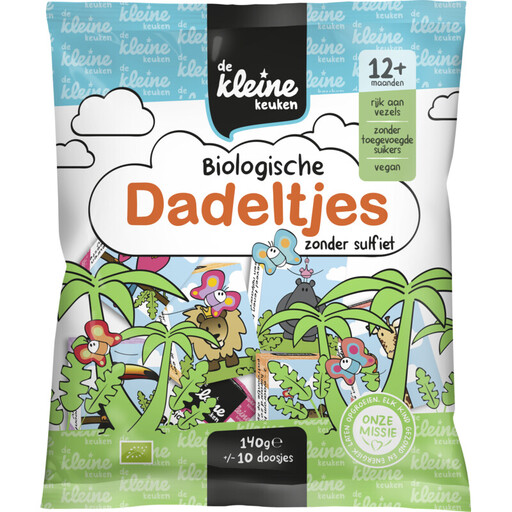
De Kleine Keuken organic dates 12+

De Kleine Keuken organic dates 12+

The product information lists dates as the main ingredient and rice flour as the second ingredient.

According to the product information, the product contains no added sugars and should be stored in a cool, dry, dark place.

The product information recommends keeping your child sitting upright and supervising them while they eat.

View at Joybuy
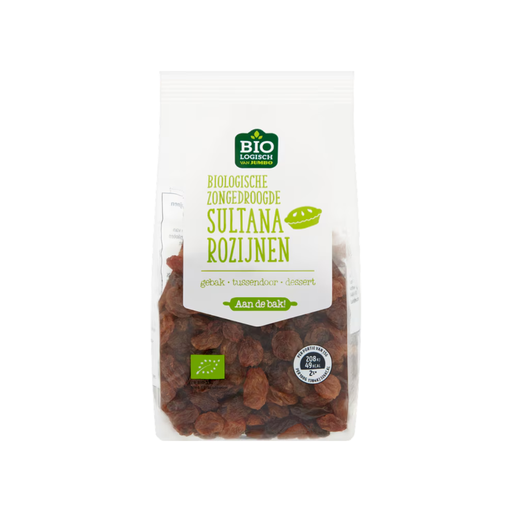
B+ Sultana raisins 250 g

B+ Sultana Raisins 250 g

The product description lists raisins with sunflower oil and suggests using them as a snack or adding them to breakfast cereal.

The pack weighs 250 g; the product information recommends resealing it carefully after opening.

According to the product information, a stalk or stone may remain. Check the raisins before serving.

View at Joybuy

Frequently asked questions

How much dried fruit should you give a toddler?

Keep the amount small. The Netherlands Nutrition Centre doesn’t give a universal portion in grams for toddlers, so the 25 g shown on some product labels is not automatically a recommendation for toddlers.

Can my toddler eat dried fruit while walking?

Make sure your child eats sitting down and stay nearby. A small portion or convenient pack is no substitute for supervision.

What allergen information should I check if my child has a known allergy?

Read the ingredients and allergen information on the exact pack, and check for any warnings about cross-contamination too. The Netherlands Food and Consumer Product Safety Authority states that prepacked products should show allergen information on the label.

What does the organic certification tell you about dried fruit?

The certification provides information about organic production and labelling, not whether a product is suitable for a toddler. The Netherlands Enterprise Agency states that the EU organic logo is mandatory on prepacked foods produced in the EU and sold as organic.

How should you store dried fruit after buying it?

Follow the label for the product variant you’ve chosen. The product information for Albert Heijn, Jumbo and PLUS raisins says to store them in a cool, dry, dark place; for AH Biologisch Mango gedroogd & ongezoet, Albert Heijn recommends storing it at room temperature in a dark place.
