What should you look for when buying?
Compare nutritional values based on the amount you actually eat. For a recovery meal, deliberately choose a separate protein source; the Vereniging Sportvoedingsexperts Nederland cites quark with fruit and muesli as an example.
| What to consider |
What to look for |
Who is this most relevant to? |
| Protein for recovery |
Compare protein per 100 g and per serving. The labels for AH, Jumbo and BIO+ raisins list 3.0, 3.1 and 2.8 g per 100 g respectively; that works out at around 0.7–0.8 g per 25 g. |
After exercise, I want to know how much protein my serving really adds and what the rest of my meal provides. Around 31% of consumers are primarily concerned with protein for recovery. |
| Organic certification |
Check the EU organic logo, the control body code and the indication of origin on the actual pack. Skal sets out conditions for organic ingredients in composite organic products. |
If I want to buy organic, I want to be able to check the labelling on the product itself. Around 25% of consumers are primarily concerned with verifiable organic certification. |
| Sugars and serving size |
Check both total sugars and any information about added sugars. AH Biologisch Rozijnen lists 59 g of total sugars per 100 g and 0 g of added sugars. |
When choosing a sweet snack, I want to consider what’s in the serving I actually eat, not just the claim about added sugars. Around 19% of consumers are primarily concerned with sugars and energy per serving. |
| Allergens |
Check the ingredients list and any cross-contamination warnings for the exact variety. The AH fruit and nut mix examined contains almonds and pecans. |
If I need to avoid certain nuts, I check the full allergen information before choosing a mix. Around 13% of consumers prioritise avoiding relevant allergens. |
| Packaging and storage |
Compare pack sizes and follow the storage advice on the packaging. The AH, Jumbo and BIO+ raisin packs examined contain 250 g; the AH fruit and nut mix contains 120 g. |
For my everyday shopping, I want to choose a pack that suits how often I use the product and how I can store it. Around 12% of consumers are primarily concerned with pack choice and practical storage. |
Joybuy products
These products are organic raisins and dates, to use as a dried fruit component. For a recovery meal, also consider a separate protein source; according to the product information, the dates contain 2.6 g of protein per 100 g.
 Image unavailable
De Kleine Keuken organic raisins 12M+ 140 g
The product information positions these raisins for children aged 12 months and over, rather than specifically as sports nutrition.
The description mentions 14 g portion packs and no added sugars or sulphites.
The product information advises supervising children while they eat.
View at Joybuy
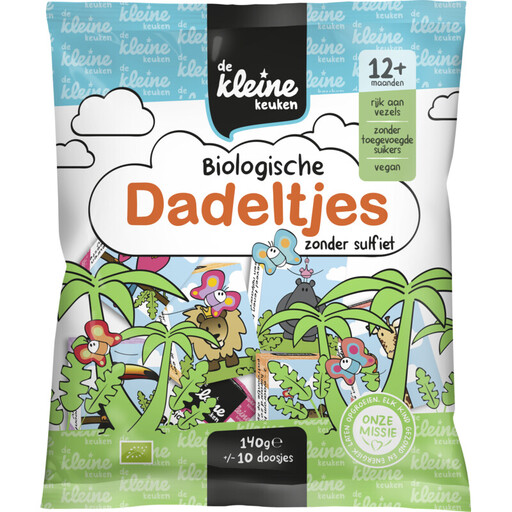 Image unavailable
De Kleine Keuken organic dates 12+
These dried dates can be used as a fruit component. Pair them with a separate protein source if recovery is your main goal.
The product information lists 2.6 g of protein per 100 g and 0.4 g per 14 g serving.
The description lists dates with 5% rice flour, no added sugars and no sulphites. The product is intended for children aged 12 months and over; the product information advises that the child sits upright and eats under supervision.
View at Joybuy
Frequently asked questions
Does a small serving of organic raisins provide enough protein to form the basis of my recovery meal?
No. A 25 g serving of the raisins examined provides around 0.7–0.8 g of protein. Use them as a fruit component and consider the separate protein source in your meal; the Vereniging Sportvoedingsexperts Nederland cites quark with fruit and muesli as an example of a recovery meal.
Does ‘no added sugars’ also mean that raisins contain little total sugar?
No. AH Biologisch Rozijnen lists 0 g of added sugars, but 59 g of total sugars per 100 g. So check ‘of which sugars’ as well as your serving size.
How can I identify an organically certified product?
Check the EU organic logo and the accompanying information on the packaging. According to the European Commission, the logo may only be used on organically certified products; this includes the control body code and the indication of origin. Skal sets out additional conditions for composite organic products.
How should I store dried raisins and a fruit and nut mix?
Follow the label for the exact variety. The AH and BIO+ raisins examined say to store in a cool, dry, dark place; the AH fruit and nut mix label says it has a limited shelf life once opened.
Can I use raisins for children aged 12 months and over as special sports nutrition?
The De Kleine Keuken raisins examined are positioned as baby food for children aged 12 months and over, not as special sports nutrition. The product information advises having the child sit upright and supervising them while they eat.


