What should you look for when choosing?
Start by checking that the product’s organic origin can be verified. Then decide on the snack portion and packaging, and check the type of fruit and allergen information if these are relevant to your family.
| What to consider |
What should you check? |
Who is this important for? |
| Organic origin |
Check the EU organic logo, the control code and the agricultural origin. The European Commission states that the EU organic logo may only be used for products certified as organic by an approved control authority or control body. |
If organic origin is a deciding factor for me, I want to be able to verify it from the label; around 29% of consumers prioritise verifiable origin. |
| Small portions |
Decide how much to offer for one snack time. The Netherlands Nutrition Centre recommends keeping portions of raisins small because of their sugar content. |
I want to offer a small amount after school, without letting the size of the bag determine my portion choice; around 29% of consumers focus mainly on portion size and composition. |
| Packaging and storage |
Compare the packaging with the number of snack times you want to use it for. Follow the storage advice on the relevant pack. |
If I want to divide a pack between several occasions, practical portioning matters most to me; around 18% of consumers give packaging and storage the highest priority. |
| Type of fruit |
Compare the types of fruit listed, such as raisins and dried mango. A different variety doesn’t, by itself, tell you what your child prefers. |
I want to be able to vary the types of fruit without assuming what my child likes; around 12% of consumers prioritise variety. |
| Ingredients and allergens |
Check the ingredients and allergen information on the pack. The Netherlands Food and Consumer Product Safety Authority states that allergen information for prepacked products must appear on the label. |
If an allergy is relevant, I want to check the labelling for that allergen separately; around 12% of consumers say allergen information is their top priority. |
Joybuy products for after-school snack portions
This selection includes raisins, dates and mixed fruit pieces in snack-sized formats. Check each product’s organic labelling, ingredients and usage instructions; the product name alone doesn’t confirm that its organic certification can be verified.
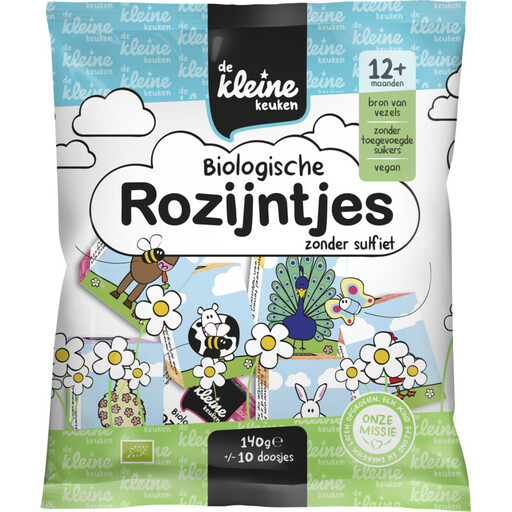 Image unavailable
De Kleine Keuken organic raisins 12M+, 140 g
The product description says these organic raisins come in snack boxes, making it easy to offer individual portions.
The pack contains 10 boxes of 14 g. The product information specifies 12M+ and recommends supervision while eating.
View at Joybuy
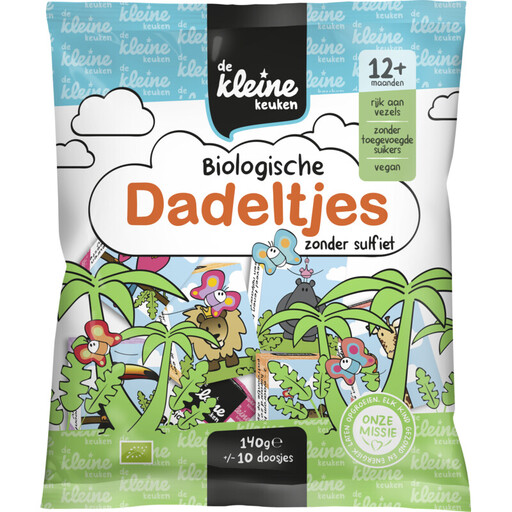 Image unavailable
De Kleine Keuken Organic dates 12+
The product description presents mini dates as a snack for young children. They’re an option if you want to compare dried dates with raisins.
The ingredients list specifies 95% dates and 5% rice flour. Nutritional values are given per 14 g. The product information specifies 12+ and advises seating the child upright and supervising them while they eat.
View at Joybuy
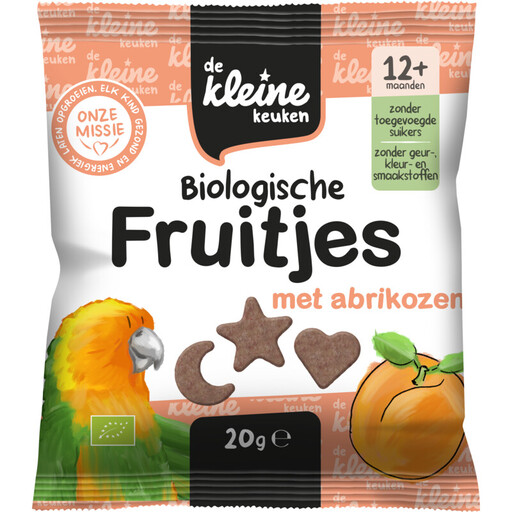 Image unavailable
De Kleine Keuken Organic Fruitjes with Apricots, 20 g
This product may suit anyone looking for a mixed fruit snack rather than a single type of fruit.
The ingredients list specifies 44% apricot, 44% date, 8% banana and 4% rice flour. The product information gives an age indication of 12 months and states that the product may contain traces of nuts.
View at Joybuy
Frequently asked questions
What should you look for on an organic label?
Check the EU organic logo, the control code and the agricultural origin. According to the European Commission, the EU organic logo may only be used for products certified as organic by an approved control authority or control body. Processed products must also meet certain requirements, including containing at least 95% organic ingredients and meeting additional conditions for the remaining ingredients.
Can a bag of raisins count as one snack portion?
The contents of the bag aren’t a guide to portion size. The Netherlands Nutrition Centre recommends keeping portions of raisins small because of their sugar content, so divide the contents according to the snack occasion.
Is organic origin enough if my child has an allergy?
No. Organic origin doesn’t tell you whether a product contains allergens. If an allergy is relevant, check the ingredients and allergen information on the pack. The Netherlands Food and Consumer Product Safety Authority states that this information must appear on the label of prepacked products.
How should you store the listed Jumbo Biologisch Sultanarozijnen?
For its 500 g pack of Biologisch Sultanarozijnen, Jumbo recommends storing the raisins in a cool, dry, dark place. For other varieties, follow the storage advice on their own packaging.
Can dried fruit replace fresh fruit?
Raisins can be served as a snack, but the Netherlands Nutrition Centre says fresh fruit remains the better choice. If you serve dried fruit, remember the advice to keep portions small.


