
A small fruit addition
For parents and carers who want to pack a small amount of dried fruit alongside a regular school lunch. The Netherlands Nutrition Centre recommends a small portion; make sure there is still room for fresh fruit.


Choose a certified organic option your child enjoys, and offer it as a small addition rather than an automatic replacement for fresh fruit. Then check the ingredients, portion size and allergen warnings on the exact product packaging. Organic certification alone does not tell you whether a product is suitable for an individual allergy or the amount you want to pack.
For parents and carers who want to pack a small amount of dried fruit alongside a regular school lunch. The Netherlands Nutrition Centre recommends a small portion; make sure there is still room for fresh fruit.
For shoppers who want to recognise organic certification and then compare the ingredients of each product. Don’t rely on words such as ‘natural’ alone: the European Commission explains that the organic logo is reserved for products certified by an authorised body.
For families who need to take a known food allergy or school arrangements into account. Check the allergen information on the exact product packaging; even a fruit product may carry a warning about possible traces. The Netherlands Food and Consumer Product Safety Authority (NVWA) explains allergen labelling on prepacked products.
Start with the factor that matters most for your child, then check the packaging and the amount you want to pack.
| What to consider | What should you check? | Who might this matter more to? |
|---|---|---|
| Portion size and adding to a meal | How much you actually pack, and whether dried fruit remains an addition to fresh fruit. | I want to pack a small amount without automatically replacing fresh fruit. The Netherlands Nutrition Centre recommends a small portion; around 31% of shoppers put portion size first. |
| Recognising organic certification | The organic designation on the exact product and, where shown, the EU organic logo, control code and agricultural origin. | I want to check that the organic designation applies to the product, rather than judging by the look of the packaging alone. Around 25% of shoppers prioritise this check; the European Commission and Skal Biocontrole explain protected organic designations. |
| Taste and convenience | Whether your child enjoys the type of fruit and its texture, and whether the packaging is easy to portion and store at home. | I’m looking for something my child enjoys that’s practical to pack in a lunchbox. A GroentenFruit Huis factsheet on children aged 6 to 11 highlights preference, choice and convenience; around 19% of shoppers prioritise acceptance and ease of use. |
| Allergens and arrangements | The ingredients, allergen information and any warnings about possible traces on the exact product packaging. | I need to take a known allergy or school arrangement into account, so the information for the specific product is particularly important. Around 13% of shoppers prioritise these individual requirements; the NVWA explains allergen information on prepacked products. |
| Packaging and leftovers | The net weight, how much you’ll actually use and the storage advice after opening. | I want to choose a pack size that suits how often I pack portions, so there isn’t too much left over. Around 12% of shoppers prioritise the cost per portion used and reducing leftovers. |
Organic production does not change the advice on how much dried fruit to eat. The Netherlands Nutrition Centre recommends a small portion.
Assess the certification and portion size separately, then decide how much to pack.
Unsweetened dried fruit still contains sugar. So ‘unsweetened’ does not mean it contains no sugar.
Check the ingredients and nutritional information for the exact product, and bear in mind how much you’re packing.
A fruit and nut mix contains nuts; even a product made from a single type of fruit may carry a warning about possible traces.
Check the ingredients and allergen information on the exact product packaging, and take the individual situation and school arrangements into account.
The contents of a pack aren’t automatically the amount you’ll want to pack for one lunch. The organic raisins from Albert Heijn and Jumbo reviewed here come in 250 g packs.
Prepare a separate small portion and follow the storage advice on the packaging for the rest.
Product information is available for organic raisins and dried unsweetened mango.
The product information for Zongedroogde Sultana Rozijnen Biologisch describes an organic option in a 250 g pack.
The Alesto range includes products such as dried fruit.
The documented product page is for Trader Joe’s Rozijnen in a 500 g pack.
PLUS product information describes De Kleine Keuken 12+ Rozijnen Biologisch.
Product information is available for raisins in the range.
These products suit anyone looking for organic raisins, fruit bites or dates as a fruit option for lunch or a snack. Check the packaging, ingredients and any usage guidance for each product.
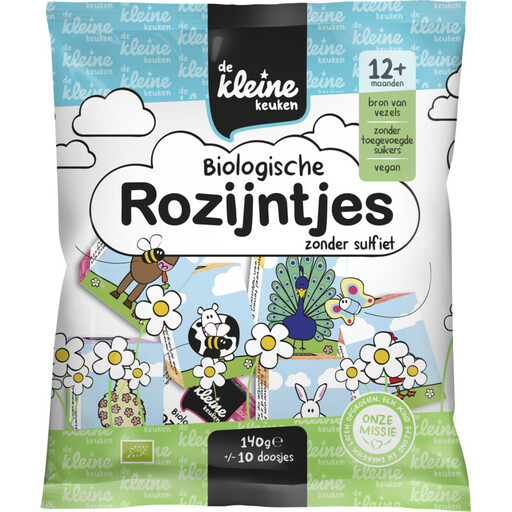 Image unavailable
The individually packed boxes of raisins may suit you if you want to decide how much to pack in each one.
The product information lists 14 g boxes. It also says that children should be supervised while eating; the product is not suitable for children with swallowing difficulties.
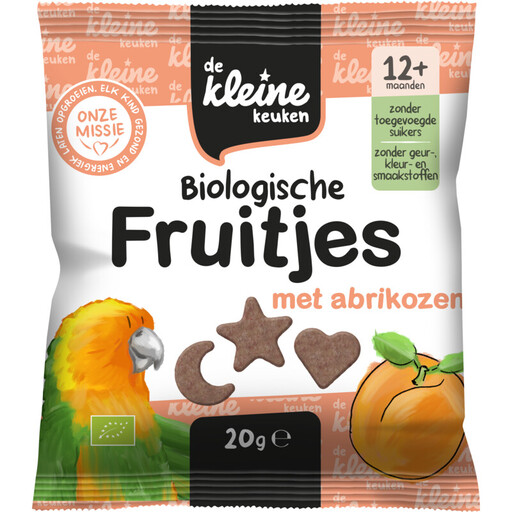 Image unavailable
These fruit bites are an option if you’d like to pack something different from raisins.
The product information lists apricots, dates and bananas. It warns that the product may contain traces of nuts; if this is relevant to an allergy, check the packaging.
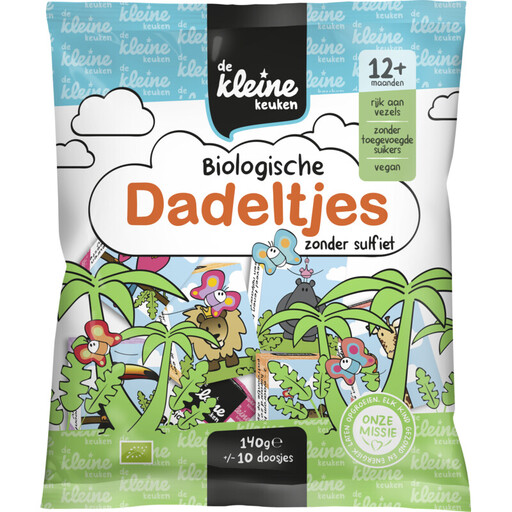 Image unavailable
Dates offer a different fruit option from raisins; consider whether this product suits your child’s preferences and lunch arrangements.
The product information says that children should sit upright and be supervised while eating.
Not necessarily a Dutch code: the European organic logo should appear alongside the code of the authorised control body and the agricultural origin. The products reviewed list different control codes, so check the designation on the exact product packaging.
Don’t make that your default choice. The Netherlands Nutrition Centre lists raisins as a possible snack, recommends a small portion and notes that fresh fruit contains more vitamin C.
No. Unsweetened does not mean sugar-free; dried fruit contains sugar. Check the ingredients and nutritional information for the exact product, then decide how much to pack.
Read the allergen information and any warnings on the packaging of the product you choose. The NVWA says that allergen information for prepacked products must appear on the label. If your child has a known allergy, their individual circumstances and school arrangements also matter.
Follow the storage advice on the packaging for the product you choose. For dried mixed fruit, the Netherlands Nutrition Centre recommends storing it in a cool, dry, dark place in a tightly sealed container. This is not a general shelf-life recommendation for every type of dried fruit.