What should you look for when choosing?
Organic certification tells you about how a product is certified, not how much added or total sugar it contains. The European Commission sets out the requirements for the EU organic logo; according to Skal Biocontrole, the term ‘organic’ is protected.
| What to consider |
What should you look for? |
Who is this most important for? |
| Organic origin |
Check the organic label on the exact pack. If it displays the EU organic logo, also look for the control code and information about the agricultural origin. |
If organic production is the deciding factor for me, I want a clear label on the pack. Around 31% of consumers prioritise organic origin above all else. |
| Added and total sugars |
Check the ingredients and compare them with the total sugars per 100 g; these two details don’t mean the same thing. |
If I want to avoid added sugar at breakfast, the ingredients are what matter most. Around 31% of consumers prioritise checking sugar. |
| Type of fruit and storage |
Choose a type and quantity of fruit that suit your breakfast, and follow the storage advice on the pack for any leftovers. |
I want to choose fruit I’ll actually use at breakfast and can then store according to the instructions. Around 19% of consumers prioritise practical use at breakfast. |
| Allergens |
Check the allergen information on the current packaging, especially if you’re choosing a fruit mix with other ingredients. |
If someone eating has a known allergy, I want to be able to check the label before serving the fruit. Around 19% of consumers prioritise checking allergens. |
The Netherlands Food and Consumer Product Safety Authority (NVWA) explains the requirements for allergen information on prepacked products. An organic label doesn’t replace this information, so always check the packaging for the specific variant.
Joybuy products for breakfast
These Joybuy products are suited to breakfasts featuring dried fruit, including raisins, dates and fruit mixes. For each variant, check the organic label, ingredients and any warnings in the product information and on the packaging.
 No image available
De Kleine Keuken Organic raisins 12M+ 140 g
An option if you want to serve raisins at breakfast and find small portions handy.
The product description lists 10 snack boxes of 14 g and no added sugars.
The product listing says suitable from 12 months. Keep young children sitting upright and supervise them while they eat; not suitable for children with swallowing difficulties.
View product
 No image available
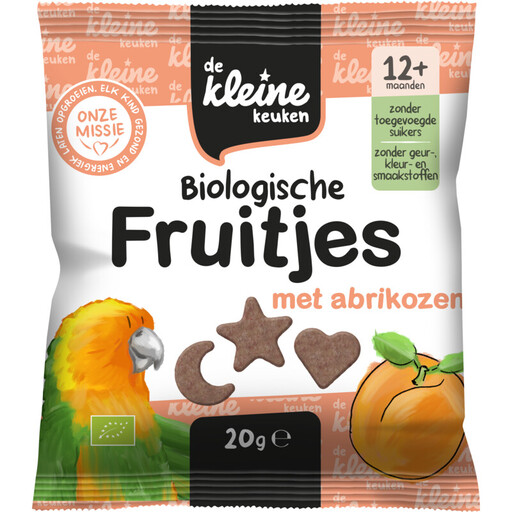
De Kleine Keuken Organic fruit bites with apricots 20 g
A good fit if you’re looking for a fruit mix with apricots, dates and banana alongside raisins.
The product listing gives a serving size of 20 g, says there is no added sugar and states that it’s suitable from 12 months.
May contain traces of nuts; check the product information if this is relevant to anyone eating it.
View product
 No image available
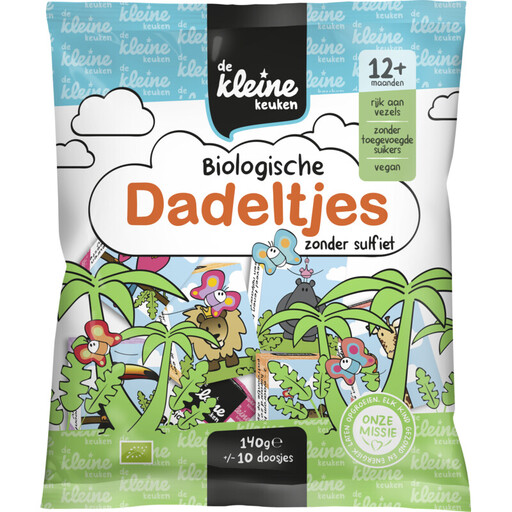
De Kleine Keuken Organic dates 12+
An option if you’d prefer dates to raisins at breakfast.
The product description says there are no added sugars and recommends storing in a cool, dry, dark place.
The product listing says suitable from 12 months. Keep young children sitting upright and supervise them while they eat.
View product
 No image available
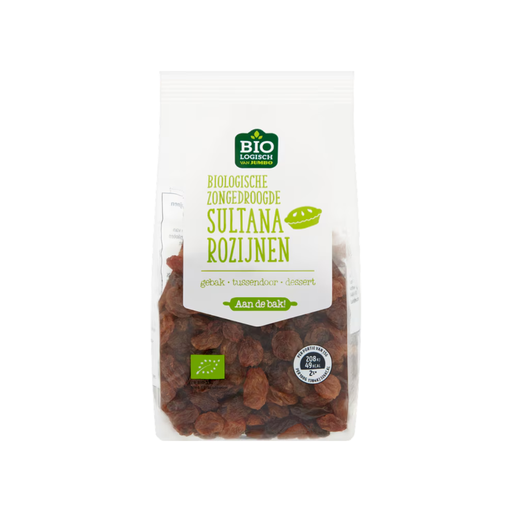
B+ Sultana raisins 250 g
A good fit if you want to add raisins to breakfast cereal.
The product description lists organic raisins with no added sugars.
According to the product information, a stalk or small stone may remain despite cleaning.
View product
Frequently asked questions
Does every organic product need to display the EU organic logo?
No, it depends on the product’s format and origin. According to the European Commission, the logo is mandatory for prepacked organic food produced in the EU. It’s optional for imported products that meet EU import rules and for unpackaged organic products. If the logo is used, the control code and agricultural origin must also be shown.
Does organic dried fruit have to be made from 100% organic ingredients?
No. According to the European Commission, products displaying the EU organic logo must contain at least 95% organic ingredients, with additional requirements for the remaining share. Also check the ingredients list for the variant you choose.
Do you need to prepare dried fruit before serving it at breakfast?
Dried fruit can be added to breakfast, as the Netherlands Nutrition Centre explains. Follow any product instructions and check the ingredients for your chosen variant. PLUS notes that natural impurities, such as stalks or small stones, may occur in BIO+ Sultana raisins.
How should you store an opened bag of dried fruit?
Follow the storage advice on the packaging for your chosen variant. The product information for AH raisins and BIO+ raisins at PLUS says to store them in a cool, dry, dark place; AH’s mango should be stored at room temperature in a dark place.
Should you throw away a pack as soon as it reaches its best-before date?
Distinguish between THT and TGT dates. For products with a THT date, the Netherlands Nutrition Centre recommends looking, smelling and tasting after the date has passed. Products with a TGT date should be used by or on that date. Also take storage conditions and product instructions into account.


