
Conscious organic snack shopper
You want to take organic dried fruit with you and be able to tell the difference on the packaging between an organic certification and general terms such as ‘natural’.


Start by checking the organic certification, then look at the ingredients, portion size and storage instructions for the specific product. If you’re having breakfast with yoghurt or other chilled ingredients, you’ll also need a cool bag. Organic or unsweetened doesn’t mean dried fruit is sugar-free or suitable for everyone.
You want to take organic dried fruit with you and be able to tell the difference on the packaging between an organic certification and general terms such as ‘natural’.
You’re looking for dried fruit to take with you for breakfast and want to check the ingredients and portions. Pack yoghurt or other chilled items separately in a cool bag.
You’re sharing snacks and want to check the ingredients, allergen warnings and whether there may be stones before handing them out.
| What to consider | What should you check? | Who is this important to? |
|---|---|---|
| Organic certification | Check the EU organic logo, inspection code and indication of the agricultural origin on the packaging. | If you mainly want to know whether the organic certification can be verified, check these details on the label. Around 20% of consumers put organic certification first. |
| Ingredients and portion | Check whether sugar or other ingredients have been added, and look at the portion size on the label. | If you want to portion out fruit as a snack or breakfast topping, the ingredients list and portion information can help you choose. Around 20% of consumers give ingredients and portion control top priority. |
| Transport and storage | Follow the storage instructions and keep dry snacks separate from chilled breakfast products. | If you’re taking food to the park, you’ll want portions that are easy to transport and store. Around 20% of consumers mainly consider how easy products are to carry. |
| Dietary requirements | Check the ingredients, allergen information and any warnings about possible stones or pits on the packaging. | If you’re sharing snacks with people who have dietary requirements, you’ll want to check what’s in the pack beforehand. Around 20% of consumers put dietary safety first. |
| Packaging and leftovers | Choose an amount that suits how much you’ll use and follow the storage instructions after opening. | If you want to avoid leaving an opened pack unused, the pack size and storage instructions are relevant. Around 20% of consumers mainly consider cost and making use of leftovers. |
Organic, unsweetened and suitable for a particular dietary requirement are different things. Check both the organic information and the ingredients and warnings on the specific pack. The Netherlands Nutrition Centre points out that dried fruit with no added sugar still contains sugar, and advises eating no more than a handful.
For yoghurt or other chilled breakfast products, the Netherlands Nutrition Centre recommends transporting them in a cool bag. Keep the dried fruit separate and follow the storage instructions on the packaging.
‘Natural’ and ‘unsweetened’ are not a substitute for organic certification. The EU organic logo, inspection code and origin statement can help you assess the organic information on the packaging.
Check these details separately from the ingredients list. The European Commission explains the EU organic logo, while the Netherlands Enterprise Agency explains that ‘organic’ is a protected term.
Label portions can vary from product to product. A portion used to calculate nutritional values is not automatically a general recommendation for how much to eat.
Use the portion information for interpreting the label, and keep it separate from the Netherlands Nutrition Centre’s advice to eat no more than a handful of dried fruit.
Storage instructions for dried fruit do not automatically apply to yoghurt or other products that would normally be kept chilled.
Pack chilled items in a cool bag and keep the dried fruit separate. The Netherlands Nutrition Centre advises throwing away products that would normally be kept chilled if they have been left unrefrigerated for more than two hours.
Organic certification doesn’t mean a product is free from allergens. What’s more, a stone can still be left in products labelled ‘stone-free’.
Read the current ingredients and warnings on the packaging before handing out portions. The Netherlands Food and Consumer Product Safety Authority explains how allergens are shown on labels.
AH Biologisch product information includes raisins, unsweetened dried mango and pitted dried dates.
Jumbo offers organic sun-dried sultanas in a 250 g pack.
PLUS sells BIO+ Sultana raisins in a 250 g stand-up pouch.
Dirk lists Bio+ Sultana Raisins in a 250 g pack.
Lidl has a Dutch product page for dried fruit.
ALDI lists 500 g Trader Joe’s raisins and an assortment page featuring cranberries or a cranberry and raisin mix.
This selection includes snacks and dried fruit to take on the go. If you’re looking for an organic option, check the certification information on the packaging; a product name containing ‘Organic’ is not a substitute for checking.
 No image available
The product description presents the raisins as a snack to take on the go, with 14 g portions in each box.
According to the description, no sugars have been added. Suitable from 12 months with supervision; not suitable for children with swallowing difficulties.
 No image available
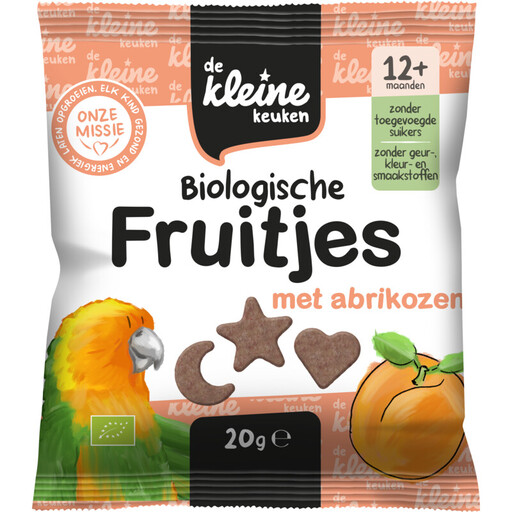
The fruit pieces described contain dried apricot, date and banana, and are intended as a snack.
The ingredients list also includes 4% rice flour; according to the description, no sugars have been added. The product information says it is suitable from 12 months and may contain traces of nuts.
 No image available
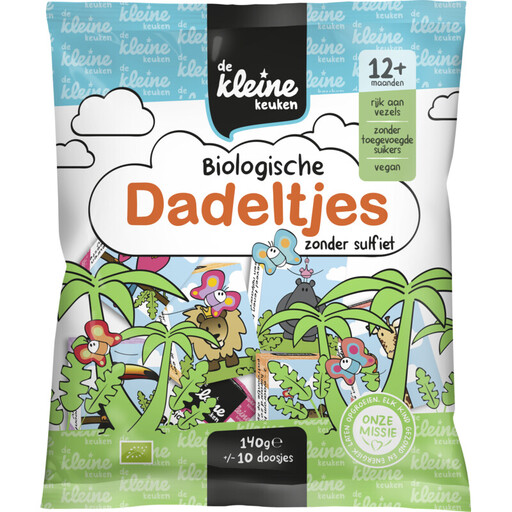
This variety lists dates as its main ingredient and is described as a snack.
The ingredients list contains 95% dates and 5% rice flour. According to the description, no sugars have been added; supervise your child while they eat and make sure they sit upright.
 No image available
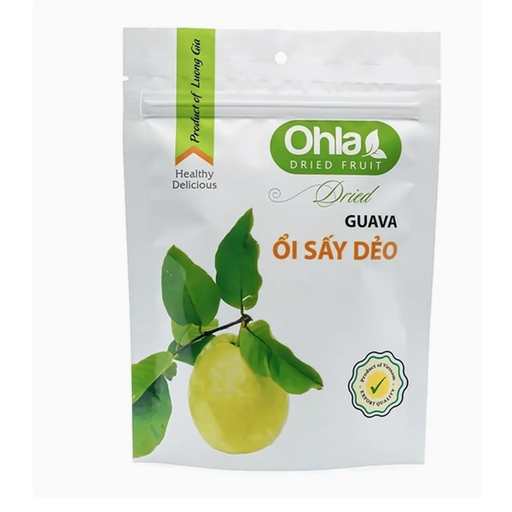
The product description presents the dried guava as a snack to take on the go.
The description says it contains 95% guava; the ingredients list also includes sugar and a preservative.
 No image available
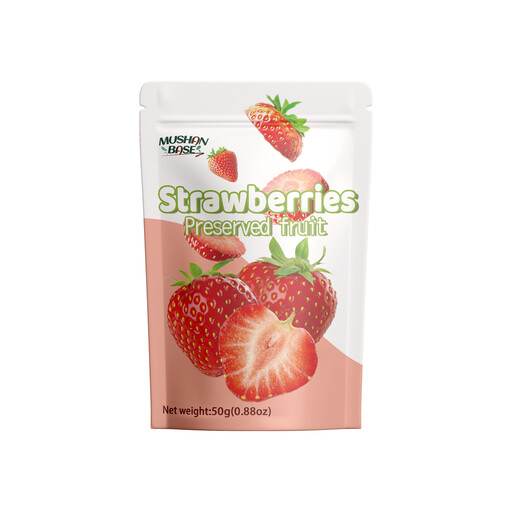
The product description suggests enjoying these as a snack or adding them to yoghurt.
The ingredients list includes dried strawberries and sugar. The description says the pack is resealable.
No. The code of the relevant inspection body appears alongside the EU organic logo; it doesn’t have to be a Dutch code. For example, the product information reviewed lists IT-BIO-009 and TR-BIO-132. The agricultural origin is shown separately.
No. ‘Unsweetened’ or ‘0 g added sugars’ doesn’t mean the fruit contains no naturally occurring sugars. The Netherlands Nutrition Centre advises eating no more than a handful of dried fruit.
Follow the storage instructions on the packaging; the dried mango and raisin products reviewed say to store them outside the fridge. For yoghurt or other breakfast products that would normally be kept chilled, the Netherlands Nutrition Centre recommends using a cool bag. Throw these products away if they have been left unrefrigerated for more than two hours.
Store dried fruit in an airtight container and follow the instructions on the packaging. Don’t automatically apply the storage life of one type of fruit to another; for example, the product information for AH Biologisch Dates says they have a limited shelf life after opening.
No. Check the ingredients and allergen warnings on the current packaging. AH Biologisch Dates warns that nuts and peanuts may be present; a stone may also be left in the dates despite the ‘pitted’ label.