
Mindful office snackers
You’re looking for organic dried fruit for your snack break and pay attention to the certification, ingredients and choosing a portion in advance. Organic certification and how much you eat are separate considerations.


Organic raisins are a good choice if you want an office snack that you can also add to breakfast. Choose unsweetened organic mango if you’re mainly looking for a different type of fruit. Check the EU organic logo, control code, ingredients and any allergen warnings on the exact pack. The Netherlands Nutrition Centre recommends eating no more than 20 grams of dried fruit a day. This is separate from the organic certification and any serving size shown on the pack.
You’re looking for organic dried fruit for your snack break and pay attention to the certification, ingredients and choosing a portion in advance. Organic certification and how much you eat are separate considerations.
You want to add dried fruit to your breakfast. Raisins are an option if you’re after a familiar type of fruit, while unsweetened mango can add variety.
You’re topping up the shared office snack supply and want to be able to share packaging and allergen information. If anyone has a known allergy, check the information for the exact product variant.
Start by checking what the product is and when you plan to eat it. Then consider the portion size, packaging and allergen information that matter for your office.
| What to consider | What should you check? | Who is this most important for? |
|---|---|---|
| Organic certification | Check the EU organic logo, control code and country-of-origin statement on the exact pack. The European Commission explains these details for organic labelling. | If I choose organic dried fruit, I want to be able to check the labelling on the pack. Around 25% of consumers give verifiable organic information top priority. |
| Ingredients and portion size | Read the ingredients list and distinguish between total sugars and added sugars. The Netherlands Nutrition Centre recommends eating no more than 20 grams of dried fruit a day. | When I want to fit a snack portion into my day, I look beyond the ‘unsweetened’ claim. Around 25% of consumers prioritise ingredients and portion control. |
| Breakfast and variety | First choose between options such as raisins and mango, then check the ingredients and storage instructions for that variant. | If I want to add fruit to my office breakfast or try something other than raisins, the type of fruit matters most. Around 20% of consumers give breakfast use and variety top priority. |
| Packaging and stock | Compare the net weight and choose a quantity that suits how much you use. Follow the storage instructions on the pack; advice for raisins does not automatically apply to mango. | For my office supplies, I want to choose a pack that suits how quickly we’ll get through it. Around 15% of consumers prioritise stock management and suitable packaging. |
| Allergens when sharing | Check the ingredients and warnings for the exact variant, and keep the original packaging. The Netherlands Food and Consumer Product Safety Authority (NVWA) explains allergen labelling. | When colleagues share snacks, I want allergen information to be available, especially if someone has a known allergy. Around 15% of consumers give verifiable allergen information top priority. |
A product with no added sugar can still contain naturally occurring sugars. The Netherlands Nutrition Centre gives a separate recommendation of no more than 20 grams of dried fruit a day.
Choose based on the ingredients, then decide on your portion size. Don’t treat the serving size shown on the pack as a substitute for the Netherlands Nutrition Centre’s advice.
Without the packaging, colleagues can no longer check the ingredients, allergen warnings or storage and best-before information. The AH mango product reviewed warns that it may contain peanuts and various nuts.
Keep the packaging with the office supplies and make the product information available to everyone who eats it.
The product pages for AH Biologisch Rozijnen and AH Biologisch Mango gedroogd & ongezoet provide information for snacking and breakfast.
Jumbo sells Zongedroogde Sultana Rozijnen Biologisch in a 250-gram pack.
BIO+ Sultana raisins are available in a 250-gram stand-up pouch.
Lidl sells the Belbake Biologische rozijnen product range.
Dirk lists Bio+ Rozijnen sultana in a 250-gram pack.
ALDI has a separate BIO own-brand range and also lists Trader Joe’s raisins in a 500-gram pack.
This selection features snack-focused products containing organic raisins or dates. Check the ingredients and information on the exact pack to see whether the variant suits your snack break.
 No image available
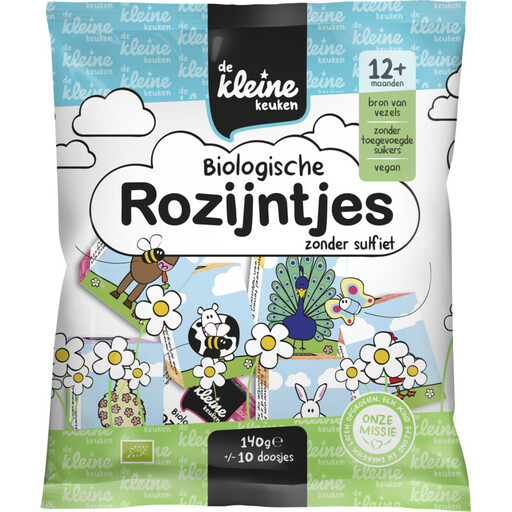
The product description mentions 14 g portion packs, which may suit you if you’re looking for an individual portion for your snack break.
The title states 140 g. The product description says there are no added sugars.
 No image available
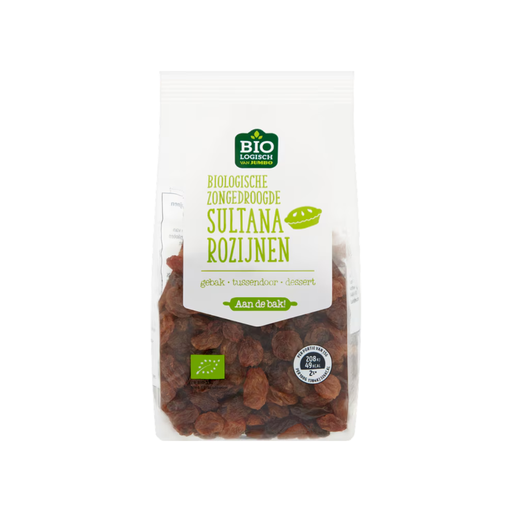
These raisins may suit you if you’re looking for a product described as suitable both as a snack and with breakfast cereal.
The product description lists organically grown raisins and sunflower oil. Despite cleaning, a stalk or stone may remain.
 No image available
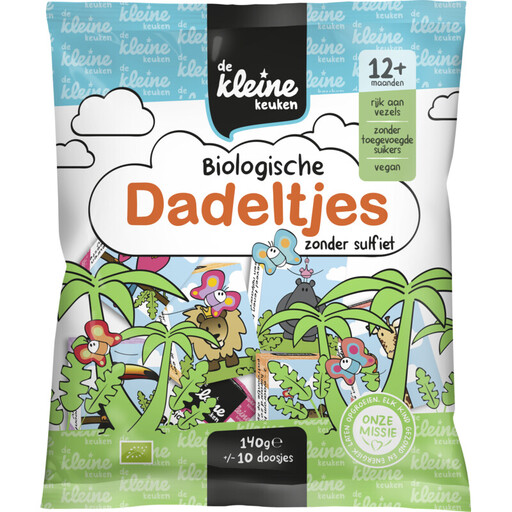
These dates are an alternative if you’re considering a date-based snack as well as raisins for your break.
No, you don’t need to look only for that Dutch code. The European Commission explains that the EU organic logo should be accompanied by the control body’s code and an indication of origin. Products may show other control codes, such as TR-BIO-154, TR-BIO-132 or IT-BIO-009.
No, don’t treat ‘natural’ as a substitute for organic labelling. Check the organic information on the exact pack; the EU organic logo shows that the product meets organic standards.
The Netherlands Nutrition Centre recommends eating no more than 20 grams of dried fruit a day. This is nutritional advice, not a legal limit on purchases. A serving size of, for example, 25 grams shown on a pack does not replace this advice.
Follow the instructions on the pack. The Netherlands Nutrition Centre’s storage guide says opened raisins can be kept in a kitchen cupboard for 6–9 months. Also check the best-before information and the condition of your own product.
That depends on the colleagues who will be eating it and the exact pack. AH Biologisch Mango gedroogd & ongezoet may contain peanuts and various nuts. Keep this warning available and don’t treat the variant as nut-free for everyone.