
People stocking the office snack tin
You’re looking for dried fruit that you can serve in small amounts and store in a sealed container. Check the organic certification and storage instructions on the pack.


Organic raisins are a good choice if you want to serve small portions and use the same fruit as a breakfast topping. Dried apricots are an alternative if you prefer to offer larger, individual pieces of fruit. Check the organic certification, ingredients and allergen information on the exact pack: organic does not mean low in sugar or suitable for everyone. Follow the storage instructions on the label, and treat the Netherlands Nutrition Centre’s advice of a maximum of 20 grams of dried fruit per day as dietary guidance, not a purchasing limit.
You’re looking for dried fruit that you can serve in small amounts and store in a sealed container. Check the organic certification and storage instructions on the pack.
You want to use fruit both as a breakfast topping and as a snack. Check the ingredients and choose an amount that suits how you plan to use it.
You’re filling a communal snack tin and need to consider ingredients, allergens and possible traces. Always follow the information on the specific product’s packaging.
Start by checking the organic certification on the exact pack. Then compare portion sizes, ingredients and how you’ll store and serve the fruit at work.
| What to consider | What to look for | Who should pay extra attention? |
|---|---|---|
| Organic certification | Check the organic label and control code on the pack; a word such as ‘natural’ is not, on its own, proof of certification. The European Commission explains that the EU organic logo is linked to certification by an authorised control authority or control body. | If I want to buy organic, I want to be able to verify this on the product; around 25% of consumers prioritise verifiable certification. |
| Portions and sugars | Check both the ingredients and the nutrition table. A ‘no added sugars’ claim does not mean dried fruit is low in total sugars; the Netherlands Nutrition Centre recommends a maximum of 20 grams of dried fruit per day. | When I want to set out a manageable amount for a snack or breakfast, I consider both the portion and total sugars; around 25% of consumers prioritise portion size and ingredients. |
| Ingredients and allergens | Check the ingredients and warnings about allergens and possible traces on the current pack. A fruit and nut mix contains different ingredients from a product made with fruit alone. | If I’m sharing the snack tin, I want to know whether the ingredients suit other people’s dietary needs; around 19% of consumers prioritise suitability. |
| Storage and serving | Follow the storage instructions on the label and seal the supply properly. A 250-gram pack is not automatically divided into individual portions; the Netherlands Nutrition Centre recommends keeping dried fruit mix in a cool, dry, dark place in a well-sealed container. | When I’m restocking the office supply and serving portions, I want storage to be practical; around 19% of consumers consider this their most important purchasing criterion. |
| Packaging and how you shop | Compare current prices per kilogram for the same type of fruit and packaging, and factor in any delivery charges. PLUS says local prices may vary; Dirk describes its range as available without a delivery service. | If I’m looking for a pack that suits my budget and the way I shop, I compare the specific options; around 12% of consumers prioritise cost and how they buy. |
Organic certification does not mean dried fruit is low in sugars. Sugars can occur naturally, even when no sugar has been added.
Read the ingredients and nutrition table separately, and serve an amount that suits how you plan to use it.
The AH mix reviewed contains almonds and pecans. According to the packaging, the Smaakt apricots reviewed may contain traces of cereals containing gluten, peanuts, nuts and sesame.
Check the information on the exact pack and keep different products and their labels clearly separate.
Colleagues who need to avoid certain ingredients may need a separate option.
The AH Biologische Abrikozen product page is for fresh apricots, not dried fruit. The form of the product affects how you store it and whether it’s suitable for the office snack tin.
Check that the product description says ‘dried’ and compare products from the same category.
Storage instructions can vary from one product to another. Instructions for an unopened pack do not necessarily apply once the bag has been opened.
Follow the label, seal the supply properly and choose an amount based on how quickly the fruit will be used.
An amount that doesn’t suit how it will be used can lead to waste.
AH Organic Raisins are an option if you’re looking for raisins to snack on or add to breakfast. Albert Heijn lists an organic label and control code TR-BIO-154.
Jumbo lists organic sun-dried sultanas in a 250-gram pack, with control code TR-BIO-132.
Lidl Netherlands lists Belbake Organic Raisins as a product.
ALDI lists Trader Joe’s raisins in a 500-gram pack and also has a separate Bio range.
PLUS lists BIO+ Sultana Raisins and Smaakt Organic Apricots. This lets you compare raisins with larger, individual pieces of fruit.
Dirk lists BIO+ sultanas in a 250-gram pack.
This selection on Joybuy includes raisins, dates and fruit pieces for snacking; the product information for the raisins also mentions using them in breakfast cereals. If you’re buying organic, check the certification and allergen information on the exact pack.
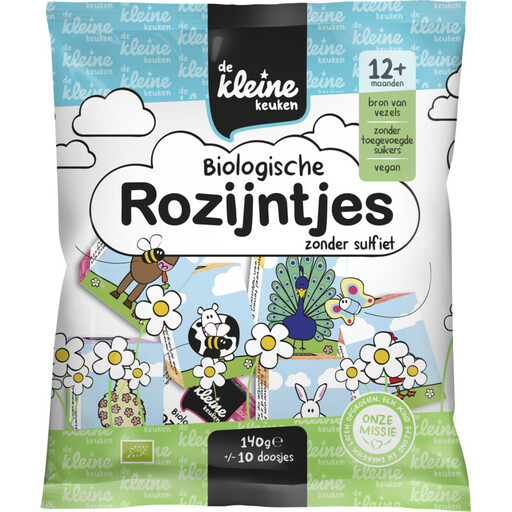 Image unavailable
The pack contains 14-gram boxes, designed for serving small portions of raisins as a snack.
The product information lists ten boxes, raisins and no added sugars or sulphites. According to the information, the product is suitable from 12 months; supervise children while they eat and do not give it to children with swallowing difficulties.
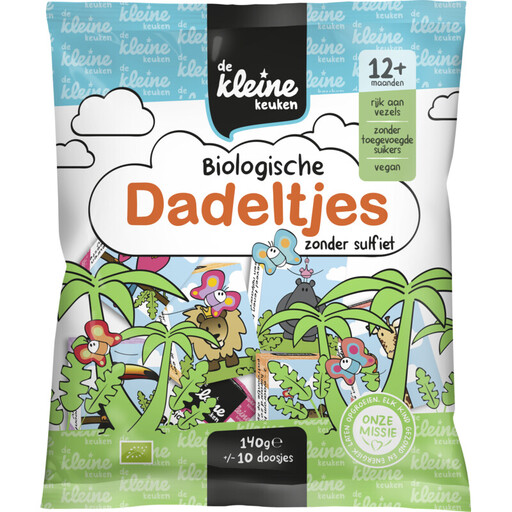 Image unavailable
The product description mentions mini dates and snack boxes for a small fruit snack.
The ingredients list dates and rice flour; according to the product information, no sugars or sulphites have been added. The title says 12+.
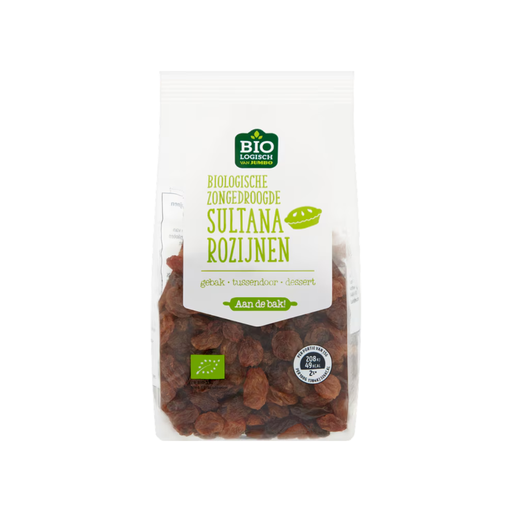 Image unavailable
The product description says they can be eaten as a snack or added to breakfast cereals.
The ingredients are raisins and sunflower oil; the product information says no sugars have been added and advises resealing the pack securely after opening. According to the description, a stalk or stone cannot be entirely ruled out despite checks.
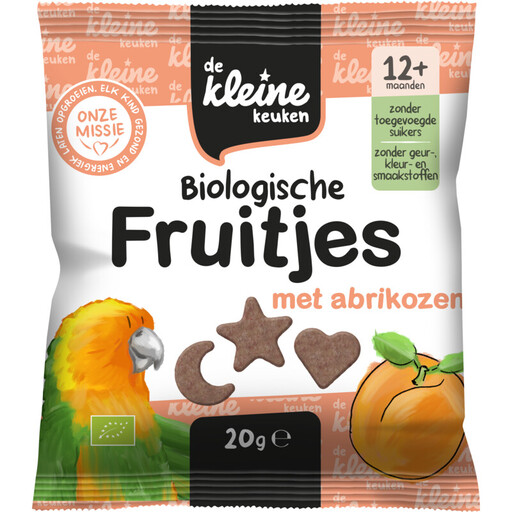 Image unavailable
The 20-gram pack contains a small amount of fruit pieces for a snack.
The product information lists dried apricots, dates and banana; the ingredients list states 44% dried apricots and 44% dates. The product may contain traces of nuts and, according to the information, is suitable from 12 months.
No. The EU organic logo is linked to certification by an authorised control body and a control code. The AH and Jumbo raisins reviewed list TR-BIO-154 and TR-BIO-132 respectively. For imported organic products, the EU organic logo is optional, so its absence alone does not prove that an imported product is not organic.
The Netherlands Nutrition Centre recommends a maximum of 20 grams of dried fruit per day. The portion size shown on the pack may differ. For a fruit and nut mix, this amount applies to the dried fruit, not necessarily to the whole mix.
Yes, if the product’s storage instructions allow for it and the tin seals securely. The Netherlands Nutrition Centre recommends storing dried fruit mix in a cool, dry, dark place in a well-sealed container. The Smaakt apricots reviewed say to store them in a cool, dark place in a sealed container; don’t automatically apply one product’s storage instructions to every product.
Check the ingredients and warnings on the current packaging of the exact product. The AH mix contains nuts, and the Smaakt apricots reviewed carry a warning about possible traces. Sulphites can cause intolerance reactions; an organic label is no substitute for checking the specific product.
According to the Netherlands Food and Consumer Product Safety Authority, allergen information must appear on the label of prepacked foods. Different methods apply for providing this information to consumers for non-prepacked foods. These rules for businesses do not automatically apply to every informal office snack tin.