Organic dried fruit can be a small addition to a nursery lunch, but it does not replace an assessment of portion size, age and how it is served. For its Organic Sun-Dried Sultana Raisins 250 g, Jumbo lists a European organic logo and inspection code. Adjust the amount to suit the child, avoid serving lots of raisins at once and supervise children while they eat.
Who is this choice relevant to?
People responsible for nursery lunches
You plan mealtimes for babies, toddlers and pre-school children. When adding a small extra, consider age, portion size and supervision. Gezonde Kinderopvang explains the role of childcare practitioners at mealtimes.
Buyers with an organic policy
You want to be able to verify the organic origin of the specific variant. The European Commission explains that the EU organic logo is used on products certified as organic by an approved control authority or control body.
Groups with allergen policies
You need information about ingredients and relevant allergens so staff know what they are serving. The NVWA states that allergen information for pre-packed products must appear on the label.
What should you look for when buying?
First consider whether the way the fruit is served is suitable for the children and the level of supervision. Then check its organic origin, ingredients and packaging.
| What to consider |
What to look for |
Who this is for |
| Amount and how it is served |
Adjust the size and amount to the child’s age and ability to chew. Avoid serving lots of raisins at once and supervise children. |
If you’re serving young children, you’ll want the amount and form to suit the mealtime and level of supervision. Around 33% of consumers prioritise an appropriate, safe way of serving food. |
| Organic origin |
Check the EU organic logo, inspection code and agricultural origin for the specific variant. |
If verifiable organic origin is essential to your purchasing policy, you’ll want to be able to check the details on the product itself. Around 27% of consumers prioritise this check. |
| Ingredients and allergens |
Read the full ingredients list and allergen information. A fruit mix, for example, may contain almonds. |
If you need to follow a group’s allergen policies, you’ll want to know exactly what is in the pack. Around 20% of consumers prioritise this information. |
| Packaging and storage |
Compare pack sizes and individual portions. Follow the storage instructions and the nursery’s food hygiene code when portioning. |
If you’re buying for several mealtimes, you’ll want to know whether the packaging is practical for storing and portioning the product. Around 20% of consumers focus on this practical consideration. |
The percentages shown give a general overview of purchasing priorities for this nursery lunch scenario; they are not measured market shares.
Common buying mistakes
-
Assuming an organic logo means a product is suitable for a child-sized portion
Organic certification relates to the product’s organic origin and how it is produced. The Voedingscentrum also advises against serving lots of raisins at once and recommends supervising children.
Consider organic origin and suitability for serving as two separate questions.
-
Using an adult reference portion as a guide
Jumbo’s product page gives an adult reference intake for 15 g. This is not portion guidance for children.
Use the nutritional information to compare products, not to set a portion for every child without further consideration.
-
Treating a fruit mix as if it contains only fruit
According to its product name, the AH Organic Raisin, Pineapple, Mango and Almond Mix mentioned here contains almonds. This is relevant when following allergen policies.
Check the full product name, ingredients and allergen information before choosing a product for the group.
Supermarket brands to consider
Albert Heijn
The range lists AH Organic Raisins and several organic dried fruit varieties.
- The product name AH Organic Raisins is listed; the category overview also mentions unsweetened dried pineapple.
- The fruit and almond mix mentioned contains almonds. Check the ingredients of the exact variant if buying for a group.
Jumbo
The product page for Jumbo Organic Sun-Dried Sultana Raisins 250 g lists organic information specific to this product.
- The page lists raisins and sunflower oil of organic origin, the European Organic logo and inspection code TR-BIO-132.
- The portion information given is based on an adult reference intake. Jumbo warns that the product may contain a stalk or stone.
Lidl
Lidl lists Belbake Organic Raisins in a 200 g pack.
- The product name and pack size are listed.
- The product page says it is available in store. Bear this in mind when planning your shopping.
PLUS
PLUS lists BIO+ Sultana Raisins in a 250 g stand-up pouch.
- The product identity and pack size are listed on the product page.
- For nursery use, check the product details and ingredients on the exact pack.
Dirk
The range mentioned includes Bio+ Sultana Raisins and De Kleine Keuken Organic Raisins.
- The product and range listings give you specific options to ask about in store.
- Dirk does not offer a delivery service, so bear in mind how you’ll collect your shopping.
ALDI
ALDI lists Trader Joe’s raisins and also has a general organic range.
- These two listings can help you look for products in the range.
- A general mention of an organic range does not confirm that the raisins listed are certified organic. Check the specific pack.
Dried fruit at Joybuy
These Joybuy products are dried fruit options for nursery lunches. Check the packaging to make sure the organic certification and ingredients meet your purchasing policy; a product name alone does not confirm its certification details.
 No image available
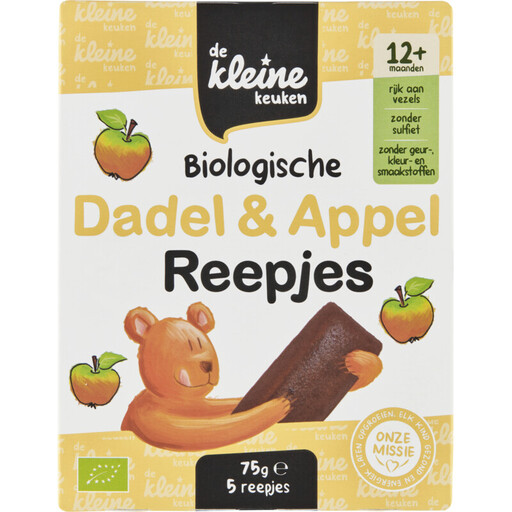
The Little Kitchen Organic Date Strips, 75 g
The product description lists dates and apple. Check the packaging if you need to make sure these ingredients meet the group’s requirements.
Pack size: 75 g. The product description says it contains nuts and is suitable from 12 months.
View at Joybuy
 No image available
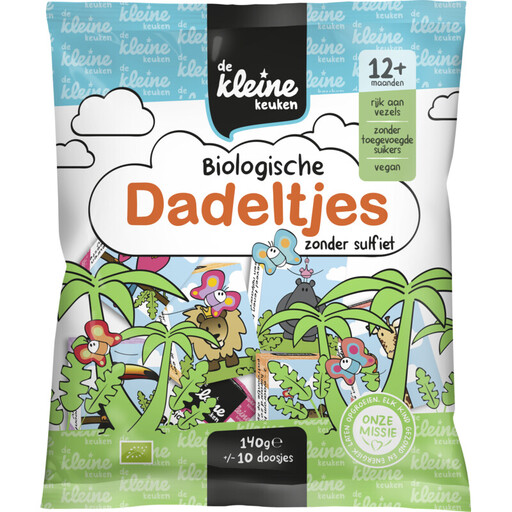
De Kleine Keuken Organic Raisins 12M+, 140 g
The pack contains snack boxes, which may be useful if you want to portion the raisins in advance. Supervise children while they eat.
The product information lists ten 14 g boxes and an age recommendation of 12 months and over. It also says the product is not suitable for children with swallowing difficulties.
View at Joybuy
 No image available
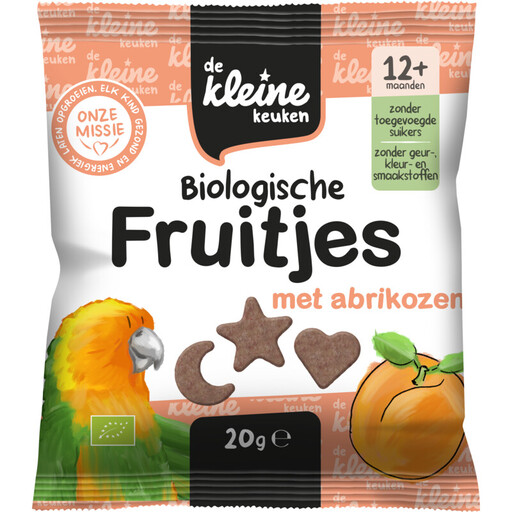
De Kleine Keuken Organic Fruitjes with Apricots, 20 g
The product description lists dried apricots, dates and banana as ingredients.
Pack size: 20 g. The information gives an age recommendation of 12 months and over and warns that the product may contain traces of nuts.
View at Joybuy
 No image available
De Kleine Keuken Organic Dates 12+
The product description lists dates and rice flour as ingredients. Check the packaging for the full product information.
The stated composition is 95% dates and 5% rice flour; both are described as organic. The product name states 12+.
View at Joybuy
Frequently asked questions
Are raisins suitable for children under one?
The Voedingscentrum advises waiting before giving snacks during the first-tastes stage. Around their first birthday, children who eat meals with the family can have raisins occasionally. The De Kleine Keuken pack mentioned also has its own age recommendation of 12 months and over; follow the product information.
Is 15 g on Jumbo’s product page a recommended portion for children?
No. The reference intake for Jumbo’s sultanas is for an average adult. The Voedingscentrum does not give a universal children’s portion in grams; avoid serving lots of raisins at once and take the child and mealtime into account.
How should you serve dried fruit while supervising children?
Make sure children are sitting calmly and stay nearby while they eat. Avoid serving lots of raisins at once. For toddlers and pre-school children, also consider the size and chewability of other pieces of fruit. An organic logo does not change this advice on serving food.
Which food hygiene code applies when the nursery portions out a larger pack?
RIVM/KIDDI advises following the Food Hygiene Code for Small Institutions or another approved food hygiene code that covers all activities. Follow this procedure when portioning food, and also follow the storage instructions on the product packaging.
What allergen information should be available?
The NVWA states that allergen information for pre-packed products must appear on the label. Keep this information available when staff serve the product from its original packaging, and check the details for the specific variant.


