Who is organic dried fruit for a night shift for?

Shopping with organic credentials in mind

You want proof that your snack is organic. Skal explains that products need organic certification to be sold as organic, so check for the organic designation and certification mark rather than relying on words such as ‘natural’.

Taking a small snack with you

You want to portion dried fruit in advance and take it with you on your shift. The Netherlands Nutrition Centre points out that dried fruit is naturally high in sugar. Check the total sugars and the amount you eat separately from the organic certification.

Having breakfast after your night shift

You use dried fruit as an addition to something like muesli or yoghurt, not as a replacement for a full breakfast. VGZ recommends having breakfast after a night shift, with wholemeal bread or muesli, protein and fruit.

What should you look for in organic dried fruit for a night shift?

What to look for What should you check? Who is this important for?
Organic designation Check the certification mark and organic designation on the packaging. If organic origin is my top priority, I look for the certification mark and control code. Around 34% of consumers say organic origin is their top priority when shopping.
Sugars and portion size Compare total sugars per 100 g, then decide on your own portion size. For a snack during my shift, I want to know how much sugar I’m eating in my portion. Around 33% of consumers say portion control is their top priority.
Packaging and use Check whether the pack size works for measuring, taking with you and storing; follow the storage instructions. If I want to use the same supply for a snack and as a breakfast topping, I look at the pack size and how convenient it is to use. Around 20% of consumers prioritise practicality.
Ingredients and allergens Read the ingredients and allergen information on the current packaging. If I have a known sensitivity, I want to check the information for this specific product, separately from its organic designation. Around 13% of consumers say checking labels and allergens is their main consideration.

Common mistakes when buying dried fruit

  • Assuming organic or no added sugar means low in sugar

    Organic certification and nutritional information answer different questions. Even raisins with no added sugar contain naturally occurring sugars.

    Check the organic designation, ingredients and total sugars separately. Measure out your snack before your shift starts.

  • Comparing serving sizes from different manufacturers as if they were the same

    A label showing values per 15 g may give a lower sugar figure than one showing values per 25 g, even if the product doesn’t contain less sugar for the same amount.

    First compare the nutritional values per 100 g, then work out how they apply to the portion you want to take with you.

  • Relying on an organic product name to check for allergens

    Organic production doesn’t, in itself, tell you anything about allergens. Sulphites can be used as a preservative in dried fruit.

    If you have a known sensitivity, check the allergen information on the current packaging.

  • Overlooking pack size and where the product is sold

    A product that’s only sold in store or isn’t available for home delivery may not fit your usual shopping routine.

    Check the net weight and whether you can buy the product through a channel that suits the way you shop.

Relevant brands and product ranges to consider

Albert Heijn

AH Organic Raisins are a specific organic raisin option for a snack or breakfast topping.

  • Albert Heijn’s product information lists raisins and sunflower oil from organic sources, with control code TR-BIO-154.
  • The nutritional table lists 59 g of sugars and 0 g of added sugars per 100 g. The latter doesn’t mean the product is sugar-free.

Jumbo

Jumbo Sun-Dried Organic Sultana Raisins 250 g is a specific organic raisin option.

  • The product page displays the EU organic logo and control code TR-BIO-132.
  • The product information warns that a stalk or stone may remain. Check the packaging and nutritional table of the product you buy.

Lidl

Belbake Organic Raisins are listed as an organic raisin option at Lidl.

  • The product listing gives a pack size of 200 g.
  • The listing says the product is sold in store only; check the packaging information before you buy.

Aldi

Aldi lists Trader Joe’s pitted sun-dried plums.

  • The product description confirms that these are dried plums with the stones removed.
  • The listing doesn’t confirm that these plums are organic, so don’t assume they are based on a general organic range page.

Plus

BIO+ Sultana raisins at PLUS are a specific organic raisin option.

  • The product information lists 99% organic raisins and organic sunflower oil.
  • The storage instructions say to store in a cool, dry, dark place. The product information also mentions possible natural impurities.

Dirk

Dirk sells Bio+ Sultana Raisins 250 g.

  • The product listing confirms the product name and pack size.
  • Dirk says it doesn’t offer a delivery service. This is worth bearing in mind if you usually have your shopping delivered.

Organic dried fruit at Joybuy

This selection includes organic raisins and dates that you can portion yourself as a snack or add to breakfast. Two products are labelled as baby food from 12 months, so check that this product format suits your intended use.
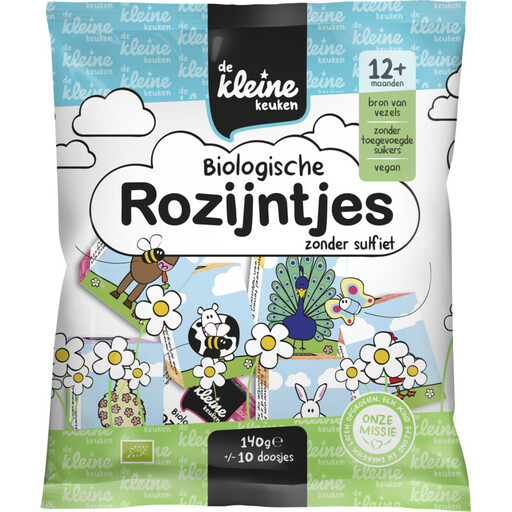
De Kleine Keuken organic raisins, 140 g

De Kleine Keuken Organic Raisins 12M+, 140 g

The product title specifies organic raisins, a pack size of 140 g and an age recommendation of 12 months and over. Check that this product format suits your needs.

Joybuy
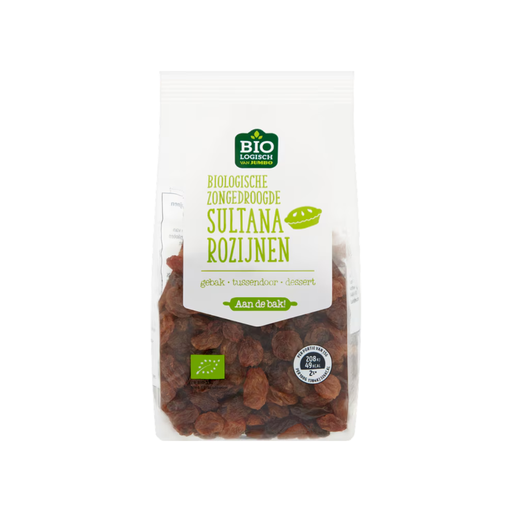
B+ Sultana raisins, 250 g

B+ Sultana Raisins, 250 g

This pack is for anyone who wants to portion organic raisins themselves for a snack or to add to breakfast cereal.

Joybuy’s product information lists raisins and sunflower oil from organic sources, 75,5 g of sugars and 3,7 g of fibre per 100 g, and nutritional values per 15 g. According to the product information, a stalk or small stone may remain despite cleaning.

Joybuy
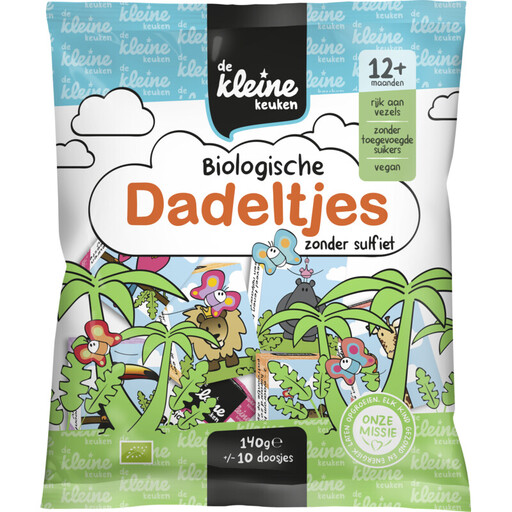
De Kleine Keuken organic dates

De Kleine Keuken Organic Dates 12+

The product title specifies organic dates and an age recommendation of 12 months and over. Check the packaging to see whether this product format is suitable for your intended use.

Joybuy

Frequently asked questions about organic dried fruit

Is organic dried fruit the same as sugar-free dried fruit?

No. Organic certification relates to how a product is produced, not its total sugar content. For example, AH Organic Raisins lists 0 g of added sugars but 59 g of total sugars per 100 g. So check both the ingredients and the nutritional table.

How much dried fruit should you take for a snack?

Measure out a small portion in advance. The Netherlands Nutrition Centre advises having no more than a handful; the World Cancer Research Fund gives general guidance of a maximum of 20 g per day. The 15 g or 25 g portions shown on product pages are serving sizes for calculating that product’s nutritional values, not personalised dietary advice.

Can dried fruit replace your full breakfast after a night shift?

Have it as an addition, not as a full breakfast. VGZ suggests a breakfast after a night shift that combines wholemeal bread or muesli with protein and fruit.

What should you check if you’re sensitive to sulphites or other allergens?

Read the allergen information on the current packaging. Sulphites can be used as a preservative in dried fruit. The Netherlands Food and Consumer Product Safety Authority states that allergen information must be shown on the label of prepacked products. An organic product name doesn’t replace checking the details for that specific product.

How can you recognise an organic designation on packaging?

Look for the organic designation and the EU organic logo. Skal explains that this logo is compulsory for prepacked foods produced in the European Union and sold as organic; this requirement doesn’t necessarily apply to every imported product.
