
Marathon runners who focus on breakfast
You’re looking for a considered addition to your usual breakfast during intensive training weeks. Check the organic information and ingredients, and think about how the portion fits into your meal.


Choose organic dried fruit by checking the organic information on the exact pack, the ingredients and the portion that suits when you plan to eat it. Adding it to your usual training breakfast is different from using it as fuel on the go. Before a run, timing and digestibility matter; for food during an endurance session, you’ll need to calculate the carbohydrates in a weighed portion. Organic certification does not prove that a product will improve your sports performance or replace a complete nutrition plan.
You’re looking for a considered addition to your usual breakfast during intensive training weeks. Check the organic information and ingredients, and think about how the portion fits into your meal.
You want to know how many carbohydrates a weighed portion provides and whether it’s practical to eat during a longer training session. The organic label alone won’t answer those questions.
You prioritise timing and digestibility, for example if you’re running shortly after breakfast. What works at a leisurely breakfast may not be the best choice just before a training session.
First, check the organic information and ingredients on the exact pack. Then decide whether you want to eat the fruit with a regular meal, just before a run or during an endurance session.
| Point to consider | What should you check? | Who is this important for? |
|---|---|---|
| Training breakfast | Check the ingredients for any added sugar or syrup. Weigh your portion and distinguish between an addition to breakfast and food for during exercise. | If I’m looking for something to add to my usual training breakfast, I want a weighed portion that fits my meal. Around 28% of consumers prioritise suitability for breakfast. |
| Carbohydrates on the go | Use the carbohydrate information per 100 g on the exact pack and the weight of your portion. The Netherlands Nutrition Centre recommends 30 to 60 g of rapidly absorbed carbohydrates per hour for exercise lasting 1 to 2.5 hours. | I want to be able to calculate how many carbohydrates my portion provides during a long run, and whether it’s practical to eat on the go. Around 22% of consumers prioritise carbohydrate intake. |
| Timing and stomach comfort | Check the fibre and fat per portion, and when you plan to eat it. Hardlopen.nl advises eating your last large meal 2–3 hours before running and avoiding foods high in fat, protein and fibre just beforehand. | If I’m running shortly after eating, I want to take timing and digestibility into account. Around 22% of consumers prioritise stomach comfort. |
| Organic status | Check the organic information and related certification details on the exact pack. Skal states that businesses need an organic certificate to sell products as organic. | I want to be able to verify the organic claim on the pack. Around 17% of consumers prioritise verifiable organic status. |
| Pack size and cost | Compare the net weight and current cost on the same weight basis. Follow the storage instructions for the product you choose, too. | I want an amount that suits how I use it, and to be able to compare costs on the same weight basis. Around 11% of consumers prioritise pack size and cost. |
For general everyday dietary advice, the Netherlands Nutrition Centre recommends a maximum of 20 g of dried fruit per day. This is not an hourly target for sports fuel. Calculate a portion for exercise separately using the nutrition information on the exact pack, and take other sources of carbohydrates into account.
An organic claim doesn’t tell you how many carbohydrates a portion provides or how it fits into your nutrition during exercise.
Check the organic information when choosing a product, then use the nutrition information for the exact variant to calculate the carbohydrates per portion.
A product that suits a regular breakfast may not work as well just before a training session. Hardlopen.nl recommends easily digestible food just before exercise and highlights foods high in fat, protein and fibre as something to watch out for.
Distinguish between your usual breakfast and food eaten just before a training session. Adjust the meal size and timing to suit when you plan to eat.
The Netherlands Nutrition Centre’s Fruit fact sheet classifies sweetened dried fruit as outside the Wheel of Five. An organic claim doesn’t mean you can ignore added sugar or syrup.
Read the ingredients list and check the organic status separately.
A larger pack weight doesn’t tell you the cost per kilogram or whether it suits how you plan to use it.
Compare current unit prices on the same weight basis and choose an amount that suits your portioned use and the storage instructions.
Albert Heijn lists organic raisins, apricots and pitted dried dates. These are different types of product to consider when choosing something for breakfast.
Jumbo lists Organic Sultana Raisins 500 g with control code NL-BIO-01 and the origin statement EU/non-EU Agriculture. Jumbo also mentions raisins as an addition to porridge oats.
PLUS lists BIO+ Sultana raisins in a 250 g stand-up pouch. BIO+ is the brand for this product listing.
This Joybuy selection includes raisins, date products, an apricot and date mix, and a prune product. The product titles alone don’t make it clear whether every variant is dried fruit or suitable for a particular training moment. Check the product form, ingredients and organic information on the exact pack.
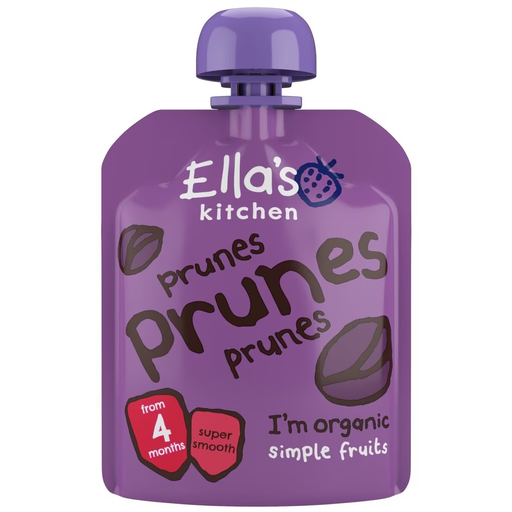 No image available
The product title mentions prunes, BIO, 4M+ and 70GR. Check the product form and packaging before assessing this variant as dried fruit for a training breakfast.
 No image available
The product information lists raisins in 14 g portions; the description says they’re suitable from 12 months. Check the ingredients, nutrition information and organic details on the pack before assessing the portion for sports use.
The product description states that no sugars have been added. Follow the pack’s storage and use instructions; the description says the product is not suitable for children with swallowing difficulties.
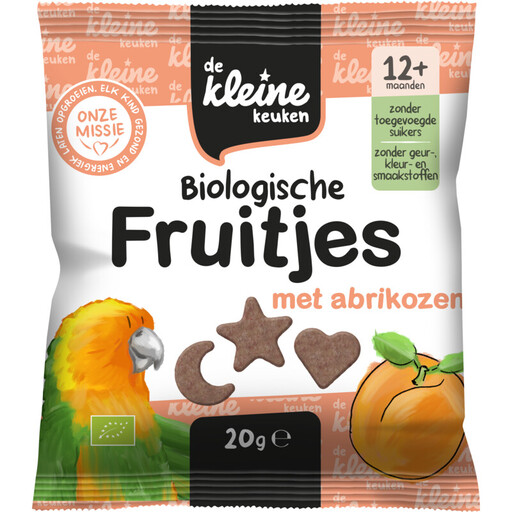 No image available
The product information lists a fruit mix containing 44% dried apricots, 44% dates, 8% bananas and 4% rice flour. The description says it’s suitable from 12 months; check the exact ingredients and portion size on the pack.
According to the product description, the mix contains no added sugar and the product may contain traces of nuts. The product description is intended for use from 12 months.
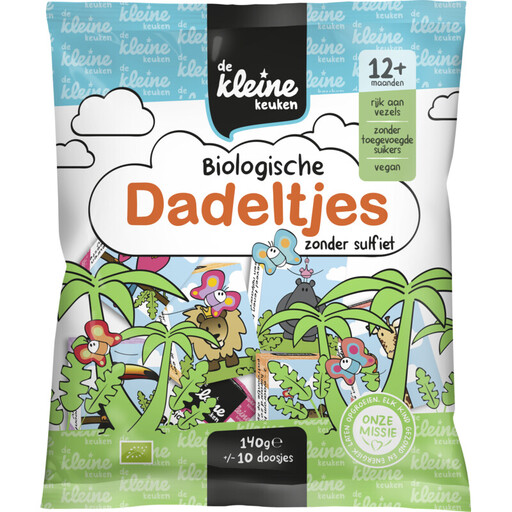 No image available
The ingredients list gives 95% dates and 5% rice flour; the product description says it can be used as baby food from 12 months. Check the product form before comparing this variant with dried dates.
The nutrition information lists 78 g of carbohydrates and 7.8 g of fibre per 100 g. The product description states that no sugars have been added; use the nutrition information on the exact pack for your calculations.
Not under exactly the same conditions. The European Commission explains that the logo is compulsory for pre-packed food produced in the EU and sold as organic. The EU organic logo must be accompanied by the code number of the control body and the agricultural origin. So, if a logo is missing from an online product description, don’t automatically assume that an imported product isn’t organic.
No. The Netherlands Nutrition Centre’s guidance for exercise lasting 1 to 2.5 hours refers to grams of carbohydrates, not grams of raisins. Use the nutrition information on the exact pack to calculate the contribution from your weighed portion, and include other sources of carbohydrates in your total.
The Netherlands Nutrition Centre recommends a maximum of 20 g of dried fruit per day as part of general dietary advice. The guideline for carbohydrates during exercise has a different purpose. Don’t use the daily fruit recommendation as a sports nutrition target or as a complete marathon nutrition plan.
Check the allergen information on the exact pack. According to the Netherlands Food and Consumer Product Safety Authority, pre-packed products must show allergen information on the label; an organic claim doesn’t replace this information.
Jumbo advises storing this variant in a cool, dry, dark place. Follow the instructions on the pack you buy, too; this advice doesn’t automatically apply to other fruit products or products with different ingredients.