Who is this dried fruit for?

Organic-conscious lunch packers

You want to take verifiably organic dried fruit with you, so you check the certification and product information rather than relying on words such as ‘natural’. The European Commission explains that the EU organic logo can only be used on products that have been certified as organic.

People who portion their own breakfast and lunch

You’re looking for a bag you can portion at home to take with you or enjoy at breakfast. The raisin bags reviewed contain 250 grams; the serving sizes shown on the labels are not individually packed lunch portions. AH, Jumbo and PLUS provide product and serving information.

Shoppers choosing by texture and ingredients

You’re looking for a fruit and texture that suit your preferences, and you check the ingredients and allergen information. Albert Heijn describes the prunes reviewed as soft; the packaging also warns that they may contain peanuts and nuts. The NVWA explains how allergen information is shown on food labels.

What should you look for when buying?

What to consider What should you check? Who should pay particular attention?
Organic certification Check for the EU organic logo, the control code and the country of origin statement. Skal Biocontrole and the European Commission explain what the organic certification means. If organic origin is essential to you, you’ll want to be able to identify it on the label. Around 25% of shoppers weigh this up first.
Convenience and portion sizes Compare the pack weight with the amount you want to take with you. AH and BIO+ list 25-gram servings; Jumbo lists 15 grams. These are label serving sizes, not universal dietary advice. If you want to prepare portions at home for work, school or breakfast, look at the difference between a large bag and individual portions. Around 25% of shoppers mainly look for convenient options to take with them.
Ingredients and quantity Read the ingredients list and nutrition table separately. Jumbo lists 75,5 grams of sugars per 100 grams; the Voedingscentrum advises having no more than a handful of dried fruit with no added sugar. If ingredients, sugar content or your personal dietary requirements come first, compare the packaging carefully. Around 20% of shoppers prioritise ingredients and quantity.
Type of fruit and texture Check the product description and ingredients. The AH prunes reviewed contain 89% prunes and water; Albert Heijn describes their texture as soft. If you eat dried fruit on its own or mix it into breakfast, the type of fruit and its texture may determine your choice. Around 15% of shoppers focus mainly on taste and texture.
Quantity and storage Choose a pack size that suits how you’ll use it and follow the storage instructions on the label. BIO+ advises storing its product in a cool, dry, dark place; the AH prunes reviewed have a limited shelf life once opened. If you want to avoid leaving a pack unused, check the quantity and the instructions for after opening. Around 15% of shoppers prioritise making good use of the product and avoiding waste.

Common buying mistakes

  • Assuming organic means low in sugar

    Organic certification tells you about how a product is made, not its sugar content. The Voedingscentrum points out that dried fruit with no added sugar still contains sugar.

    Read the ingredients and nutrition information separately, and decide in advance how much you want to take with you.

  • Going by the fruit name alone

    The name AH Biologisch Apricots refers to fresh apricots in the product information reviewed, not dried apricots. The form of the fruit can affect how it’s prepared and stored.

    Check the full product name, category and description before you buy.

  • Assuming a product is nut-free because nuts aren’t listed as ingredients

    The AH prunes reviewed contain prunes and water, but also state that they may contain peanuts and various nuts. So the ingredients list alone doesn’t give you the full picture of potential allergens.

    If you have a relevant allergy, check both the ingredients and the warning about possible traces on the current packaging.

  • Assuming a multipack contains individual lunch portions

    The AH prunes 4-pack reviewed contains four products, not four individual portions to take with you. A larger supply may not suit how you use the product or its shelf life once opened.

    Check how many packs are included and how much product each one contains.

    The prunes reviewed have a limited shelf life once opened, so bear this in mind when choosing a multipack.

Brands and product ranges to consider

Albert Heijn

The AH Biologisch products reviewed include 250-gram raisins and 350-gram pitted prunes.

  • The raisin listing gives the control code TR-BIO-154. Albert Heijn lists the prunes as containing 89% prunes and water.
  • The prunes are marked as having a limited shelf life once opened; the packaging also warns that they may contain peanuts and nuts.

Jumbo

Jumbo lists Organic Sun-Dried Sultana Raisins in a 250-gram pack.

  • The label lists raisins and sunflower oil of organic origin, along with the control code TR-BIO-132.
  • The nutrition table lists 75,5 grams of sugars per 100 grams. The stated 15-gram serving is label information, not general dietary advice.

PLUS

PLUS lists BIO+ Sultana raisins in a 250-gram stand-up pouch; BIO+ is the product brand.

  • The product information includes the EU organic logo, 99% raisins and organic sunflower oil.
  • The stand-up pouch is designed for you to portion the raisins yourself; the stated 25-gram serving is not an individually packed portion.

Dirk

Dirk lists Bio+ Sultana raisins in a 250-gram pack.

  • This listing gives you a specific product to compare with other bags of organic raisins.
  • The product listing alone doesn’t confirm that it’s the same SKU as BIO+ products sold elsewhere.

Dried fruit at Joybuy

This selection includes raisins and dates for anyone looking to take dried fruit with them. Check the packaging for organic certification and ingredients if organic certification is essential to you.
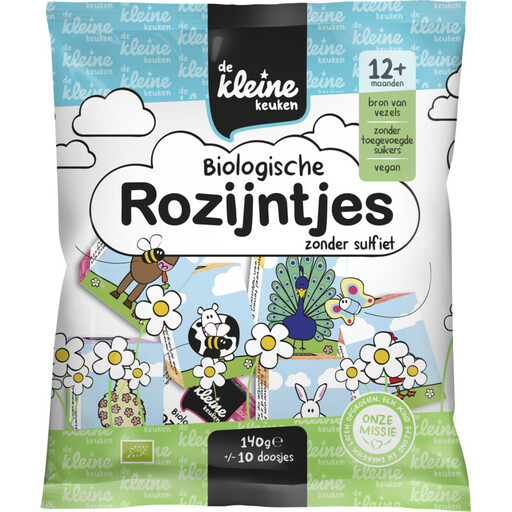
De Kleine Keuken Organic raisins 12M+ 140 g

De Kleine Keuken Organic raisins 12M+ 140 g

The product name identifies raisins for anyone looking for a dried fruit snack to take with them; check the packaging for organic certification and instructions for use.

The title states 140 g and 12M+. Follow the warnings on the packaging and supervise while eating.

View at Joybuy
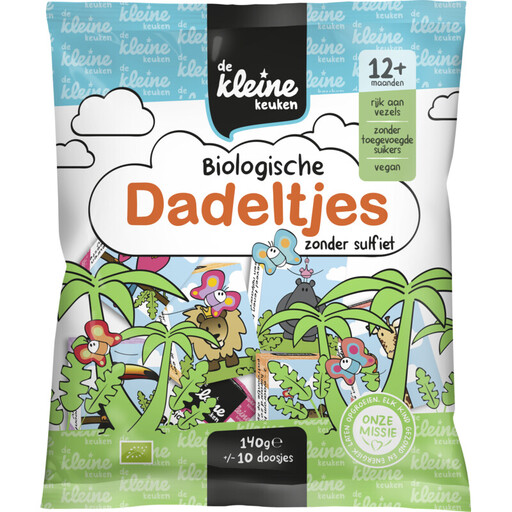
De Kleine Keuken Organic dates 12+

De Kleine Keuken Organic dates 12+

This option may suit you if you want to take dates with you; check the packaging for the ingredients and organic certification.

The product name states 12+. Follow the warnings on the packaging and supervise while eating.

View at Joybuy
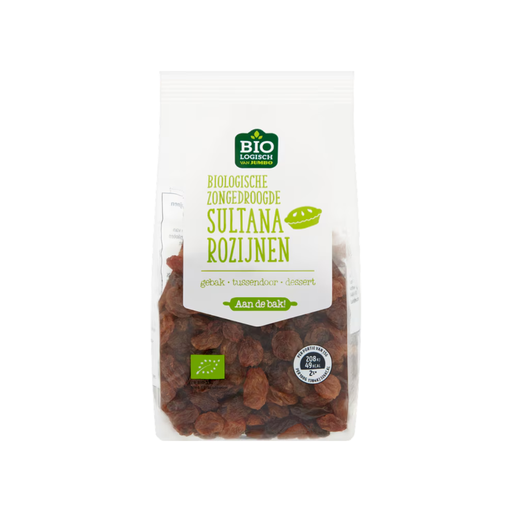
B+ Sultana raisins 250 g

B+ Sultana raisins 250 g

A 250 g bag may suit you if you want to portion out the amount you need for lunch or breakfast. Check the current packaging for ingredients and organic certification.

The product name lists sultana raisins and 250 g. Also check the packaging for any warnings about stalks or stones.

View at Joybuy

Frequently asked questions

Does organic dried fruit need to have a Dutch control code?

No, a Dutch code isn’t the only option. The European Commission explains that the EU organic logo is used with a control code and a statement of the origin of the agricultural raw materials. The AH and Jumbo raisins reviewed list TR-BIO-154 and TR-BIO-132 respectively.

How much dried fruit should I take if brands list different serving sizes?

Treat the serving size on the label as product information, not universal dietary advice. AH and BIO+ list 25 grams, Jumbo lists 15 grams, and the AH prunes reviewed list 50 grams. The Voedingscentrum advises having no more than a handful of dried fruit with no added sugar; this isn’t the same as a manufacturer’s stated serving size.

Is the storage advice the same for every type of dried fruit?

No, follow the instructions for the specific product. BIO+ advises storing its product in a cool, dry, dark place; the AH prunes reviewed have a limited shelf life once opened. The Voedingscentrum gives a storage period of 6–9 months in a kitchen cupboard for dried mixed fruit, but that advice isn’t a guarantee for these prunes.

Is fruit with no nuts listed as an ingredient suitable for someone with a nut allergy?

You can’t tell from the ingredients list alone. The AH prunes reviewed contain prunes and water, but state that they may contain peanuts and various nuts. The NVWA explains that allergen information must be shown on the label, so check the warning about possible traces too.

Do you always have 14 days to change your mind about dried fruit bought online?

There are exceptions. ACM ConsuWijzer says online purchases generally come with a 14-day cooling-off period, subject to exceptions, including certain perishable goods and unsealed hygiene products. Dried fruit isn’t automatically covered by the perishable-goods exception just because of its product category; check the product and returns terms that apply to your purchase.
