What should you look for when buying?
First, check the organic certification details and ingredients. Then decide which portion size and type of packaging suit your child and how you'll be taking their lunch with you.
| What to consider |
What to look for |
Who is this important for? |
| Small portion |
Read the ingredients and distinguish added sugar from naturally occurring sugar. Don't automatically treat a serving suggestion on the pack as advice for a child. |
I want to give dried fruit as a small addition without it crowding out the rest of the lunch. Around 31% of consumers give portion size and ingredients the highest priority. |
| Organic certification |
Check the organic claim, the EU organic logo, and the relevant inspection and origin details for the exact product variant. |
I want to be able to check that this particular pack is organically certified, rather than relying on a brand name or a general product range page. For around 25% of consumers, confidence in organic certification comes first. |
| Use and storage |
Choose between portioning it yourself and taking a single-serve pack; follow the storage advice after opening, and keep dry raisins separate from moist lunch items until you're ready to eat. |
I'm looking for something that's practical to portion at home, take with me or add to, for example, yoghurt with porridge oats. Around 19% of consumers put convenience first. |
| Individual considerations |
Follow the age and usage instructions for the specific product variant. If your child has a known allergy, check the ingredients and allergen information. |
If my child has a specific age-related, swallowing or allergy requirement, I want to be able to check it before buying. For around 13% of consumers, these individual requirements are decisive. |
| Cost with regular use |
Compare the same type of product on the same weight basis, and consider whether you'll portion out a larger pack yourself or use individual servings. |
If I use it regularly, I want to know which pack size suits the amount my child actually eats. Around 12% of consumers put affordability above other purchasing considerations. |
Products at Joybuy
This selection includes pre-packed fruit products for children, other types of dried fruit and loose sultanas. Check the ingredients, certification details and usage instructions for each product variant.
 No image available
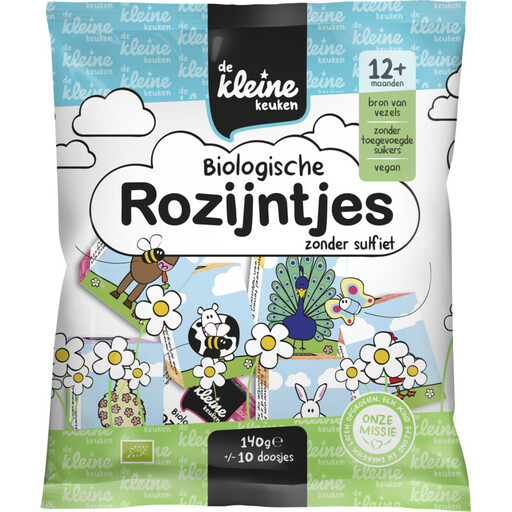
De Kleine Keuken Organic Raisins 12M+ 140 g
A good fit if you're looking for a separately packaged addition for a child. The product title says organic raisins; check the certification details on the pack.
The product information says it's suitable from 12 months and that children should be supervised while eating. Not suitable for children with swallowing difficulties.
View at Joybuy
 No image available
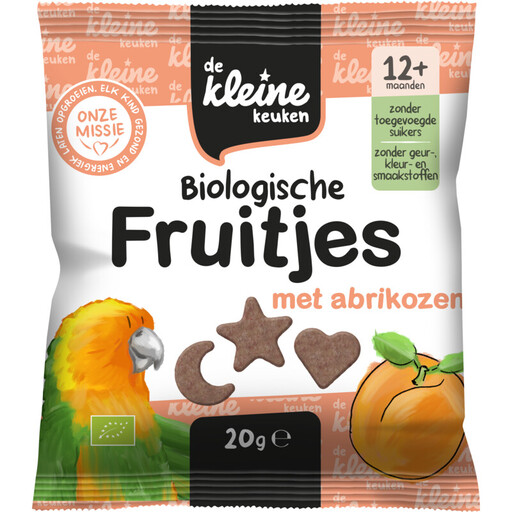
De Kleine Keuken Organic Fruit Bites with Apricot 20 g
A good fit if you're looking for a different type of dried fruit alongside raisins. The product information lists apricots, dates and bananas.
The product information says that it may contain traces of nuts.
View at Joybuy
 No image available
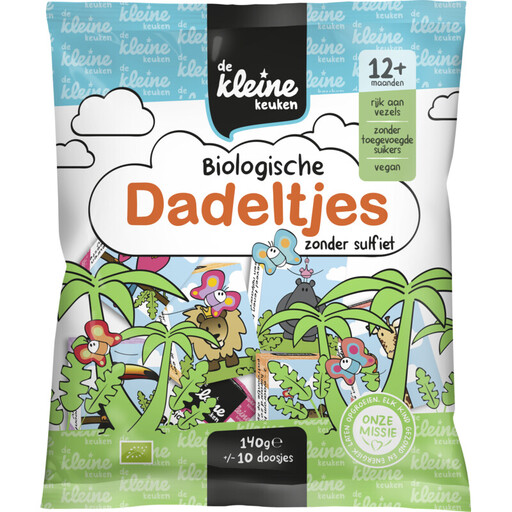
De Kleine Keuken Organic Dates 12+
A good fit if you're looking for a different type of dried fruit from raisins. The product title says organic dates and indicates it's suitable from 12 months.
According to the product information, the child should sit upright and be supervised while eating. Check the usage instructions on the pack.
View at Joybuy
 No image available
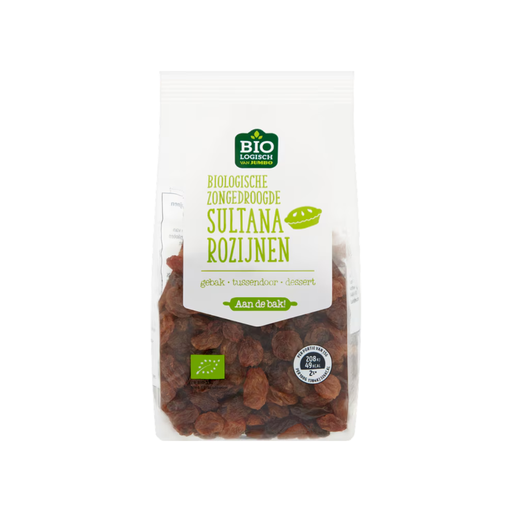
B+ Sultana Raisins 250 g
A good fit if you'd like to portion out small amounts of raisins for lunch yourself. The product information lists EU Organic Farming; also check the certification details on the pack.
The product information lists raisins and sunflower oil, and recommends sealing the pack securely after opening. Occasionally, a stalk or stone may remain.
View at Joybuy
Frequently asked questions
How can you identify organically certified dried fruit?
Check the organic claim and certification details on the exact pack. According to the European Commission, the EU organic logo may be used on certified organic products; also look for the inspection code and details of the agricultural origin. Conditions apply to the use of the logo on imported products.
Is the serving suggestion on the pack the right amount for my child?
Not necessarily. The AH and Jumbo products reviewed give different serving suggestions, while the Voedingscentrum recommends small amounts for children. Adjust the amount to suit your child and the rest of the meal.
How can you serve raisins at breakfast or lunch?
Serve them as a small part of a varied meal. The Voedingscentrum gives yoghurt with porridge oats, raisins and banana as a breakfast idea that can also work for lunch; dried fruit can also be served as a small addition in a separate compartment of a lunchbox.
How should you store an opened bag of dry raisins?
Store dry raisins in a cool, dry, dark place in a tightly sealed pack, and follow the advice on the packaging too. The Voedingscentrum gives a storage time of 6–9 months in a kitchen cupboard for opened dry raisins. This doesn't automatically apply to raisins already mixed with yoghurt or other moist food.
What needs extra care when it comes to young children?
Don't give a child lots of raisins at once, and stay with them while they eat, as they could choke. For the De Kleine Keuken 12+ product reviewed, the product information also gives an age indication of 12 months and over, and says children should sit upright while eating.
What should you check if your child has a known food allergy?
Read the ingredients list and allergen warnings on the exact pack, including for organic products and fruit and nut mixes. The Netherlands Food and Consumer Product Safety Authority sets out the requirements for clearly distinguishing relevant allergens in the ingredients list; organic certification doesn't replace this information.


