
Conscious organic snack buyers
You want to be able to check whether dried fruit is organic, and also see whether sugar or other ingredients have been added. The organic claim and the ingredients list each provide different information.


Check the organic claim and control code for the exact product, then read the ingredients and allergen information too: they answer different questions. The Albert Heijn product pages reviewed list fruit as the only ingredient in the mango and dates, with no added sugar; the Jumbo and BIO+ sultanas reviewed also contain sunflower oil. Unsweetened doesn’t mean sugar-free: the Voedingscentrum recommends limiting dried fruit to a handful.
You want to be able to check whether dried fruit is organic, and also see whether sugar or other ingredients have been added. The organic claim and the ingredients list each provide different information.
You choose an amount and serving style that suit your group. If anyone has an allergy, check the warnings for the specific product; small boxes can be handy if you want to hand them out individually.
You may want to use any opened pack later, too. So check the type of fruit, pack size and storage instructions for the exact product.
Start by checking the organic claim and ingredients list, then choose a pack and serving style to suit your group and any plans to use the rest later.
| What to consider | What should you check? | Who is this important for? |
|---|---|---|
| Organic certification | Check the organic claim, control code and origin information on the exact product. The European Commission explains the requirements for the EU organic logo. | If I’m looking for organically certified fruit, I check the label rather than relying on the product name alone. Around 26% of consumers put certification first. |
| Ingredients and sugar | Read the ingredients list separately from the nutritional information; unsweetened doesn’t mean sugar-free. | If I want fruit only or no added sugar, I check the full ingredients list. Around 21% of consumers put ingredients first. |
| Allergens | Read the allergen information and warnings on the current packaging. The NVWA highlights the need for allergen information on prepacked products. | If someone in my group has a specific allergy, I check whether the product is suitable. For consumers who prioritise allergy suitability, this is the deciding question when buying; they make up around 16%. |
| Quantity and serving | Compare the net weight and consider whether you want to put out one bowl or individual packs. | If I’m sharing fruit during the film, I choose an amount and serving style that suit my group. Around 21% of consumers prioritise sharing and serving. |
| Storage and using it later | Choose packaging that suits how you plan to use the rest, and follow the storage instructions for the exact product. | If I want to use the rest for breakfast another day, I pay attention to the pack size and storage instructions. Around 16% of consumers prioritise having it for more than one occasion. |
Dried fruit with no added sugar still contains sugar. The Voedingscentrum recommends limiting the amount to a handful.
Read the ingredients and nutritional information separately, and serve a considered portion; don’t treat the whole pack as a recommended serving.
The AH organic mango reviewed lists a single fruit ingredient, but also warns that it may contain peanuts and nuts.
Check the allergen information on the current packaging too. Don’t assume a product is allergen-free because it’s organic or has a short ingredients list.
Jumbo and BIO+ recommend storing their products in a cool, dry, dark place; De Kleine Keuken says to keep its organic raisins in the fridge.
Follow the instructions for the exact product and choose an amount that reflects how much you’ll use later.
The ALDI product reviewed is a mix of nuts and dried fruit, so its ingredients are not the same as those of a fruit-only product.
Read the full ingredients list and check organic certification separately if that’s a requirement for you.
The organic mango and dates reviewed are worth considering if you’re looking for fruit with a short ingredients list.
The organic sultanas reviewed are an option if you’re happy to choose raisins with sunflower oil.
The dried fruit page reviewed says the product is available in selected stores.
The Trader Joe’s Nut Fruit Mix reviewed is worth considering if you’re looking for a combination of nuts and dried fruit.
BIO+ is the product brand of the organic sultanas reviewed; PLUS is the retailer.
Dirk lists De Kleine Keuken Bio raisins in a 140 g pack.
These products are related to dried fruit for snacking, serving or possibly using later. If organic certification is a requirement for you, check the claim and information on the packaging of the exact product.
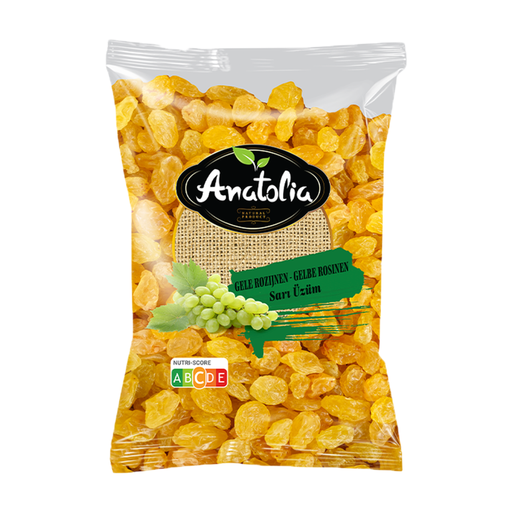 No image available
The product description suggests the raisins as a snack or an addition to breakfast cereal.
Ingredient: 100% dried grapes, according to the product description.
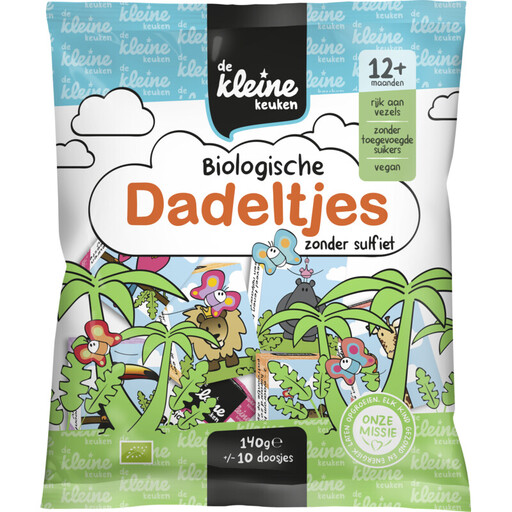
 No image available
The product information lists ten snack boxes of 14 g each, making them easy to hand out individually.
The title states 12M+. The product information recommends supervising children while they eat and says the product is not suitable for children with swallowing difficulties.
 No image available
The product description suggests mini dates as a snack; the title states 12+.
The listed ingredients are 95% dates and 5% rice flour. The description says no sugars have been added and advises sitting the child upright and supervising them while they eat.
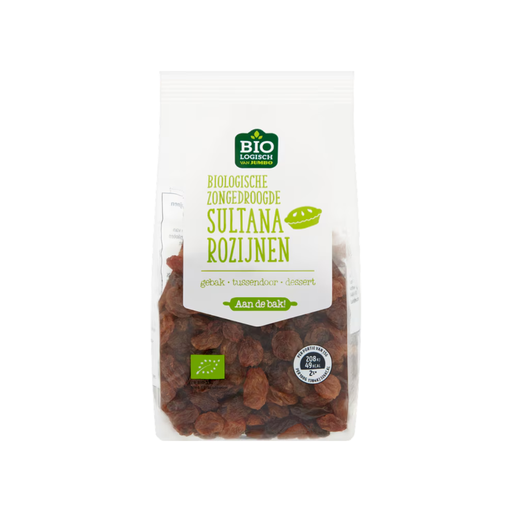 No image available
The product description lists raisins and sunflower oil, and suggests the product for snacking or adding to breakfast cereal.
The nutritional information lists 75,5 g of sugars per 100 g. The description says that a stalk or stone cannot be completely ruled out.
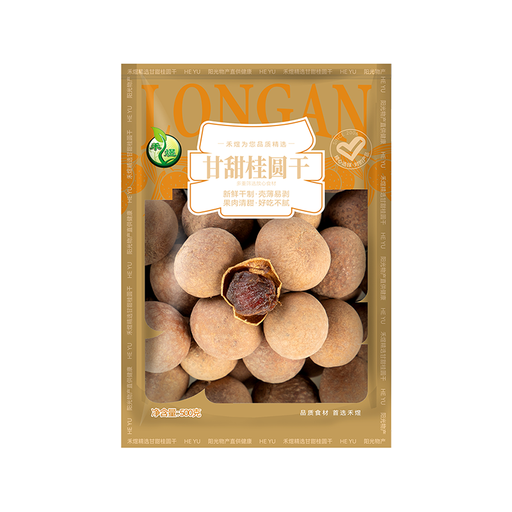 No image available
The product description suggests using longan in congee, soup or tea, so it isn’t a product to serve straight from the pack as a film-night snack without further preparation.
The description says to wash and cook the product, and to store it in a cool, dry place.
No. The control code and country of origin are listed separately. The European Commission describes origin labelling as EU Agriculture, non-EU Agriculture or a combination of the two. Check this information if the growing region matters to you.
No. Unsweetened means no sugar has been added, but dried fruit still contains sugar. The Voedingscentrum recommends limiting dried fruit to a handful.
Follow the instructions for the exact product. Jumbo and BIO+ recommend storing their products in a cool, dry, dark place; De Kleine Keuken says to keep its organic raisins in the fridge. Don’t assume one set of storage instructions applies to all dried fruit.
Choose a pack that suits what you actually want to serve and use later. The packs reviewed range from 130 g of mango to 500 g of dates; a larger pack won’t necessarily be a better choice if you won’t use the rest later.
Check the allergen information and warnings on the current packaging before choosing a product. The NVWA says allergen information must appear on the label of prepacked products; if you’re unsure about a specific allergy, ask the supplier for product information.