What should you look for when choosing?
Organic raisins
Choose these when: you’re looking for a sweet addition that you can also use in granola or other dishes; Albert Heijn and PLUS offer organic raisin varieties.
Consider: the varieties reviewed contain sunflower oil as well as raisins. Organic does not mean that the overall sugar content is low.
Organic unsweetened mango
Choose this when: you want individual pieces of fruit and are looking for an ingredients list containing only dried mango; Albert Heijn offers this variety.
Consider: the packaging warns that it may contain peanuts and nuts. This warning may matter to guests with relevant dietary needs.
Organic fruit and nut mix
Choose this when: you want to serve fruit and nuts together and the ingredients are suitable for your guests; Albert Heijn offers a mix containing almonds.
Consider: almonds are an ingredient in the mix, not just a possible-traces warning.
Check the organic label first, then choose based on the ingredients, suitability for your guests and what you plan to do with any leftovers.
| What to consider |
What should you check? |
Who might prioritise this? |
| Verifiably organic |
Check the organic label and certification or control code on the exact product. ‘Organic’ is a protected term according to the Netherlands Food and Consumer Product Safety Authority; Skal Biocontrole explains the certification requirements. |
If I want to buy organic, I want to be able to check that on the packaging; around 28% of consumers put that assurance first. |
| Ingredients and sugars |
Check the ingredients, total sugars and added sugars separately. Albert Heerd states that the unsweetened mango reviewed contains 61 g of sugars and 0 g of added sugars per 100 g. |
If I want to know what else is in the product besides fruit and how much sugar it contains, I check the nutritional information; around 22% of consumers are most concerned about ingredients and sugar content. |
| Suitability for guests |
Check both the ingredients and any warnings about possible traces. Consider sulphites separately if a guest is sensitive to them. |
When I’m serving a table of people with different dietary needs, I want to check every pack; around 22% of consumers prioritise suitability for guests. |
| Right-sized quantity |
Compare the net weight with how much you want to serve. The Albert Heijn and PLUS raisins reviewed come in 250 g packs; the Albert Heijn mango reviewed comes in a 130 g pack. |
If I’m buying for several people, I look for an amount that suits what I want to serve; around 17% of consumers prioritise pack size. |
| Storage and using leftovers |
Follow the storage advice and check for any instructions after opening. The raisins reviewed should be stored in a cool, dry, dark place; Albert Heijn states that its mango has a limited shelf life once opened. |
If there’s anything left after the get-together, I want to be able to store it according to the label and use it later; around 11% of consumers put storage and reuse first. |
Dried fruit at Joybuy
Joybuy’s organic dried fruit selection includes varieties to serve at the table, as well as products marketed as snacks for young children.
 No image available
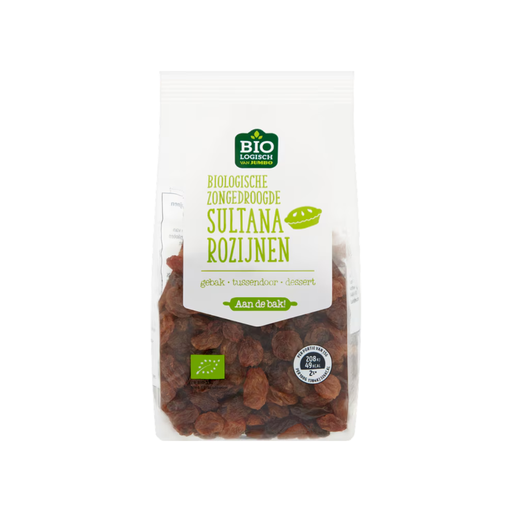
B+ Sultana raisins, 250 g
An option if you want to serve organic sultana raisins and use any leftovers at breakfast or in baking.
Net weight: 250 g.
The product information states that, despite checks, the presence of a stalk or stone cannot be entirely ruled out.
View at Joybuy
 No image available
De Kleine Keuken organic raisins 12M+, 140 g
This individual snack pack is aimed at young children; consider whether this child-focused variety suits what you’re looking for for your get-together.
The product name states 12M+ and a net weight of 140 g. The product information warns that it may contain traces of nuts.
According to the product information, this product is not suitable for anyone with swallowing difficulties, and children should be supervised while eating.
View at Joybuy
 No image available
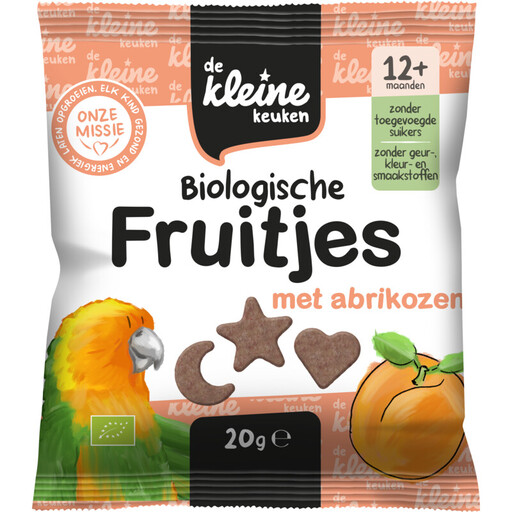
De Kleine Keuken organic fruit bites with apricots, 20 g
According to the product information, this variety is intended as a snack for children aged 12 months and over; check whether that suits the guests at your table.
The product name states 20 g. The product information warns that it may contain traces of nuts.
View at Joybuy
 No image available
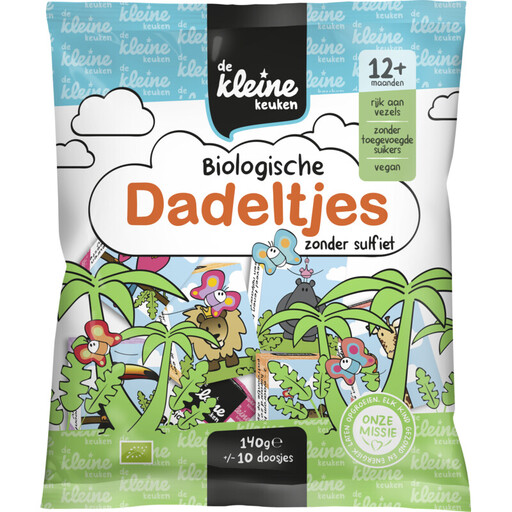
De Kleine Keuken organic dates 12+
An option if you’re looking for dates; the product information positions it as baby food for children aged 12 months and over.
The product name states 12+.
View at Joybuy
Frequently asked questions
Is the EU organic logo required on every organic product?
Skal Biocontrole states that the logo is compulsory for pre-packed food produced in the EU and sold as organic. Don’t apply this specific rule automatically to every imported product; the term ‘organic’ remains protected.
How should you store leftover dried fruit after your get-together?
Follow the label for the exact product. The raisins reviewed should be stored in a cool, dry, dark place; for the mango reviewed, Albert Heijn states that it has a limited shelf life once opened.
Is the serving size on a pack automatically a dietary recommendation?
Not necessarily. The packs reviewed list 25 g as a serving size; the Netherlands Nutrition Centre recommends having no more than a small handful of dried fruit. So don’t treat the stated serving size as a required amount to serve.
How can you check a safety warning before serving?
Check the official notices from the Netherlands Food and Consumer Product Safety Authority and, if there’s a relevant warning, confirm that the product and batch match. A warning about another product from the same brand or supermarket doesn’t mean your product has been recalled.
Do you need to soak dried fruit before serving it?
Soaking is not generally required for the varieties described. Albert Heijn describes the mango as a snack and the raisins as suitable for immediate use in cooking; follow any instructions on the packaging of your product.


