Who is organic dried fruit relevant to?

If you add fruit to your breakfast

Want to decide how much fruit to add? Raisins and unsweetened dried mango are two options. Check the ingredients and portion size too. The Netherlands Nutrition Centre recommends eating no more than a handful of dried fruit.

If you’re stocking up on snacks

Compare the ingredients, allergen information and storage advice rather than relying on the organic label alone. The AH mango product we reviewed may contain traces of peanuts and nuts. Always check the packaging of the product you choose.

If you want to check the organic label

Look for the EU organic logo, the control code and the indication of agricultural origin. These details don’t tell you about the sugar content or whether a product is suitable for someone with an allergy.

What should you look for when choosing?

What to consider What should you look for? Who is this important to?
Organic origin Check the organic logo, control code and origin information on the packaging. If you want to buy organic, you’ll want to be able to check the label. Around 25% of consumers prioritise verifying organic origin.
Ingredients and allergens Read the ingredients list and allergen warning for the exact product. If additives or allergens affect your choice, you’ll want to read the label for that product before buying. Around 25% of consumers give top priority to ingredients and allergens.
Portion size and packaging Compare the net weight with how much you use, and follow the storage advice once opened. If you keep fruit in stock, you’ll want to choose a pack size that suits how often you use it. Around 25% of consumers prioritise managing their stock.
Type of fruit Choose the type of fruit you want, then check the ingredients for that product. If you want to vary what you have for breakfast or as a snack, don’t assume that raisins and mango have the same ingredients. Around 25% of consumers prioritise variety in the types of fruit they buy.

Common pitfalls when choosing

  • Confusing unsweetened with sugar-free

    The AH Organic Dried & Unsweetened Mango we reviewed lists 0 g of added sugar, but 61 g of total sugars per 100 g. So, unsweetened doesn’t mean sugar-free.

    Check both the ingredients and the nutrition table. The Netherlands Nutrition Centre recommends dried fruit with no added sugar and no more than a handful.

  • Relying on the organic label to tell you about allergens

    The organic label doesn’t tell you whether a product is suitable for someone who needs to avoid certain allergens. The AH mango we reviewed states that it may contain peanuts and various nuts.

    Check the allergen information on the packaging of the exact product. The NVWA explains which allergens must be listed on the label.

  • Stocking up without checking the storage advice

    The AH mango we reviewed has a limited shelf life once opened. The pack may not suit how much you use if you can’t finish it in time.

    Choose a quantity that suits your usage and follow the storage advice on the packaging. Don’t assume that another fruit mix has the same storage life.

Relevant brands and product ranges to consider

Albert Heijn

The AH Organic products we reviewed are raisins and dried, unsweetened mango.

  • The official product pages show an EU organic logo and control code. According to the product information, the mango contains only dried mango.
  • The mango may contain traces of peanuts and nuts and has a limited shelf life once opened. The raisins also contain sunflower oil.

Jumbo

The product listing we reviewed is Jumbo Organic Sun-Dried Sultana Raisins 250 g.

  • The official product information lists raisins and sunflower oil of organic origin, and provides nutritional values.
  • This product information supports a comparison of this product, not a conclusion about Jumbo’s entire range.

Lidl

Lidl Netherlands lists Belbake Organic Raisins as a separate product.

  • The product listing gives you a specific product name to look out for when searching for organic raisins.
  • Check the current ingredients and label information on the packaging of the product you’re considering.

PLUS

The product range we reviewed is BIO+ Sultana raisins in a 250 g stand-up pouch.

  • The official product page displays the EU Organic Farming logo and lists ingredients of organic origin.
  • The ingredients list includes sunflower oil, and the product information warns that natural impurities, such as stalks and stones, may be present.

Products at Joybuy

This selection includes organic raisins and dates, as well as a mixed fruit snack. Check the ingredients, packaging and any age or usage instructions for each product.
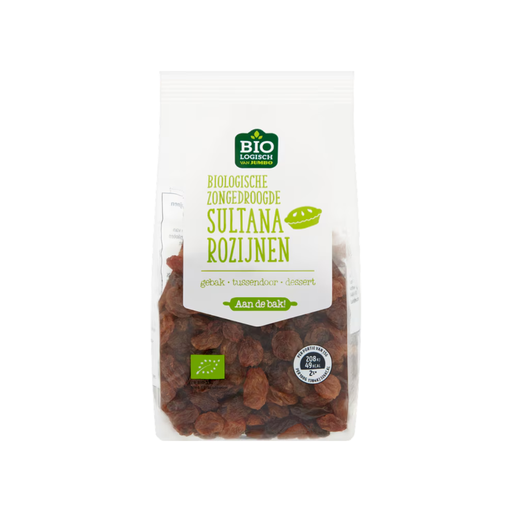
B+ Sultana raisins, 250 g

B+ Sultana raisins, 250 g

The product description suggests adding them to breakfast cereal or enjoying them as a snack.

According to the product description, the raisins and sunflower oil are of organic origin; no added sugar is listed.

Keep the packaging tightly closed. Despite checks and cleaning, a stalk or stone may remain.

View at Joybuy
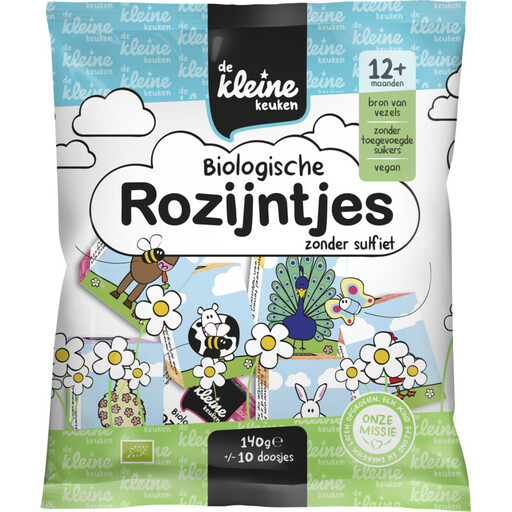
De Kleine Keuken organic raisins 12M+, 140 g

De Kleine Keuken organic raisins 12M+, 140 g

The pack contains 10 portion-sized boxes of 14 g each.

The description lists organic raisins, with no added sugar or sulphites.

According to the product information, suitable for children aged 12 months and over. Supervise children while they eat; not suitable for those with swallowing difficulties.

View at Joybuy
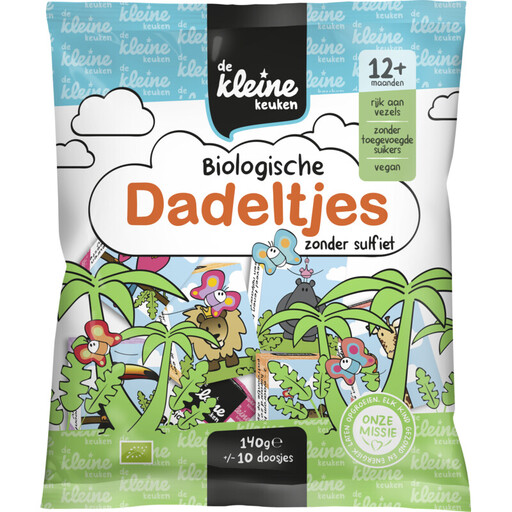
De Kleine Keuken organic dates 12+

De Kleine Keuken organic dates 12+

A date product for anyone considering dried dates as well as raisins.

The description lists 95% dates and 5% rice flour of organic origin, with no added sugar.

According to the product information, suitable for children aged 12 months and over. Make sure the child is sitting upright and supervise them while they eat.

View at Joybuy
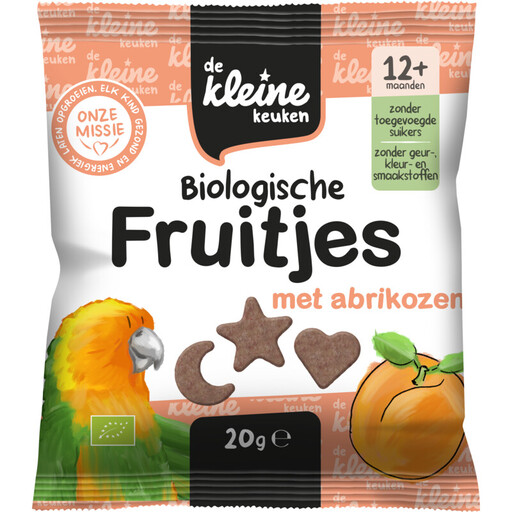
De Kleine Keuken Organic Fruitjes with Apricots, 20 g

De Kleine Keuken Organic Fruitjes with Apricots, 20 g

This is a mixed fruit snack, not a single type of dried fruit.

The description lists apricots, dates, banana and rice flour, with organic ingredients and no added sugar.

Intended for children aged 12 months and over as an occasional snack. The product information states that it may contain traces of nuts.

View at Joybuy

Frequently asked questions about organic dried fruit

Does organic dried fruit always need to have the green EU leaf logo?

Not always. According to the European Commission, the logo is compulsory for pre-packed food produced in the EU and sold there as organic. Its use is optional for imported organic products. If the logo is used, the label should also show the control code and the indication of agricultural origin.

Is the portion size on the packaging the same as dietary advice?

No. The AH and PLUS products we reviewed list a 25 g portion, while Jumbo uses 15 g in its nutrition table. These figures relate to individual products. The Netherlands Nutrition Centre recommends dried fruit with no added sugar and no more than a handful.

How should I store an opened pack?

Follow the advice on the relevant packaging. BIO+ Sultana raisins should be stored in a cool, dry, dark place. The AH mango we reviewed is labelled as having a limited shelf life once opened. The Netherlands Nutrition Centre’s general advice for dried mixed fruit is to store it in a cool, dry, dark place in a tightly closed container. Don’t automatically apply this advice as a storage period for other products.

Is organic dried fruit suitable if I need to avoid peanuts or nuts?

The organic label doesn’t tell you this. The AH mango we reviewed states that it may contain peanuts and various nuts. Check the allergen information on the packaging of the exact product you want to buy. The NVWA explains allergen labelling requirements.

Does a health and beauty shop need an organic certificate to resell packaged organic products?

According to Skal, a shop is exempt from certification if it only sells pre-packed organic products directly to consumers and meets the specified conditions. Importing organic products from outside the EU yourself or carrying out other organic activities may require certification. The exemption therefore doesn’t automatically apply to every type of business.
