Choose a product that is verifiably organic, then decide whether raisins, dates or dried pineapple best suit your journey: as a breakfast topping, a snack on its own or something to enjoy on several occasions. Check the EU organic logo and control code against the ingredients, sugar content, allergen warnings and storage instructions. Organic or unsweetened does not mean sugar-free. Voedingscentrum recommends a maximum of 20 g of dried fruit per day; a serving size shown on the packaging does not replace this dietary advice.
Who is organic dried fruit for?
Shoppers who check organic labels
You want to be sure that dried fruit is organic, rather than relying on words such as ‘natural’ or ‘pure’. The European Commission explains that the EU organic logo may only be used on products certified as organic by a recognised control authority or control body. Check the code and the statement of agricultural origin too.
Shoppers planning snacks for the journey
You want to take the right amount with you, so you check pack size, storage instructions and allergen warnings. Albert Heijn’s product information for the dates and pineapple reviewed mentions possible traces of peanuts and nuts. If you have a relevant allergy, always check the current packaging.
Shoppers putting together their own travel breakfast
You want to decide how much fruit to mix into your breakfast, so you compare ingredients, sugars and fibre. Jumbo suggests adding raisins to porridge; the exact ingredients vary from product to product.
What should you look for when choosing?
Start by checking the organic label, then choose based on the ingredients, when you plan to eat it and the packaging. That way, an appealing product name alone won’t dictate your choice.
| What to consider |
What to look for |
Who should pay particular attention? |
| Organic certification |
Check the EU organic logo, control code and statement of agricultural origin. According to the European Commission, the logo is intended for products certified as organic. |
If I want to be sure the organic claim is backed up, I check the label rather than relying on words such as ‘natural’ or ‘pure’. Around 28% of shoppers prioritise verifiable organic certification. |
| Ingredients and allergens |
Read the ingredients list and the current allergen warning; also compare total sugars and fibre per 100 g. |
If I want to assess the ingredients or need to take an allergy into account, I check both the ingredients and the warnings. Around 22% of shoppers give this check top priority. |
| Portioning and storage |
Decide in advance how much to take with you and follow the storage instructions. Voedingscentrum recommends a maximum of 20 g of dried fruit per day. |
If I’m planning snacks for a car journey or several days away, I want to be able to portion them out and store the packaging as directed on the label. Around 22% of shoppers prioritise these practical considerations for travelling. |
| Fruit flavour and how you’ll use it |
Decide whether you’ll eat the fruit on its own or mix it into breakfast, then check the ingredients of the specific product. |
If I want some variety or plan to add fruit to breakfast, I factor the type of fruit and how I’ll use it into my choice. Around 17% of shoppers are mainly guided by their preferred fruit flavour or how they plan to use it at breakfast. |
| Pack size |
Compare the net weight and consider whether you’ll be able to store the pack as directed once it’s opened. |
If I’m looking for a snack to take on the go, I don’t want to carry more than I need. Around 11% of shoppers consider a suitable pack size the most important factor. |
Things to consider when travelling
-
Organic or unsweetened doesn’t mean sugar-free
The AH Biologisch Raisins and AH Biologisch Dried & Unsweetened Pineapple reviewed state that they contain 0 g of added sugars, but 59 g and 67 g of total sugars per 100 g respectively, according to Albert Heijn. Added sugars and total sugars are therefore two different figures on the label.
Check both the ingredients and the total sugars, and decide in advance how much you want to take with you.
-
A short ingredients list doesn’t guarantee it’s suitable for someone with an allergy
The AH dates and AH pineapple reviewed each list just one fruit ingredient, but also warn that they may contain peanuts and nuts.
If you have a relevant allergy, read the warning on the current packaging. Don’t assume a product is suitable based on an organic claim or a short ingredients list.
-
A large pack needs a storage plan
The products reviewed should be stored in a cool, dry and dark place. The AH dates and AH pineapple also state that they have a limited shelf life once opened.
Choose a pack size that suits your plans and follow the label’s storage instructions after opening.
Brands and shops to explore
Albert Heijn
The organic options reviewed include 250 g of raisins, 500 g of pitted dates and 80 g of dried pineapple.
- The product information lists ingredients, control codes, nutritional values and storage instructions.
- The dates and pineapple reviewed carry a warning that they may contain peanuts and nuts. Descriptions of flavour and texture are claims made by the brand.
Jumbo
Jumbo lists 250 g of organic Sultana raisins, which you can portion out for a snack or add to breakfast.
- The product page lists organic ingredients and control code TR-BIO-132.
- The ingredients list includes sunflower oil as well as raisins. The manufacturer says a stalk or stone may occasionally remain.
Lidl
Lidl lists dried fruit at selected stores.
- This category may be worth exploring if you shop at Lidl.
- The shop name or product category doesn’t confirm that a particular product is organic. Check the product label to find out.
ALDI
ALDI lists a 500 g pack of raisins as a product to consider.
- The pack size gives you a useful guide if you’re planning to enjoy the fruit on several occasions.
- The 500 g pack and the shop name alone don’t confirm organic certification. Check the specific product.
PLUS
PLUS lists BIO+ Sultana raisins in a 250 g stand-up pouch.
- The product information states that it contains 99% organic raisins and organic sunflower oil.
- PLUS warns that natural impurities may be present. BIO+ is the product range, not the name of the supermarket.
Dirk
Dirk lists Bio+ Sultana Raisins in a 250 g pack. BIO+ describes its range as organic and bearing the European organic certification mark.
- The product listing gives you a specific product name and pack size to consider.
- Check the current packaging for ingredients, control code and allergen information. Don’t assume that a product with the same name at another shop has the same ingredients.
Products at Joybuy
These products include dried fruit and fruity snacks that you can portion out for the journey. Check the product information for details of the ingredients, packaging and instructions for use for the product you choose.
 No image available
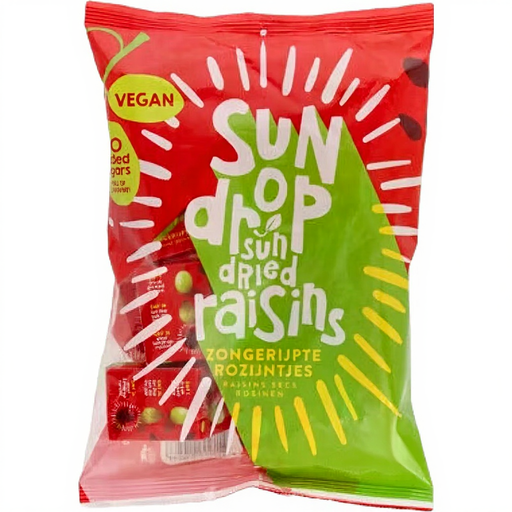
Sundrop Mini Raisin Handouts, 252 g
The product information describes these raisins as a snack for on the go.
The ingredients list states that they contain 99.5% raisins and sunflower oil. The nutritional information lists 4.2 g of fibre per 100 g. Reseal the pack after opening; store in a cool, dry place away from direct sunlight.
Joybuy
 No image available
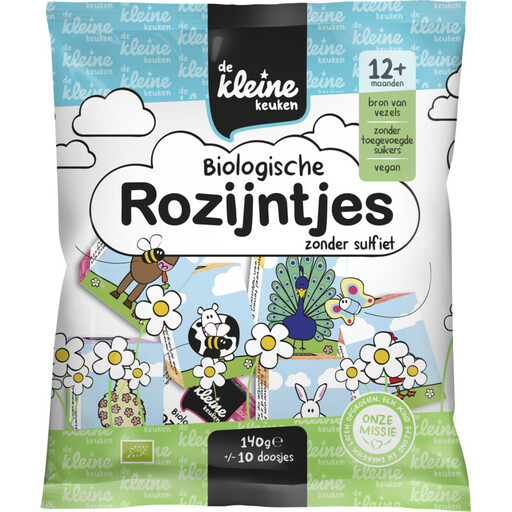
De Kleine Keuken Organic Raisins 12M+, 140 g
The product name specifies raisins and a 140 g pack for anyone looking for a portion-sized option.
The product information says it is suitable from 12 months and advises storing it in a cool, dry, dark place. Make sure young children are sitting upright and supervise them while they eat.
Joybuy
 No image available
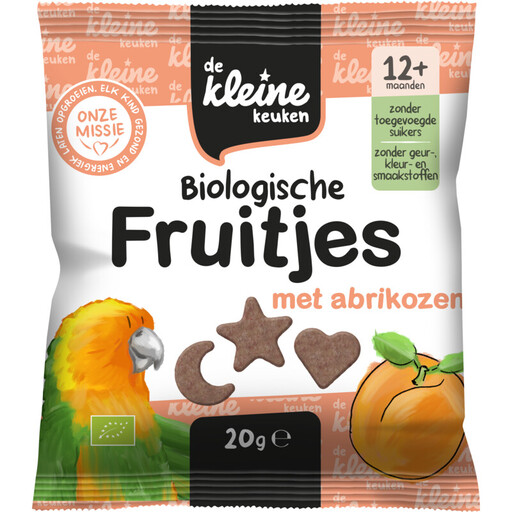
De Kleine Keuken Organic Fruitjes with Apricots, 20 g
The product information describes the fruit pieces as a snack and lists dried apricots, dates, bananas and rice flour.
The information states that no sugars are added and that the product is suitable from 12 months. It may contain traces of nuts; store in a cool, dry place after opening and use promptly.
Joybuy
 No image available
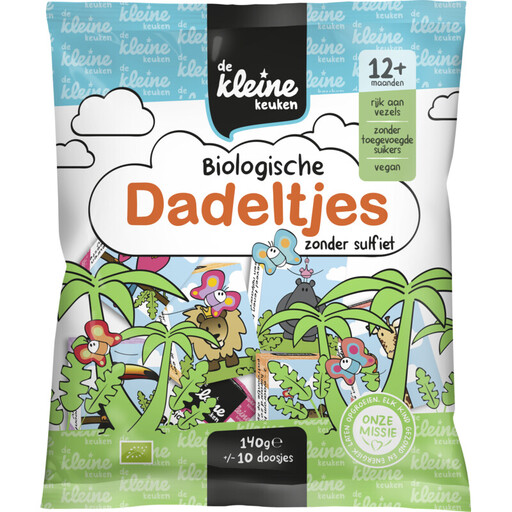
De Kleine Keuken Organic Dates 12+
The product name specifies dates for anyone looking for a date-based snack.
According to the product information, it is suitable only for children over 12 months and is not suitable for children with swallowing difficulties. Supervise children while they eat.
Joybuy
Frequently asked questions
Does every organic product need to display a Dutch control code?
No. The code refers to the control body and doesn’t have to be Dutch. The European Commission explains that the EU organic logo may only be used on products certified as organic by a recognised control authority or control body. So check the code and statement of origin on the packaging.
Is the serving size on the packaging the same as the daily recommendation?
No. A serving size on the label isn’t automatically the recommended daily amount. Voedingscentrum recommends a maximum of 20 g of dried fruit per day, so treat this advice separately from the serving size stated on the packaging.
Can I keep an opened bag in the car for the whole journey?
Follow the storage instructions on the specific packaging. The products reviewed should be stored in a cool, dark and dry place. The AH dates and pineapple reviewed also state that they have a limited shelf life once opened. These instructions don’t specify how long the product can be stored in a hot car.
What does ‘may contain’ mean on a pack of organic fruit?
It warns that allergens may be present accidentally; it doesn’t necessarily mean the allergen has been added as an ingredient. From 1 January 2026, new rules apply in the Netherlands to these warnings on prepacked foods. The NVWA says they must be based on a risk assessment. If you have a relevant allergy, read the warning on the current packaging, even if the ingredients list mentions only fruit.


