
Conscious organic snack shoppers
You’re looking for dried fruit with verified organic certification. The EU organic logo is linked to organic certification; the European Commission and Skal Biocontrole explain which labels apply.


Choose organic raisins if you’re after a simple snack that you can also enjoy at breakfast; unsweetened dried mango offers a change if you’d rather try a different fruit. Before going to the cinema, check the venue’s house rules and compare the organic certification, ingredients and allergens on the packaging. Unsweetened doesn’t mean sugar-free, so keep portion size in mind too.
You’re looking for dried fruit with verified organic certification. The EU organic logo is linked to organic certification; the European Commission and Skal Biocontrole explain which labels apply.
You want to take a snack to the cinema, but first check whether the venue allows it and how much you want to portion out beforehand. Cinema house rules don’t apply when you’re watching at home.
You compare things such as added sugars, ingredients or allergens. A short ingredients list doesn’t rule out a warning about possible allergens.
Start by checking the organic certification and ingredients, then choose a pack size and portion that suit your film night and where you plan to enjoy your snack.
| What to consider | What to look for | Who is it most relevant to? |
|---|---|---|
| Organic status | Check the organic certification and, where shown, the EU organic logo, control code and agricultural origin. The European Commission links the logo to organic certification. | If organic origin is what matters most to me, I want to be able to check the certification on the packaging. Around 28% of consumers prioritise confidence in organic certification. |
| Portion and sugars | Compare total sugars per 100 g with added sugars, and weigh out your portion in advance. Albert Heijn lists 59 g of total sugars and 0 g of added sugars per 100 g for AH Biologisch Rozijnen; the Netherlands Nutrition Centre recommends a maximum of 20 g of dried fruit per day. | If you want to eat a pre-measured amount during the film, focus on portion size and sugar information. Around 22% of consumers prioritise this. |
| Cinema venue | Check the house rules of the specific cinema. KINO Rotterdam prohibits bringing your own food and drink; the Pathé information consulted, which applies to school visits, also prohibits consuming them. | If I want to eat my snack during a screening, I check what the venue allows first. Around 22% of consumers prioritise being able to enjoy their snack at the cinema. |
| Ingredients and allergens | Read both the ingredients list and the allergen warning on the current packaging. AH Biologisch Mango gedroogd & ongezoet warns that the product may contain peanuts and nuts. | If I have a relevant allergy or a specific preference about ingredients, I want to check both. Around 17% of consumers prioritise dietary compatibility. |
| Pack size | Choose an amount that suits how you plan to use it. The AH mango product reviewed contains 130 g; the raisin bags mentioned from Albert Heijn, Jumbo and PLUS contain 250 g. | If I only have the snack occasionally, I want to choose a pack size that suits the amount I plan to eat. Around 11% of consumers prioritise a suitable pack size. |
Organic origin or a small pack doesn’t mean you can eat the snack in every cinema. KINO Rotterdam prohibits bringing your own food and drink.
Check the venue’s rules in advance. If outside food isn’t allowed, save the snack for home or another occasion where it is permitted.
AH Biologisch Rozijnen lists 0 g of added sugars, but also 59 g of total sugars per 100 g. And the whole pack isn’t automatically one portion.
Compare the nutrition information per 100 g and decide in advance how much you want to eat. The Netherlands Nutrition Centre recommends a maximum of 20 g of dried fruit per day.
The unsweetened AH mango product reviewed warns that it may contain peanuts and nuts, even though its ingredients list contains only dried mango.
Read the ingredients and allergen warning on the packaging, then assess the information for your circumstances.
The AH Biologisch range reviewed includes raisins and dried mango, including a 130 g unsweetened mango option.
Jumbo lists organic sultanas in a 250 g bag.
PLUS offers BIO+ Sultana raisins in a 250 g pack; BIO+ is the name shown on the packaging.
Dirk lists 250 g packs of Bio+ Sultana raisins.
Lidl lists Belbake Organic raisins.
ALDI is worth considering when comparing supermarkets and also has a separate organic range.
These product picks include organic dried fruit and mixed fruit snacks for a film night; check the ingredients and organic certification on the packaging of each product.
 No image available
For anyone who wants to take raisins in pre-portioned snack boxes.
Product information lists 10 boxes of 14 g. Suitable from 12 months; supervise children while they eat and don’t use if they have swallowing difficulties.
 No image available
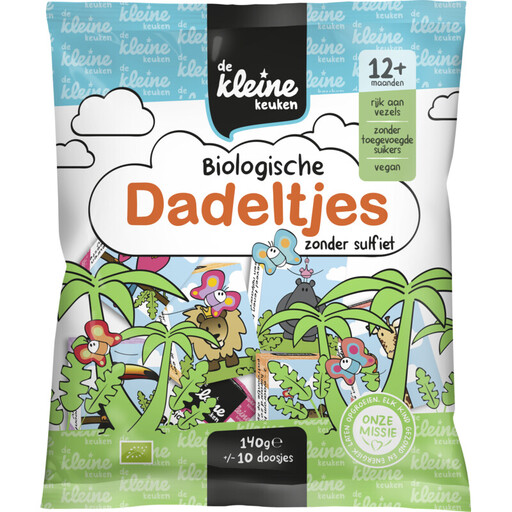
For anyone considering dates as a dried-fruit snack instead of raisins.
Product information lists 95% dates and 5% rice flour. The packaging states 12+; follow the instructions to ensure children are sitting upright and supervised while eating.
 No image available
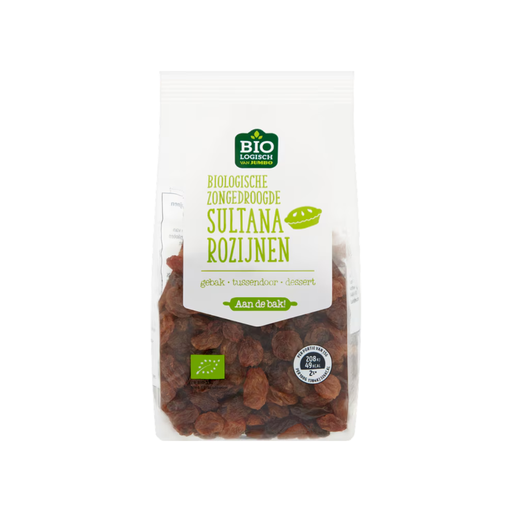
An option if you’re looking for sultanas to enjoy as a snack or add to breakfast cereal.
Product information lists raisins and sunflower oil, and warns that a stalk or stone may remain. Check the organic certification and ingredients on the current packaging.
 No image available
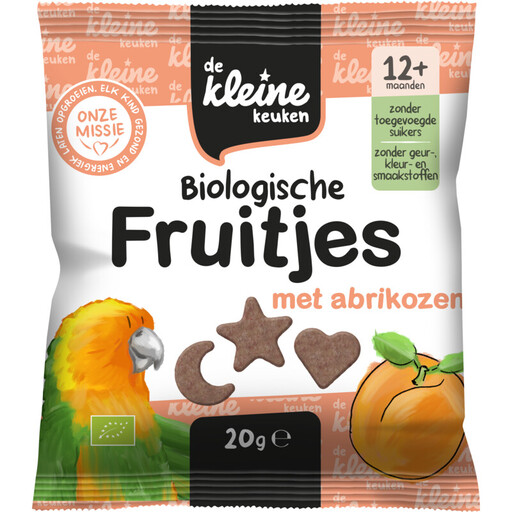
For anyone looking for a small mixed-fruit snack rather than dried fruit on its own.
Product information lists 44% dried apricots, 44% dates, 8% banana and 4% rice flour. Suitable from 12 months; the information warns that it may contain traces of nuts and recommends supervising children while they eat.
No. According to the European Commission, the logo is compulsory for pre-packaged food produced in the EU and sold as organic. Its use is optional for imported products that meet EU import requirements. When the logo is used, the control code and agricultural origin must also be shown.
No, unsweetened doesn’t mean sugar-free. Albert Heijn lists 0 g of added sugars for AH Biologisch Rozijnen, but also 59 g of total sugars per 100 g. The Netherlands Nutrition Centre recommends a maximum of 20 g of dried fruit per day; this is dietary advice, not a legal limit for products.
It depends on the venue’s house rules. KINO Rotterdam doesn’t allow visitors to bring their own food and drink; the Pathé information consulted applies to school visits and also prohibits consuming them. These are house rules specific to a venue and context, not evidence of a general Dutch legal rule about snacks. Check the rules for your screening.
Read both the ingredients list and the warnings about possible allergens on the current packaging. The Netherlands Food and Consumer Product Safety Authority explains allergen information on pre-packaged products. The unsweetened AH mango product reviewed warns that it may contain peanuts and nuts; organic certification doesn’t replace this information.
Yes, if the type of fruit and its ingredients suit what you want to eat. Albert Heijn suggests adding dried mango to granola and yoghurt; this is a serving suggestion from the retailer, not evidence of a particular health benefit.
Follow the storage instructions on the packaging of the specific product. For the BIO+ raisins reviewed, PLUS advises storing them in a cool, dry and dark place. The AH mango product reviewed states that it has a limited shelf life once opened; this doesn’t establish a general number of days for which it will keep.