What should you look for when buying?
First decide how much you want to eat, then check the organic labelling, ingredients and product information on the specific pack.
| What to consider |
What should you check? |
Who is this important for? |
| Portion and sugars |
Check the total sugars per 100 g and weigh out your own portion. Remember to include any dried fruit you have already eaten. |
If you want to have a small amount in the evening, weighing your portion helps you stick to that choice. Around 30% of consumers give portion size and sugars top priority. |
| Organic status and ingredients |
Check the organic labelling and control code, the ingredients list and any allergen warnings. |
If you want to verify that a product is organic and ensure the ingredients suit your preferences, read the warnings on the pack too. Around 30% of consumers prioritise certification and ingredients. |
| Type of fruit and how you’ll use it |
Choose between options such as raisins and mango; consider whether you want to eat the fruit on its own or with yoghurt and granola. |
If you’re looking for one type of fruit to enjoy both as a snack and at breakfast, consider your taste preferences and how versatile it is. Around 20% of consumers prioritise versatility. |
| Packaging and storage |
Compare the net weight with how much you expect to use, and follow the storage advice and use-by date. |
If you want to choose a pack that suits your stock-up habits and how you’ll use it, check the quantity and the label instructions for after opening. Around 20% of consumers focus mainly on packaging and storage. |
Dried raisins at Joybuy
These product options are raisins for a measured snack. If organic certification is essential to you, check the organic labelling and control code on the pack.
 No image available
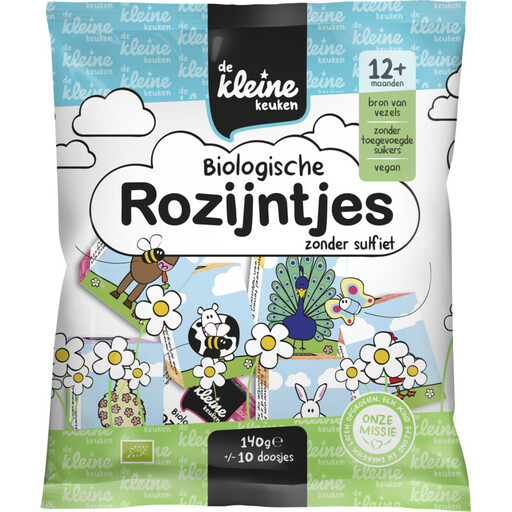
De Kleine Keuken Organic Raisins 12M+ 140 g
The product information describes 14 g snack boxes, so you can have a separately packed portion.
The product information states that there are no added sugars and that the product contains 75 g of total sugars per 100 g.
The product title says ‘Organic’; if certification is important to you, check the organic labelling and control code on the pack.
According to the product information, suitable from 12 months. Supervise children while they eat and do not give this product to children with swallowing difficulties.
View at Joybuy
 No image available
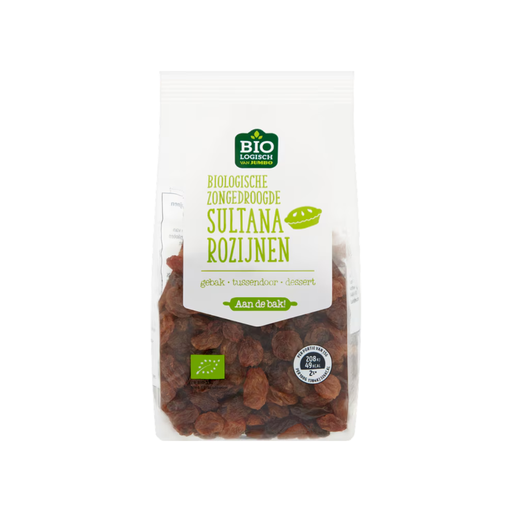
B+ Sultana Raisins 250 g
The product description says these sultana raisins are suitable for snacking on their own or adding to breakfast cereal.
The product information lists raisins and sunflower oil as ingredients, with 75.5 g of total sugars and 3.7 g of fibre per 100 g.
The product information describes the raisins as organic; check the labelling and control code on the pack before considering them certified organic.
According to the product information, stems or pips may remain despite cleaning. Seal the pack securely after opening.
View at Joybuy
Frequently asked questions
Is the serving size on the pack the same as daily guidance?
No. The raisin products checked list different reference serving sizes: 25 g for AH and PLUS, and 15 g for Jumbo. The World Cancer Research Fund recommends eating no more than 20 g of dried fruit a day; this is dietary advice, not a legal limit.
Does organic dried fruit always need to carry the EU organic logo?
The EU organic logo is compulsory on prepacked food produced in the EU and sold as organic; its use is optional for imported organic products. The European Commission also lists the control code and an indication of the agricultural origin as relevant information to check.
Does ‘no added sugars’ mean dried fruit is low in sugar?
No. Added sugars and total sugars are different figures. The AH Organic Dried & Unsweetened Mango pack states that it contains 0 g of added sugars and 61 g of total sugars per 100 g; check both figures and consider your portion size too.
What should I look out for if I have a nut allergy?
Check the allergen information on the specific pack. The Netherlands Food and Consumer Product Safety Authority lists nuts and peanuts among the allergens consumers must be informed about. The AH mango pack checked warns that it may contain peanuts and several types of nuts.
How should I store an opened pack of dried fruit?
Follow the storage advice on the pack. The products checked recommend storing them in a cool, dry, dark place; the AH mango pack also states that it has a limited shelf life once opened. There is no general storage period that applies to all dried fruit.


