What should you look for when buying?
Start by checking organic product information and allergens, then compare ingredients, portions and pack sizes on a like-for-like basis.
| What to consider |
What should you check? |
Who is this important for? |
| Verifiably organic |
Check the organic label, ingredients and certification code in the product information. |
If I need to verify the organic origin of food for my conference breakfast, I check the label and code. Around 25% of consumers prioritise being able to verify this. |
| Allergens and buffet information |
Read the ingredients and warnings, and decide how guests can access allergen information. |
When serving guests with allergies, I want product-specific information to be available, including when fruit is taken out of its packaging and served in a bowl. Around 25% of consumers prioritise allergen management. |
| Ingredients and sugars |
Compare the ingredients list and total sugars per 100 g; treat ‘no added sugar’ separately from total sugars. |
If I want to tailor the breakfast to the quantity being served, I look at both the ingredients and total sugars. Around 25% of consumers prioritise this information. |
| Portions and storage |
Compare pack sizes and use one planned weight; follow the storage advice for each product. |
For my purchasing plan, I want to know how many packs will cover the planned portions and how to store opened stock. Around 25% of consumers prioritise portion costs and practical considerations. |
Joybuy products for a conference breakfast
These products suit a choice of organic raisins served as a separate topping at a conference breakfast.
 No image available
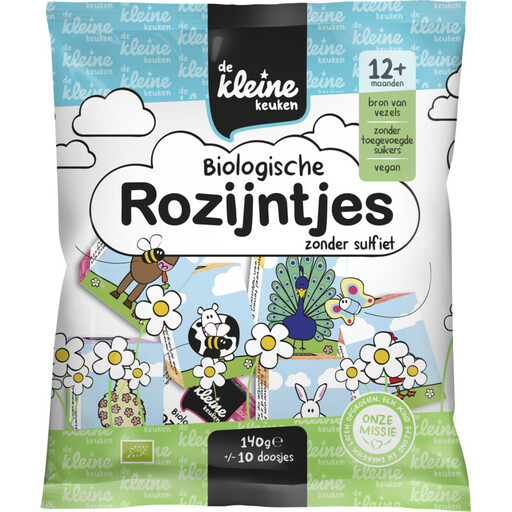
De Kleine Keuken organic raisins 12M+ 140 g
The individual boxes may suit a buffet where you want to portion food by pack.
The product information lists 10 boxes of 14 g and says to store in a cool, dry, dark place. The product is labelled as baby food for children aged 12 months and over; the description recommends supervision while eating and says it is not suitable for children with swallowing difficulties.
View at Joybuy
 No image available
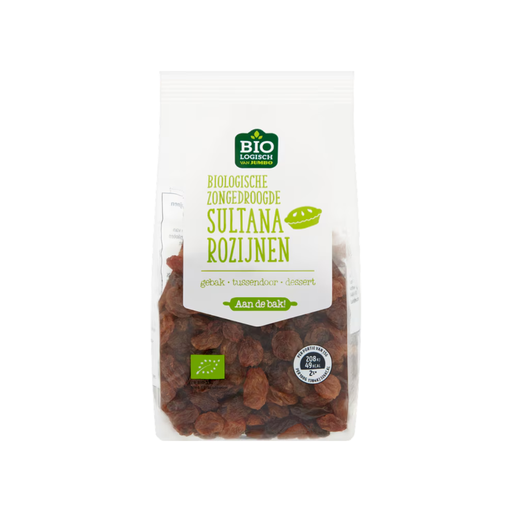
B+ Sultana raisins 250 g
A good fit if you’re looking for organic sultana raisins to top breakfast cereal.
The product information lists a 250 g pack and raisins and sunflower oil from organic sources. According to the description, a stem or stone may remain despite checks; store in a cool, dry place.
View at Joybuy
Frequently asked questions
Can you use the EU organic logo to present the entire conference catering service as organic?
No, not as a certification mark for the catering service: the European Commission excludes mass catering, such as restaurants, from using the EU organic logo. This is different from the organic labelling of individual ingredients.
How do you provide allergen information when serving dried fruit from its packaging in bowls?
Make sure guests can get information about any regulated allergens present. The NVWA explains that, for non-prepacked products, you can provide information verbally if there is a visible notice telling guests they can ask for it and the information is available before purchase. Use the latest product information, including any warnings that traces of peanuts or nuts may be present.
Is organic dried fruit automatically free from sulphites or nuts?
No, the organic label alone does not mean a product is free from allergens. Check the ingredients and allergen information for each product; AH Biologisch Ananas, for example, warns that traces of peanuts and nuts may be present.
How long can you keep an opened pack?
Follow the advice for the specific product. Jumbo and BIO+ at PLUS recommend storing their products in a cool, dry, dark place. AH Biologisch Ananas has a limited shelf life once opened; follow the product instructions rather than assuming a storage period.
Do you have to follow the portion size on the label for a conference breakfast?
No, use your own planned quantity for your purchasing calculations so you can compare products on the same basis. The portions listed on product pages are label information, not a catering standard.
Is a hygiene code compulsory for conference catering?
The business must use an HACCP food safety plan for the food activities concerned. According to the NVWA, an appropriate, approved hygiene code can meet this requirement; you can also use your own plan if it complies with the legal requirements.


