
Quick coffee-break snackers
You want to take a small portion with you on your commute. With large packs, you’ll need to measure out your own portion. The Netherlands Nutrition Centre recommends eating no more than 20 grams of dried fruit a day.


Choose organic raisins if you want a large pack to portion up and take with you; choose unsweetened organic mango if you’d prefer dried fruit with a single ingredient and a different flavour. Check the organic certification, ingredients and allergen warning on the specific pack. Unsweetened doesn’t mean sugar-free: the Netherlands Nutrition Centre recommends eating no more than 20 grams of dried fruit a day.
You want to take a small portion with you on your commute. With large packs, you’ll need to measure out your own portion. The Netherlands Nutrition Centre recommends eating no more than 20 grams of dried fruit a day.
You want to assess organic certification, ingredients and added sugars separately. The European Commission and Skal Biocontrole provide information about the organic logo and the protected designation.
You add dried fruit to a breakfast prepared in advance. In that case, portion size and the storage instructions on the pack are practical things to consider. The Netherlands Nutrition Centre lists dried fruit as an addition to breakfast.
Consider the organic claim, portion size and ingredients separately: a certification logo doesn’t automatically tell you the total sugar content or what the allergen warning says.
| What to consider | What to check | Who it matters to |
|---|---|---|
| Organic status and ingredients | Check the EU organic logo, inspection code, agricultural origin and ingredients on the specific pack. The European Commission and Skal Biocontrole explain the requirements for using the organic designation. | If I want to buy organic, I want to be able to check the claim on the pack and know what’s in the product. Around 34% of consumers prioritise verifiable organic status and clear ingredients. |
| Portion size and sugars | Check total and added sugars separately, and compare them with the amount you plan to take with you. The Netherlands Nutrition Centre recommends eating no more than 20 grams of dried fruit a day. | If I want to take a small snack with me, I pay attention to my portion size and want to know how much total sugar it contains. Around 27% of consumers focus most on portion size and understanding sugar content. |
| Taking it with you and storage | Check whether the pack contains individual portions or whether you’ll need to measure them out yourself. Follow the storage instructions on the label. | To make my morning run smoothly, I want to know in advance whether I need to prepare a portion and how to store the rest. Around 20% of consumers prioritise preparation and portability. |
| Pack size | Compare the net weight with how much you expect to use; the mango pack reviewed contains 130 grams and the raisin packs contain 250 grams. | I want to choose an amount that suits how often I use the product, without buying more than I need. Around 13% of consumers focus mainly on buying an appropriate quantity. |
| Allergens | Read both the ingredients and the allergen warning on the specific pack. The NVWA states that prepacked products must show allergen information on the label. | If a particular allergen is relevant to me, I check the warning before choosing. Around 6% of consumers prioritise suitability when they have a relevant allergy. |
The AH Biologisch Mango gedroogd & ongezoet product reviewed lists 0 grams of added sugars, but 61 grams of total sugars per 100 grams.
Check both figures separately and decide in advance how much you want to take with you.
The raisin packs reviewed contain 250 grams. That’s more than the maximum of 20 grams of dried fruit a day recommended by the Netherlands Nutrition Centre.
Measure out a portion at home rather than taking the whole bag as a snack.
The AH mango reviewed lists dried mango as an ingredient, but also warns that it may contain peanuts and nuts.
If you have a relevant allergy, check the warnings on the current pack too.
The organic product ranges reviewed include raisins and dried, unsweetened mango.
The range reviewed includes organic sultanas in a 250-gram pack.
The BIO+ Sultana raisins reviewed are sold in a 250-gram bag.
The Lidl product listing is for Belbake Organic Raisins.
The ALDI listing reviewed is for Trader Joe's Raisins, 500 grams.
The product listed at Dirk is Bio+ Sultana Raisins.
This selection includes dried fruit and fruit pieces in small packs or larger packs for stocking up. Check the organic claim and certification on the specific pack; a product title alone isn’t a substitute for checking.
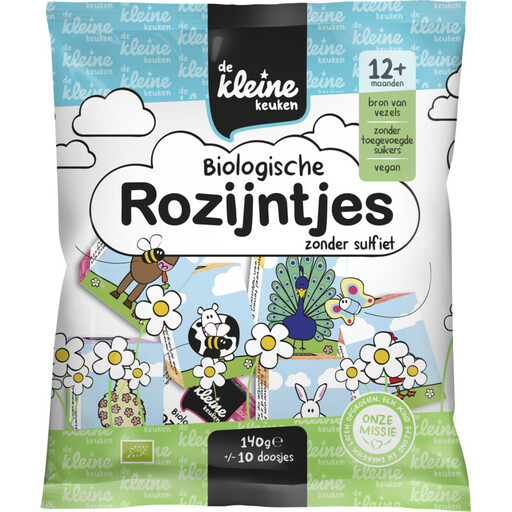 Image unavailable
The product information lists ten snack boxes of 14 grams each. Check the organic claim on the pack.
According to the product information, suitable from 12 months; not suitable for children with swallowing difficulties. Supervise children while they eat.
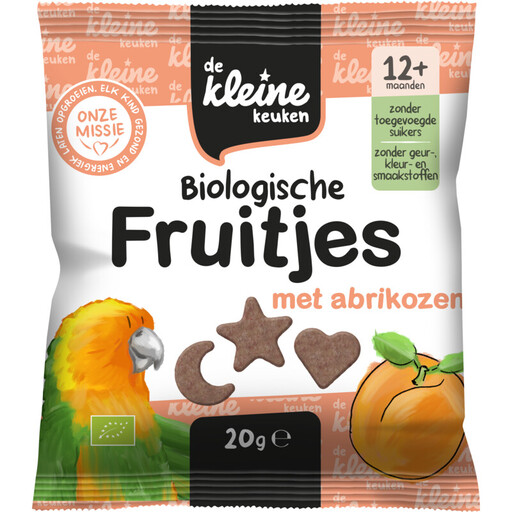 Image unavailable
The product information lists 44% dried apricots and 44% dates, plus banana and rice flour. Check the organic claim on the pack.
The product information states that it may contain traces of nuts and is suitable from 12 months.
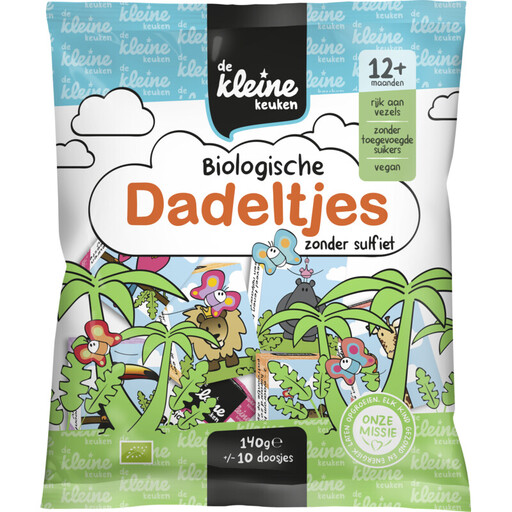 Image unavailable
The product information lists snack boxes with a 14-gram portion and states that they contain 95% dates and 5% rice flour. Check the organic claim on the pack.
The product information states that it is suitable from 12 months. Make sure the child is sitting upright and supervise them while they eat.
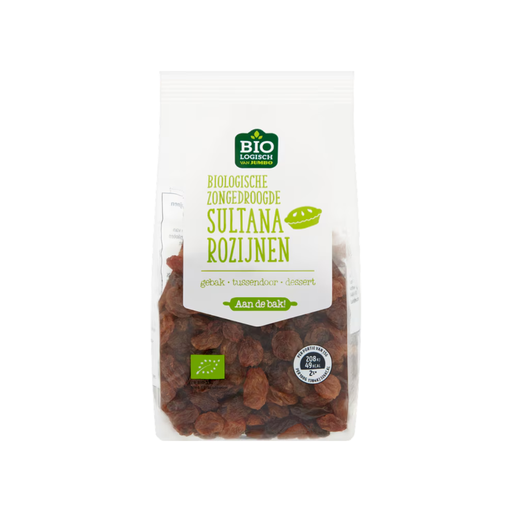 Image unavailable
The product information describes sultanas for snacking or adding to breakfast cereal. The stated pack size is 250 grams; check the organic claim on the pack.
The nutritional information lists 75.5 grams of sugars per 100 grams. The product description states that the presence of a stalk or stone cannot be entirely ruled out.
Look for the EU organic logo, along with its inspection code and agricultural origin. The European Commission links the logo to organic certification; Skal Biocontrole explains that the organic designation is protected by law.
No. The AH and PLUS products reviewed list a manufacturer’s portion of 25 grams, while the Netherlands Nutrition Centre recommends eating no more than 20 grams of dried fruit a day. So a portion stated on the label isn’t automatically the same as that recommendation.
Follow the instructions on the pack. The raisins reviewed are labelled to be stored in a cool, dry, dark place. The mango reviewed has a limited shelf life once opened, so check the label for guidance on your pack.
Yes. The NVWA states that allergen information must be shown on the label of prepacked products. That doesn’t mean every pack is suitable for every allergy: for example, the AH mango reviewed states that it may contain peanuts and nuts.
Check the current pack before using the product, especially the ingredients, nutritional values and allergen information. Albert Heijn warns that these details can change and directs customers with questions to its customer service team.