If you have coeliac disease, choose an exact variant that is clearly labelled as both organic and suitable for a gluten-free diet: an organic certification on its own says nothing about gluten. Albert Heijn lists both features for the organic raisins, dates and mango reviewed here. Then consider the type of fruit, ingredients and pack size. Check the packaging of the product you buy, too, and take care to avoid cross-contamination when preparing breakfast.
Who is this buying guide for?
Gluten-free and organic
You’re shopping for someone with coeliac disease and would also like to choose an organic product. Check both features separately: Albert Heijn lists them for the variants reviewed here, but this doesn’t automatically apply to other products.
Breakfast with simple ingredients
You want to add dried fruit to breakfast and are mainly comparing the type of fruit, ingredients and added sugar, without losing sight of whether it’s suitable for a gluten-free diet.
A pack that suits how you use it
You want to choose a pack that suits your needs and storage routine. Compare the net weight and follow the instructions on the packaging. At home, keep the fruit away from crumbs containing gluten.
What should you look for when buying?
| What to consider |
What should you check? |
Who is this important for? |
| Suitability for a gluten-free diet |
Check the exact variant, the gluten-free claim and any warnings. Use clean utensils and preparation equipment. |
When I’m buying for someone with coeliac disease, I want to know first whether the exact variant is suitable and how to avoid cross-contamination. Around 36% of consumers put gluten-free suitability first. |
| Organic certification |
Look for the organic label and the EU organic logo. Assess these separately from the gluten information. |
When I want to buy organic, I check the label on the product rather than relying only on the shop name. Around 29% of consumers make organic provenance their top buying priority. |
| Ingredients and breakfast portion |
Read the ingredients list and distinguish added sugar from total sugars. Choose a portion that suits you. |
When I choose dried fruit for breakfast, I want to know what’s in it and how much I’m having. Around 21% of consumers prioritise ingredients and a suitable breakfast portion. |
| Packaging and storage |
Compare the net weight and follow the storage and use-by information after opening. |
I want a pack that suits my needs and that I can store according to the instructions. Around 14% of consumers cite pack size, use and storage as their top buying priority. |
Common buying mistakes
-
Confusing organic with gluten-free
Organic certification and information about gluten answer different questions. An organic logo is therefore not a general confirmation that a product is suitable for someone with coeliac disease.
Check both features on the exact variant and read the packaging. The Dutch Coeliac Society advises checking labels carefully.
-
Assuming ‘unsweetened’ means ‘sugar-free’
According to Albert Heijn, the AH mango reviewed here contains no added sugar, but the product page lists 61 g of total sugars per 100 g.
Compare added and total sugars, and choose a portion that suits you. The Netherlands Nutrition Centre recommends a maximum of 20 gram of dried fruit per day. This is dietary advice, not a product requirement.
-
Buying a large bag without considering how you’ll use it
The AH packs reviewed here come in different sizes. Albert Heijn also says that the dates and mango have a limited shelf life once opened.
Compare the net weight with how much you use, and follow the storage instructions for the exact variant.
A larger bag may go unused if you don’t get through it within the recommended storage period.
-
Causing cross-contamination at home
Crumbs from bread containing gluten can get into a gluten-free breakfast, for example via a chopping board, warns the Dutch Coeliac Society.
Use clean preparation equipment and keep bread crumbs away from the dried fruit and your breakfast.
Relevant brands and product ranges
Albert Heijn
The Dutch product pages for AH Organic Raisins, AH Organic Pitted Dried Dates and AH Organic Dried & Unsweetened Mango list organic labelling and state that the products are gluten-free.
- The product information describes raisins with sunflower oil, dates as the sole ingredient and mango as the sole ingredient.
- The dates and mango also carry warnings about possible peanut and nut contamination. This applies to the information for these products and is not a statement about the whole range.
Jumbo
Jumbo lists Organic Sun-Dried Sultana Raisins 250g as a separate product variant.
- The product name makes the organic variant easy to distinguish from regular raisins.
- The range listing alone doesn’t confirm that the product is suitable for a gluten-free diet, so check the exact packaging.
Lidl
Lidl Netherlands lists Belbake Organic Raisins.
- The product listing identifies an organic raisin variant.
- An organic label is not a general gluten-free guarantee from Lidl or for this product listing.
PLUS
PLUS lists BIO+ Sultana Raisins in a 250 g pack; BIO+ is the product brand.
- The product information states that it contains 99% organic raisins and organic sunflower oil.
- The organic information and ingredients list don’t, on their own, answer whether there is a risk of cross-contamination with gluten.
Dirk
Dirk lists Bio+ Sultana Raisins in its range as a product from the external brand Bio+.
- The product name helps distinguish these raisins from baking products that contain raisins.
- Don’t assume it’s the same variant or has the same product information as BIO+ Sultana Raisins from another supermarket without checking.
Products at Joybuy
This selection includes organic dried fruit snacks, including variants for children aged 12 months and over. Product titles or ingredient information don’t automatically confirm that a product is suitable for a gluten-free diet, so check the packaging for the exact variant before choosing it if you have coeliac disease.
 No image available
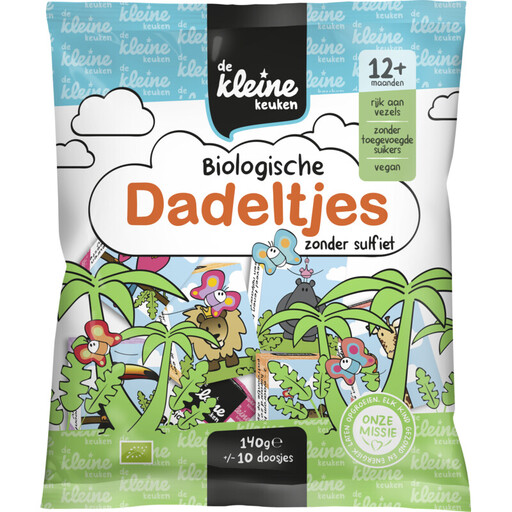
De Kleine Keuken Organic raisins 12M+ 140g
An option if you’re looking for organic raisins in small portions. Check the packaging to confirm whether this exact variant is gluten-free, and read the allergen information.
The product information lists 10 snack boxes of 14 g, with no added sugars or sulphites. Store in a cool, dry, dark place.
According to the product information, this is intended for children aged 12 months and over. Supervise children while they eat; not suitable for children with swallowing difficulties.
View at Joybuy
 No image available
De Kleine Keuken organic dates 12+
An option if you’re looking for organic dates. Check the packaging for the exact variant’s suitability for a gluten-free diet and its allergen information before choosing it.
The product information lists 95% dates and 5% rice flour, with no added sugars or sulphites. Nutritional values are also provided per 14 g portion.
According to the product information, this is intended for children aged 12 months and over. Make sure the child is sitting upright and supervise them while they eat to prevent choking.
View at Joybuy
 No image available
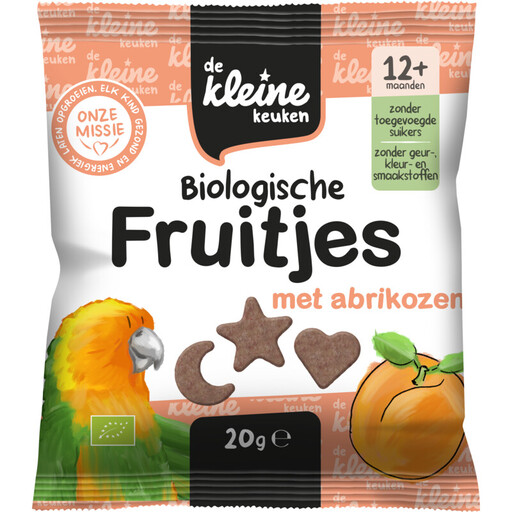
De Kleine Keuken Organic Fruit Snacks with Apricots 20 g
A fruit snack mix with dried apricots, dates and banana. Check the packaging for suitability for a gluten-free diet and allergen information before choosing this product if you have coeliac disease.
The ingredients information lists 44% dried apricots, 44% dates, 8% bananas and 4% rice flour. The product description states that no sugar has been added and warns of possible traces of nuts.
According to the product information, this is intended for children aged 12 months and over.
View at Joybuy
Frequently asked questions
Does the organic logo prove that dried fruit is gluten-free?
No. Skal Biocontrole explains that the European organic logo identifies the organic production method; suitability for a gluten-free diet needs to be checked separately. So check both features on the packaging for the exact variant.
What does a warning about cereals containing gluten mean?
According to the Dutch Coeliac Society, this type of warning indicates a possible risk of cross-contamination, not necessarily that every pack contains gluten. The society says that statements such as ‘may contain cereals containing gluten’ and ‘not suitable for people with coeliac disease’ mean the same thing. Don’t ignore such a warning because a product is labelled organic.
Is unsweetened dried fruit sugar-free?
No. The AH variants reviewed here state that they contain 0 g of added sugar per 100 g, but they do contain total sugars. For example, Albert Heijn lists 61 g of total sugars per 100 g for the mango. The Netherlands Nutrition Centre recommends a maximum of 20 gram of dried fruit per day.
How can I avoid gluten cross-contamination at breakfast?
Prepare your breakfast using clean equipment and keep crumbs containing gluten away from the dried fruit. The Dutch Coeliac Society warns that crumbs on, for example, a chopping board can end up in a gluten-free dish.
Are warnings about peanuts and nuts the same as a gluten warning?
No. According to their product pages, the AH dates and mango are labelled gluten-free and also carry warnings about possible peanut and nut contamination. These allergen warnings are relevant separately if you also need to avoid peanuts or nuts.


