Who is this useful for?

Breakfast shoppers who prioritise certification

You want dried fruit whose organic status can be verified. Look for the EU organic logo, the inspection code and the origin label for the agricultural ingredients. The European Commission explains when the logo may be used; assess the nutritional information separately.

Breakfast hosts catering for guests

You’re putting on breakfast for several people around New Year and want to take account of allergen restrictions. Read the packaging for the fruit, any nut mixes and the other breakfast products; the NVWA states that allergen information must appear on the label of prepacked products.

Shoppers who want to use up leftovers

You want enough for breakfast without buying more than you’ll use later. Compare the pack size with your plans and follow the storage advice for the specific product. The Voedingscentrum provides general storage advice for opened raisins.

What should you look for when choosing?

What to consider What to look for Who might prioritise this?
Organic status Check the EU organic logo, the inspection code and the EU or non-EU agriculture label. The European Commission says the logo is intended for certified organic products. If I’m choosing organic fruit for breakfast, I want to be able to verify its status on the packaging. Around 25% of consumers prioritise organic certification.
Sugar and portion size Check the ingredients list for added sugar or syrup. The Voedingscentrum recommends a maximum of 20 g of dried fruit a day; this is dietary advice, not a legal purchasing limit. I want to know what’s been added to the fruit and how much I’m serving, rather than treating the certification mark as portion guidance. Around 25% of consumers give sugar and portion size top priority.
Allergens for guests Read the allergen information on every pack, and also check mixed fruit or nut products and the other breakfast ingredients. The NVWA explains allergen labelling requirements. When I’m hosting breakfast, I want to be able to choose ingredients that take guests’ allergen restrictions into account. Around 25% of consumers prioritise suitability for guests.
Quantity and leftovers Compare the net weight with how much you plan to use, and think about what you’ll do with the rest. For opened raisins, the Voedingscentrum recommends storing them in a kitchen cupboard for 6–9 months; this advice does not automatically apply to other types of fruit or mixed breakfast dishes. I want to buy enough for breakfast, but also know how I can use up the rest. Around 25% of consumers prioritise quantity and making use of leftovers.

Common pitfalls

  • Treating organic certification as dietary advice

    Certification tells you about the method of production; it doesn’t automatically tell you about the ingredients or a suitable portion size. The Voedingscentrum recommends a maximum of 20 g of dried fruit a day.

    Check the certification mark, ingredients list and quantity separately. Remember that dietary advice is guidance, not a legal limit.

  • Assuming an organic fruit mix is suitable for every guest

    A mix may contain other ingredients too. For example, Albert Heijn lists an organic mix containing almonds, which may be relevant if a guest needs to avoid this nut.

    Read the full ingredients and allergen information, and keep the packaging available at breakfast.

  • Confusing an organic range with an organic product

    A supermarket may show both an organic range and individual dried-fruit products. That doesn’t mean every product in the range is automatically certified organic.

    Check the organic label on the packaging of the specific product you want to buy.

  • Buying more than you’ll use after breakfast

    A large pack isn’t automatically the most practical choice if you only need some of it. How practical the purchase is also depends on what you’ll do with the leftovers.

    Plan when you’ll use the rest and follow the storage advice on the packaging. Don’t apply general advice for opened raisins to a breakfast dish that’s already been prepared.

Supermarket brands for reference

Albert Heijn

The official range page lists AH Biologisch Rozijnen and an organic mix containing raisins, pineapple, mango and almonds.

  • The products listed make it easy to distinguish plain raisins from a mixed product.
  • Check the ingredients and allergens on the specific pack; according to the product listing, the mix contains almonds.

Jumbo

The official product information lists Raw Organic Food Abrikozen 300 g as an example labelled organic.

  • For this product, Jumbo lists the inspection code NL-BIO-01 and non-EU Agriculture.
  • The non-EU Agriculture label describes the origin of the agricultural ingredients; a Dutch manufacturer’s address doesn’t mean the apricots were grown in the Netherlands.

Lidl

Lidl Netherlands displays an organic range as well as a product page for a dried fruit mix.

  • The range page and product page give you separate starting points for browsing products.
  • A general organic range doesn’t confirm that the dried fruit mix is certified organic; check the packaging.

ALDI

ALDI displays an organic range and also lists Trader Joe’s rozijnen 500 g.

  • The product listing gives you a specific type of fruit and pack size.
  • The general organic range page doesn’t confirm that these raisins are certified organic; check the specific pack.

PLUS

The official product page lists Smaakt Abrikozen bio in a 250 g bag.

  • The product name and pack size are useful when planning a shopping list or quantity.
  • Check the packaging for current ingredients and product information; don’t infer unverified claims about sugar, sulphites or taste from the organic label.

Dirk

The official search results include De Kleine Keuken Bio rozijntjes 12 mnd 140 g.

  • The listing distinguishes dried raisins from mixed breakfast products.
  • The age label applies to the product listed and isn’t a general suitability rule for all dried fruit. Check the specific label.

Dried fruit at Joybuy

These dried fruit options are worth considering for breakfast; check each pack to make sure its organic label and product information meet your needs.
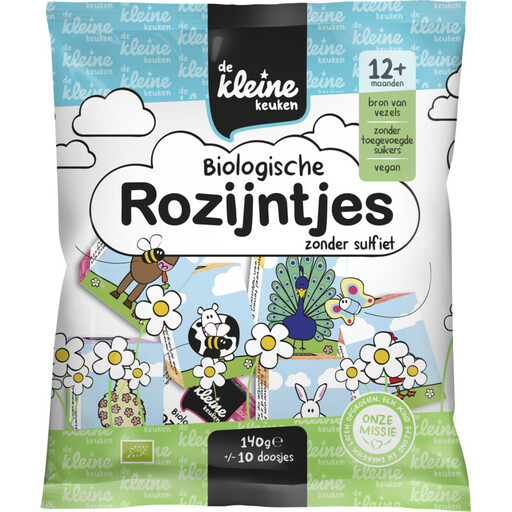
De Kleine Keuken Organic raisins 12M+ 140 g

De Kleine Keuken Organic raisins 12M+ 140 g

An option if you’re looking for organic raisins to add to breakfast; the product name says Organic raisins.

The product name lists 140 g and 12M+. According to the product information, this variety is intended for children aged 12 months and over; supervise them while they eat. Not suitable for children with swallowing difficulties.

View at Joybuy
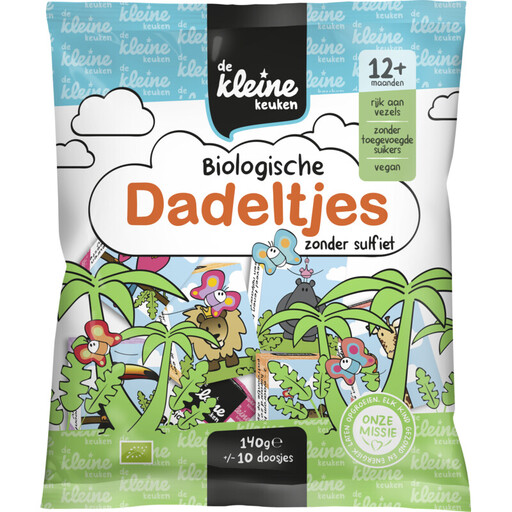
De Kleine Keuken Organic dates 12+

De Kleine Keuken Organic dates 12+

An option if you’re looking for organic dates as dried fruit for breakfast; the product name says Organic dates.

The product name lists 12+. According to the product information, this variety is intended for children aged 12 months and over; make sure your child is sitting upright and supervise them while they eat.

View at Joybuy
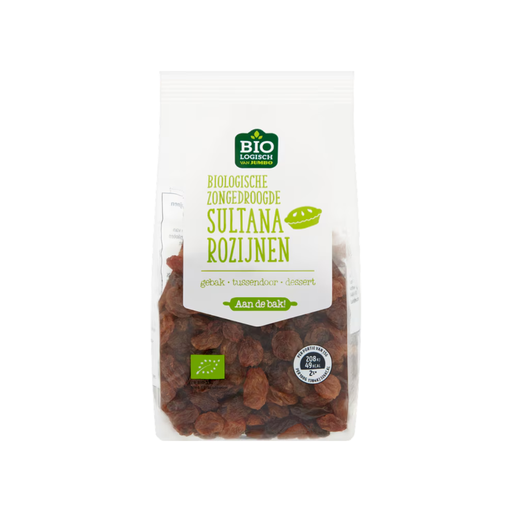
B+ Sultana Raisins 250 g

B+ Sultana Raisins 250 g

A 250 g pack of raisins to include in your breakfast plans; check the packaging if organic status is a requirement.

According to the product information, a stalk or pip may remain despite cleaning.

View at Joybuy

Frequently asked questions

How can I recognise certified organic packaging?

Look for the EU organic logo and also check the inspection code and the label showing the origin of the agricultural ingredients. According to the European Commission, the logo may only be used on products certified as organic.

Can I have a larger portion because the fruit is organic?

Don’t use the organic certification mark as portion guidance. The Voedingscentrum recommends a maximum of 20 g of dried fruit a day; this is dietary advice, not a legal limit.

Where can I check for allergens in dried fruit?

Read the ingredients and allergen information on each product’s packaging, particularly for mixed products. According to the NVWA, allergen information must appear on the label of prepacked products.

How should I store leftover raisins after New Year?

For opened raisins, the Voedingscentrum recommends storing them in a kitchen cupboard for 6–9 months. Also follow the advice on your pack, and don’t automatically apply this timeframe to other types of dried fruit or a breakfast dish that’s already been prepared.

How should I compare packs for breakfast?

Compare the net weight with how much you expect to use, and decide in advance what you’ll do with the rest. As specific examples, the Jumbo product page lists Raw Organic Food Abrikozen at 300 g and the PLUS product page lists Smaakt Abrikozen bio at 250 g; the pack size alone doesn’t tell you which is best for your needs.
